New Book: Turkey’s Kurdish Question – Discourse & Politics Since 1990

1 06 2015

9781138858565Hamid Akin Unver

Routledge, 2015

978-1-13-885856-5

The Kurdish question is one of the most complicated and protracted conflicts of the Middle East and will never be resolved unless it is finally defined. The majority of the Kurdish people live in Turkey, which gives the country a unique position in the larger Kurdish conundrum. Society in Turkey is deeply divided over the definition and even existence of the Kurdish question, and this uncertainty has long manifested itself in its complete denial, or in accusations of political rivals of ‘separatism’ and even ‘treason’. Turkey’s Kurdish Question explores how these denial and acknowledgement dynamics often reveal pre-existing political ideology and agenda priorities, themselves becoming political actions. While the very term “Kurdish question” is discussed in the academic literature as a given, a new and systemic study is required to deconstruct and analyze the constitutive parts of this discursive construct. This book provides the first comprehensive study and analysis of the discursive constructions and perceptions of what is broadly defined as the “Kurdish question” in Turkish, European and American political cultures. Furthermore, its new methodological approach to the study of discourse and politics of secessionist conflicts can be applied to many similar intra-state conflict cases.

Turkey’s Kurdish Question would suit students and scholars of Middle East studies, Conflict studies and Comparative Politics, as well as Turkish or Kurdish studies.

H. Akin Ünver is an assistant professor of international relations at Kadir Has University. This book is based on his dissertation ‘Defining Turkey’s Kurdish Question‘, which has won the Middle East Studies Association (MESA) 2010 Malcolm H. Kerr award for the best dissertation in the field of social sciences.

Click here for details.


New Book: The Limits of Trauma Discourse – Women Anfal Survivors in Kurdistan-Iraq

1 06 2015

STUDIEN34Karin Mlodoch

Klaus Schwarz Verlag, 2015

9783879977192 

This book addresses one of the most heinous crimes of Saddam Hussein’s Baath regime in Iraq, the so-called Anfal opera­tions against the Kurdish popu­la­tion in 1988: within a few months, thou­sands of villages were destroyed; up to 182,000 men and women abducted and murdered; tens of thou­sands of civi­lians were detained and later forcibly resettled. Based on long­stan­ding work expe­ri­ence with women Anfal survi­vors in the Germyan region of Kurdistan-Iraq, the author explores their psycho­so­cial situa­tion and coping stra­te­gies over more than twenty years until today. She docu­ments the women’s long path from victims to survi­vors, their struggle for truth, justice, and acknow­led­ge­ment, and their conf­licts with both the hege­monic Kurdish national victim­hood discourse and Iraqi national stra­te­gies in dealing with the past. The rese­arch gives an excep­tional long-term psycho­lo­gical perspec­tive on coping with extreme violence and loss, beyond common discourses of trauma and “hea­ling”. It links psycho­lo­gical trauma rese­arch to memory studies and the broader debate on social and political recon­struc­tion in post-conf­lict socie­ties.

Karin Mlodoch is a psycho­lo­gist and co-founder of the German NGO HAUKARI e.V. that assists women victims of political and social violence in Kurdistan-Iraq. From 2008 to 2011, she was a rese­arch fellow at the Zentrum Moderner Orient.

For details click here. 


Conference: VII. Mesopotamian Medicine Congress

28 05 2015

bannerThe convenors of the Mesopotomian Medicine Congress are organising the 7th Mesopotamian Medical Congress, which was previously held in Mardin Artuklu University with the participation of dentists and pharmacists, in Van on 4-6 June 2015.

“By doing so, we are also contributing to realize the dreams of “a few good people” who have faced with many difficulties and sacrificed themselves to conduct such a medical congress in the most important geography of the civilization.  Mesopotamia Medical Congress tradition has been carried out with growing scientific care and broad participation- we aimed to take this tradition a step further.

We would like to perform this congress at a scientific ground and social standards owned by other similar international medical congresses. Unquestionably, scientific, linguistic and social benefits of all participants are a fundamental goal of our congress. The Congress’s scientific and social program is going to be formed by expert committees and also with participants’ interactive effort and work. Likely Van city takes many visitors from neighboring countries and cities due to the location and its rich historical-cultural memory. We are expecting high level participation at our congress and also great numbers of visitors from neighboring country Iran generally prefer visiting Van during this date. In order to prevent possible problems of accommodation and to benefit from advantage of early booking and registration, it is important for our precious participants to make early booking and registration.

The Saltur Company will organize congress with higher sensitivity more than a professional and commercial understanding. The SALTUR Company‘s officials who have amateur spirit but professional diligence, will help our respected participants. The Congress website is presently online. All contact information about the Congress, announcements, briefings, posters and presentations, accommodation and registration procedures will be made via the web page. As we are on the early preparation stage on these days, your contribution, support advice and guidance are of great importance.”

Click here for details. 


New Book Out: Zones of Rebellion – Kurdish Insurgents and the Turkish State

21 05 2015

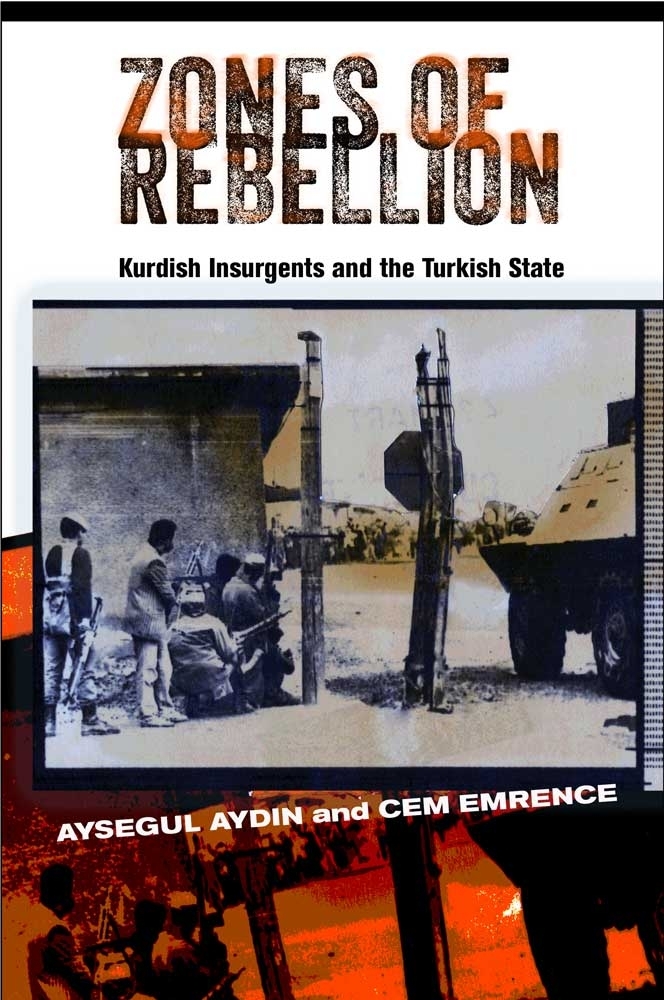
80140100817050LAysegul Aydin & Cem Emrence

Cornell University Press, 2015

9780801453540

How do insurgents and governments select their targets? Which ideological discourses and organizational policies do they adopt to win civilian loyalties and control territory? Aysegul Aydin and Cem Emrence suggest that both insurgents and governments adopt a wide variety of coercive strategies in war environments. In Zones of Rebellion, they integrate Turkish-Ottoman history with social science theory to unveil the long-term policies that continue to inform the distribution of violence in Anatolia. The authors show the astonishing similarity in combatants’ practices over time and their resulting inability to consolidate Kurdish people and territory around their respective political agendas.

The Kurdish insurgency in Turkey is one of the longest-running civil wars in the Middle East. Zones of Rebellion demonstrates for the first time how violence in this conflict has varied geographically. Identifying distinct zones of violence, Aydin and Emrence show why Kurds and Kurdish territories have followed different political trajectories, guaranteeing continued strife between Kurdish insurgents and the Turkish state in an area where armed groups organized along ethnic lines have battled the central state since Ottoman times.

Aydin and Emrence present the first empirical analysis of Kurdish insurgency, relying on original data. These new datasets include information on the location, method, timing, target, and outcome of more than ten thousand insurgent attacks and counterinsurgent operations between 1984 and 2008. Another data set registers civilian unrest in Kurdish urban centers for the same period, including nearly eight hundred incidents ranging from passive resistance to active challenges to Turkey’s security forces. The authors argue that both state agents and insurgents are locked into particular tactics in their conduct of civil war and that the inability of combatants to switch from violence to civic politics leads to a long-running stalemate. Such rigidity blocks negotiations and prevents battlefield victories from being translated into political solutions and lasting agreements.

For details click here.


New Book Out: The Kurdish Shahnama and its Literary and Religious Implications

14 05 2015

618PI-59vvLBehrooz Chaman Ara    

CreateSpace Independent Publishing Platform, 2015

ISBN:  9781511523493

The Kurdish Shanama and its Literary and Religious Implications, as the result of a long-time fieldwork in the cultural spans of Zagros, focuses on the newly survived epic-heroic narratives known as Razm-nama, Jang-nama or Shanama. In this work, the author draws attention to the existence of an unexpectedly rich epic-heroic tradition in literary Gurani (a composite idiom used in the Zagros regions) and strongly suggest that this tradition is largely independent of the Ferdowsi’s Shahnama but has many common features with other works of the Sistani cycle of epics and the Persian Naqqali tradition. This work addresses the structural and contextual similarities and differences between this tradition and its counterparts in Persian literature, and subsequently proposes a new understanding of the term Shahnama and the term Xwadaynamag. In this work, Chaman Ara, challenges the common understandings of the concept of Gurani, and presents analysis and descriptions of some linguistic features of the theory of Gurani literary language.

Click here for details.


Roundtable: Kurdish Struggle for Liberation – Challenges and Opportunities for the Republican Ideal

12 05 2015

banner-reset-2015-enIstanbul Seminars, 26-30 May 2015: Politics Beyond Borders – The Republican Model Challenged by the Internationalization of Economy, Law and Communication, Istanbul Bilgi University

For at least two centuries, Republicanism has been the political ideal of the subjugated people around the world, from the French Revolution to the anti-colonial struggles. The Republic has come to be seen as the place that realizes true freedom and self-determination independently from gender, religious or ethnic backgrounds. However, in the last decades, Republicanism has been challenged by the progressive weakening of state borders as guarantee of sovereignty. More and more Republicanism has become the synonym of state nationalism and very often of authoritarianism, taking into account only poorly, if ever, pluralism, cultural differences and the rights of minorities. Republican thought has to face the internationalization of politics, law, economy and communication through the power of information technology and social media. The Arab Spring contested explicitly Republicanism as a political model. Yet, how to move ahead? So far the Arab Spring resulted into political turmoil without bringing forth a viable and legitimate alternative political system. At the same time even in Europe the Republican tradition is threatened by populist and illiberal movements and by independentist parties which challenge the state unity. Therefore the Istanbul Seminars ’15  ask what, if anything, remains of the Republican dream in a plural world without borders. Does Republicanism still have emancipatory potential or does it have to be replaced by other, more cosmopolitan oriented models?

The Istanbul Seminars ’15 includes a Roundtable on the Kurdish Struggle for Liberation – Challenges and Opportunities for the Republican Ideal, with the following presentations:

Can Cemgil: The Kurdish Alternative to the Republican Ideal: the Rojava Experiment
Ramin Jahanbegloo: The Kurdish Solution: An Empathic Republicanism
Ömer Turan/Cemil Boyraz: Challenging the Turkish Republicanism: Political Imagination of Kurdish Movement
Barış Ünlü: The Kurdish Struggle and the Crisis of the Turkishness Contract

Click here for details.


Panel Announcement: The Kurds During the Great War

8 05 2015

The Kurds during the Great War

The international conference World War One and the End of  the Ottoman Social Formation, held at Istanbul Sehir University, 16-17 May 2015, has dedicated a panel on the Kurds during the Great War. The panel includes following presentations:

  • Sheikhs of War: The Role of Kurdish Religio-Politicial Leadership in WWI, Metin Atmaca;
  • The Great War and the Young Turks’ Policy towards Kurdish Population, Fuat Dündar.


New Journal Enriches Kurdish Journals Landscape

7 05 2015

derwazeingilizi1The Kurdish Studies Network (KSN) is happy to announce the news of a new Kurdish journal dedicated to social sciences and humanities entitled DerwazeDerwaze: a Kurdish journal of social sciences and humanities is a refereed academic journal, published once a year and only in the Kurdish language. Derwaze aims to be a venue for the writing and translation of high-quality academic works in Kurdish in social sciences and humanities ranging from but not limited to sociology, philosophy, psychology, psychoanalysis, history, geography, religious studies, politics, anthropology, literary and cultural theory and criticism, education, linguistics, arts and archaeology. Derwaze aims to contribute to the production of a lasting academic scholarship in the Kurdish language; therefore, it particularly favours fundamental research. Another goal of the journal is to make research topics outside Kurdish Studies available in the Kurdish language and thus contribute to the normalisation of Kurdish as the medium of scientific and theoretical production.

In each issue, Derwaze will publish original research in the form of research articles, review articles, shorter notes of research and document presentation, and critical book reviews. Furthermore, each issue of Derwaze will include the Kurdish translation of two key texts in social sciences and humanities. A product of the joint collaboration of its editorial, academic, linguistic and translation boards, Derwaze is published by the Zan Institute for Social, Political and Economic Research based in Diyarbakir.

As KSN, we cordially congratulate  Derwaze‘s editorial board, and wish them numerous future issues.

For details and call for papers click here.


New Kurdish Studies Issue Out

6 05 2015

1234201_625109010844964_781824838_nThe Kurdish Studies Network (KSN) is happy to announce a new issue of the Kurdish Studies journal. The latest Kurdish Studies issue includes articles on literature and political sciences, as well as book reviews and an obituary.

Kurdish Studies  journal is an interdisciplinary and peer-reviewed journal dedicated to publishing high quality research and scholarship. Kurdish Studies journal was initiated by KSN members, and supported by a large group of academics from different disciplines. The journal aligns itself with KSN’s mission to revitalize and reorient research, scholarship and debates in the field of Kurdish Studies in a multidisciplinary fashion covering a wide range of topics including, but not limited to, economics, history, society, gender, minorities, politics, health, law, environment, language, media, culture, arts, and education.


Table of Contents Kurdish Studies Vol. 3, No. 1, 2015

Articles

Editorial (Welat Zeydanlioglu, Ibrahim Sirkeci

The challenges of writing Kurdish literary history: Representation, classification, periodisation, Farangis Ghaderi

The Ideological Transformation of the PKK regarding the political economy of the Kurdish Region in Turkey, Güllistan Yarkın

The “Palestinian Dream” in the Kurdish Kurdish context, Ahmet Hamdi Akkaya

The Kurds in the changing political map of the Middle East, Michael M. Gunter)

Review article: Alevis in Turkey, Esin Caliskan

Obituary

Professor Mirella Galetti (1949-2012), Joyce Blau

Book reviews

Book reviews

All articles are freely accessible.

Welat Zeydanlıoğlu
Managing Editor
editor@kurdishstudies.net
Kurdish Studies is a peer-reviewed scholarly journal.
ISSN: 2051-4883 e-ISNN: 2051-4891


New Book Out: Imagining Kurdistan – Identity, Culture and Society

30 04 2015

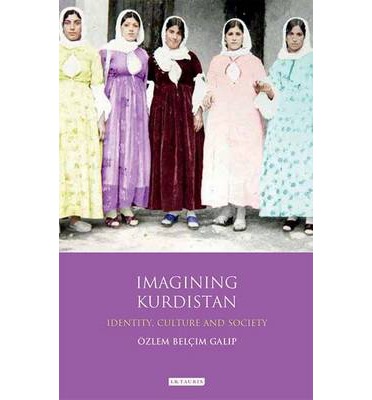
9781784530167Ozlem Belcim Galip 

I. B. Tauris, 2015

ISBN: 9781784530167

From the First Gulf War to the present upheaval in Syria, the Kurdish question has been a crucial issue within the Middle East region and in international politics. Spread across several countries, the Kurds constitute the largest stateless nation in the world. In this context, a striking question arises: how are Kurdish identity and the idea of the homeland – both as a symbol and as territorial space – constructed in writings from Turkish Kurdistan and its diaspora? Through a comparative analysis of Kurdish writing, Ozlem Galip here provides the first comprehensive look at modern Kurdish literature. Drawing on theories of space and collective memory and exploring the use of the historical past and personal memories in the literature of stateless nations, this book analyses the construction of the imaginary homeland and the concept of Kurdish identity.

Click here for details.


New Book Out: The PKK – Coming Down from the Mountains

29 04 2015

9781783600373Paul White

Zed Books, 2015

ISBN: 9781783600373

The Kurdistan Workers’ Party (PKK) is infamous for its violence. The struggle it has waged for Kurdish independence in south-eastern Turkey has cost in excess of 40,000 lives since 1984. Less known, however, is the fact that the PKK now embraces a non-violent end to the conflict, with its leader Abdullah Öcalan having ordered his fighters to ceasefire and engage in a negotiated peace with the Ankara Government. Whether these tentative attempts at peacemaking mean a long-term end to the bloodshed remains to be seen, but either way the ramifications for Turkey and the wider region are potentially huge.Charting the ideological evolution of the PKK, as well as its origins, aims and organizational setup, Paul White provides the only authoritative and up-to-date analysis of one of the most important non-state political players in the contemporary Middle East.

Dr. Paul White is a Visiting Lecturer at Universitas Muhammadiyah Jakarta, Indonesia. He has taught Middle East Politics courses at Deakin University, in Melbourne, at Macquarie University in Sydney, and at the University of Sydney’s Centre for Peace and Conflict Studies. He is the author of Primitive Rebels or Revolutionary Modernizers? The Kurdish National Movement in Turkey (Zed Books, London, 2000). He was a member of the Editorial Board, Journal of Arabic, Islamic and Middle Eastern Studies and serves on the Board of Directors of the Kurdish Institute, Washington DC.

For publisher’s website click here.


New Book Out: The Kurdish Issue in Turkey – A Spatial Perspective

25 03 2015

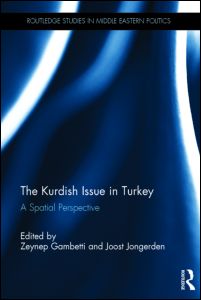
9781138824157Zeynep Gambetti & Joost Jongerden

Routledge, 2015

ISBN: 978-1-13-882415-7

This volume gives a thorough and comprehensive analysis of the Kurdish issue in Turkey from a spatial perspective that takes into account geographical variations in identity formation, exclusion and political mobilisation.

Although analysis of Turkey’s Kurdish issue from a spatial perspective is not new, spatial analyses are still relatively scarce. More often than not, Kurdish studies consist of time-centred work. In this book, the attention is shifted from outcome-oriented analysis of transformation in time towards a spatial analysis. The authors in this book discuss the spatial production of home, identity, work, in short, of being in the world. The contributions are based on the tacit avowal that the Kurdish question, in addition to being a question of group rights, is also one of spatial relations. By asking a different set of questions, this book examines; which spatial strategies have been employed to deal with Kurds? Which spatial strategies are developed by Kurds to deal with state, and with the neo-liberal turn? How are these strategies absorbed and what counter-strategies are developed, both in cities populated by the Kurds in south-eastern Turkey and in other regions?

Emphasizing that identity or place, its particularity or uniqueness, arises from social practices and social relations, this book is essential reading for scholars and researchers working in Kurdish and Turkish Studies, Urban and Rural Studies and Politics more broadly.

Click here for details. 


Conference: The Kurds in the Middle East – New Developments and Prospects

24 03 2015

new-logo-min-size-full-colour

SOAS, University of London, 24 April 2015

Since last summer, largely owing to the events in Kobanê, developments in those parts of Kurdistan that fall within the official boundaries of the states of Iraq, Syria and Turkey have drawn increasing attention globally, bringing to a new climax a century of violence which started with WWI and the Armenian genocide. Kurdish autonomy has become a fact in Northern Iraq for more than two decades. It is unfolding in Eastern Syria since the beginning of the uprising in that country in 2011. What future awaits the Kurds and the states of Iraq, Syria and Turkey? How to assess the ‘democratic autonomy’ project of the Kurdish movement in Syria and Turkey? What are the prospects of the peace talks in Turkey? Is the Kurdish movement in Iran immune to these developments? This half-day conference will address these questions and others pertaining to the same issue.

Programme:

2:00-2:15 pm, Opening Remarks:

Dr. Hassan Hakimian (SOAS)

2:15-2:45 pm, Keynote Speech:

Prof. Hamit Bozarslan (EHESS)

2:45-4:15 pm, Panel 1: ‘Conflicts and the Prospects for the Kurds in Syria and Iraq’:

Prof. Nadje Al-Ali (SOAS)

Prof. Gilbert Achcar (SOAS)

Dr. Thomas Jeffrey Miley (Cambridge)

Ms. Houzan Mahmoud (Women’s Freedom for Iraq)

4:15-4:30 pm, Coffee Break

4:30-6:00 pm, Panel 2: ‘Peace Talks in Turkey and the Future of the Kurdish Question in Turkey and Iran’:

Prof. Abbas Vali (Boğaziçi University, Turkey)

Dr. Özlem Galip (Oxford)

Dr. Veli Yadirgi (SOAS)

Dr. Latif Tas (SOAS)

6:00-6:15 pm, Closing Remarks

For details click here.


First Kurdology Department in US Opening

22 03 2015

ucfembAs part of the continued growth and development of academic activities and relationships of Soran University Dr Muslih Mustafa, President of Soran University, and Dr John Hitt, President of the University of Central Florida, signed a contract on the 5th February 2015, to open a Kurdology Department in the University of Central Florida, Orlando. The department will provide Bachelor, Master and Doctorate degrees.

This is the first time that a Kurdish University and an American University have dedicated an exclusive academic department for Kurdish language, history, civilization, and culture. This department will be the first scientific source focussing on Kurdish research in the United States of America and is regarded as a landmark in the history of universities and academia in both Kurdistan and the USA.

The delegation from Soran University was led by their president , Dr Muslih Mustafa andconsisted of Dr Nahro Zagros, Vice President for Scientific Affairs, Dr Kamal Odisho, Dean of the Scientific Research Centre and Dr Tyler Fisher, Representative of Soran University Foreign Relationships. The University of Central Florida delegation consisted of Mr John Bersia, Head of the Academic and Strategic Relationships of the UCF.

For details click here.


Panel Discussion: The Kurdish Conflict from a European Perspective

12 03 2015

humboldtAt the end of February 2015, PKK Leader Abdullah Öcalan declared that he expects his followers to lay down arms, once the conditions for a settlement are met. For many observers, this was a puzzling step. The Kurdish conflict had just escalated. Tensions had hardened between the Turkish security forces and Kurdish, Turkish and Islamist groups in Turkey as a result of the Syrian and Iraqi wars and the fight for Kobane. Negotiations with the PKK seemed to be at the verge of collapse.

Öcalans declaration may give new hopes for a peaceful resolution of the conflict, but the background of his declaration remains unclear. The pro-Kurdish party HDP’s decision to enter parliamentary elections as party rather than as independents raises questions. The threshold is ten percent and may well be too high for the HDP to surmount.

The panel will be look at developments in Turkey from a European perspective. Is there any leverage, which European actors have left to make an impact on the peace process? What are the expected influences of the developments in Turkey on Europe’s and Germany’s Kurds and vice-versa?

The panel will be conducted in German and Turkish with simultaneous translation. There will be  drinks reception afterwards.

Panelists: Susanne Güsten, Gülistan Gürbey, Latif Tas, Baha Güngör.

Date: 31 March 2015, 19:00-20:30

Venue: Humboldt University of Berlin
Auditorium des Jacob-und-Wilhelm-Grimm-Zentrums
Geschwister-Scholl-Straße 3
10117 Berlin

For details click here. 


New Book: Sold Out? US Foreign Policy, Iraq, the Kurds, and the Cold War

12 03 2015

9781137487117Bryan R. Gibson

Palgrave Macmillan, 2015

ISBN: 9781137487117

This book analyzes the ways in which US policy toward Iraq was dictated by America’s broader Cold War strategy between 1958 and 1975. While most historians have focused on ‘hot’ Cold War conflicts such as Cuba, Vietnam, and Afghanistan, few have recognized Iraq’s significance as a Cold War battleground. This book argues that U.S. decisions and actions were designed to deny the Soviet Union influence over Iraq and create strategic base in the oil-rich Gulf region. Using newly available primary sources and interviews, this book reveals new details on America’s decision-making toward and actions against Iraq during the height of the Cold War and shows where Iraq fits into the broader historiography of the Cold War in the Middle East. Further, it raises important questions about widely held misperceptions about US-Iraqi relations, such as the CIA’s alleged involvement in the 1963 Ba’thist coup and the theory that the US sold out the Kurds in 1975.

Click here for publishers website.


New Book: Identity and Nation in Iraq

10 03 2015

4fce3905e3d2cSherko Kirmanj

Lynne Rienner Publishers, 2013

ISBN: 978-1-58826-885-3

Sherko Kirmanj offers a balanced, critical analysis of the evolution of Iraqi national identity and the process of national integration, tracing a history of antagonisms and violence that began with the creation of the state in 1921. Challenging approaches that variously blame the legacy of the Baathist regime or the US invasion for the sectarian violence that plagues Iraq, Kirmanj delves into the political and social dynamics involved across the decades. His focus is on the enduring conflicts between Iraq’s Sunnis, Shiites, and Kurds—and on the challenges of forging a nation when the groups involved share no collective identity or attachment to a single homeland.

Click here for publisher’s website. 


Public Forum ‘Kurds in Syria: From Denial Towards Self-ruled Governance Model’

10 03 2015

Kurdish-Progress-LogoThe UK based Centre for Kurdish Progress cordially invites to a public forum with keynote speaker Salih Muslim, Leader of the Kurdish Democratic Union Party (PYD). The other speakers are Mr Michael Stephen of Royal United Services Institute (RUSI), Dr David Graeber of London School of Economics (LSE) and Dr Johanna RihaDr Tunc Aybak of Middlesex University will chair this debate. John Woodcock MP for Barrow and Furness will kindly host this debate in the Houses of Parliament.

Please see speaker biographies below.

This event is organised in partnership with the Centre for Turkey Studies (CEFTUS).

The debate will take place between 7-9PM, on Wednesday, 25th March in Committee Room 9, the House of Commons. Please note security checks are required to enter the House of Commons, at the Cromwell Green Entrance. We kindly ask you to arrive at 6:30PM to allow the event to start and end on time. Booking is required for this event to ensure adequate seating availability.

Speaker Biographies

Mr Saleh Muslim is the co-president of the Syrian Kurdish Democratic Union Party (PYD) and the Deputy General Coordinator of the National Coordination Body for Democratic Change in Syria (NCB). Mr Muslim’s political activities on behalf of the collective rights of Syria’s Kurdish community commenced while he was studying in Istanbul in the mid-1970s, when he was influenced by the ongoing Kurdish revolution in Iraq. The failure of that revolution deepened his commitment, and he carried on his own political activity for the Kurdish national cause. He went to Saudi Arabia in 1978 to work as a petroleum engineer with Petromin. He continued his political activities alongside his profession. He returned to Syria in 1995 to carry on his political work, and he, along with his family, was subject to proscription by the Baathist regime. He was one of the founders of the Kurdish Democratic Union Party in 2003. In 2007, his wife was arrested and detained for one year, and Mr Muslim fled political persecution in Syria to join the PYD academy near the Syrian border, in Gare in Kurdistan Region of Iraq. In April 2011, during the pro-democracy uprising, Mr Muslim returned to Syria. He played a principal part in forming the National Coordination Body for Democratic Change in June 2011 and became its Deputy General Coordinator. He became a member of the PYD’s executive council and in 2010 was elected as party head, and in June 2012 he was re-elected as co-president of the PYD along with co-president Ms. Asya Abdullah. Born in 1951 near the town of Ayn al-Arab (Kobani) in the Aleppo governorate, Mr Muslim graduated with a chemical engineering degree from Istanbul Technical University in 1977.

Mr Michael Stephens is the Research Fellow for Middle East studies and Head of RUSI Qatar. He joined RUSI’s London office in September 2010, first in the Nuclear Security Programme before moving to International Security Studies. Michael has travelled and worked in the Middle East for ten years, and has conducted research and worked in 12 countries in the region. His recent research has focused on Iraqi Kurdistan, and the Kurdish regions of Syria, their social composition and responses to the threat from the Islamic State. Michael has also focused on Arab Shia identity across the Middle East and its relationship with Iran, co-authoring a Whitehall report focusing on regional responses to Iran’s nuclear programme (2014). He is also a specialist in Qatari foreign policy and Gulf security, writing about issues of society and security from his base in Doha. As a frequent commentator on Middle East affairs, his writing has appeared in many news outlets and he is also a regular broadcast commentator. Michael studied at King’s College London and undertook three years of post-graduate research in the Middle East. He is proficient in both Arabic and Hebrew.

Dr Johanna Riha is an epidemiologist and recently finished her PhD at the University of Cambridge. After completing a BSc in Biological Sciences at the University of Birmingham and an MSc in Epidemiology at the London School of Hygiene and Tropical Medicine she worked as Lead of Information Management for the National Chlamydia Screening Programme at the Health Protection Agency, now Public Health England, in London. Johanna is Austrian and Tanzanian, grew up in Sierra Leone, Kenya and Ivory Coast, and now lives in the UK. Johanna was part of an academic delegation that visited Rojava, Syria in December 2014.

Dr David Graeber is a professor of anthropology at the London School of Economics. He is the author of numerous books, including Lost People, Debt: the First 500 Years, and Utopia of Rules, and has been involved with a variety of activist projects from the Global Justice Movement to Occupy Wall Street.

Dr Tunc Aybak is currently the director of International Politics Programme at School of Law, Middlesex University. He graduated from School of Political Science, Ankara University in International Relations and Diplomacy. He completed his PhD at the University of Hull in International law and Politics. He teaches on BA International Politics and MA International Relations programmes specializing in critical studies in geopolitics and diplomacy, foreign policy analysis, international political economy and politics of Europe. His main research areas and field work include Turkish and Russian foreign policy, citizenship and identity issues in Europe, the enlargement of the EU, energy geopolitics and pipelines with particular reference to human security issues in the Black Sea and the Middle East area.

When:

March 25, 2015 at 7pm – 9pm

Where:

Committee Room 9, House of Commons
House of Commons
St Margarets Street
Westminster,
London SW1A 0AA
United Kingdom
Google map and directions

For details click here. 


Call for Proposals 2015: Engaging Actors with Radical Religious Narratives in Conflict Transformation, Berghof Foundation

2 03 2015

images

The 2015 Grant for Innovation in Conflict Transformation calls for project proposals on the topic of “Engaging Actors with Radical Religious Narratives in Conflict Transformation”. Interested applicants are asked to read the detailed call for proposals and consult our applicant information page.

Initial applications for this call can be submitted through the online grant application form. Deadline is 16 March 2015 at 15.00 CET.

For details click here.


Call for Abstracts: Workshop on Iraqi Kurdistan and Migration

2 03 2015

imagesMigration to and from Iraqi Kurdistan: New times, new migrations? 8 May 2015, Peace Research Institute Oslo (PRIO)

The Peace Research Institute Oslo (PRIO) welcome you to an interdisciplinary workshop on migration issues in Iraqi Kurdistan. Experienced and early career researchers currently working on issues relating to migration and Iraqi Kurdistan are invited to submit contributions.

The purpose of the workshop is twofold. Firstly, to advance our understanding of migration to Iraqi Kurdistan. This includes but is not limited to

  • Return migration from the region and from Europe.
  • The sudden and dramatic influx of displaced people in the wake of Islamist political violence and state failure, and its implications for the Kurdish Regional Government (KRG).
  • Labour migration from South East Asia and elsewhere.
  • The influx of international and regional companies and their employees, as well asembassies, military and humanitarian personnel, etc.

Secondly, the workshop aims to identify the past, present and future processes of international migration from Iraqi Kurdistan. This includes but is not limited to

  • Asylum and reunification migration to Europe.
  • New forms of migration to ‘new’ destinations, e.g. business travels to China.
  • Kurdish diplomats abroad
  • International research fellowships and international student mobility

    Iraqi Kurdistan has undergone major transformations during recent decades, witnessing repression, genocide and ethnic persecution, but more recently also staggering though inequitable economic growth and urban development. Whether it is in spite of or because of the region’s turbulent history, research on migration in Iraqi Kurdistan has remained remarkably absent given its empirical magnitude and theoretical implications. The dearth of substantial research is all the more striking given the recent surge of international interest in the region. As a quasi-state, the study of the KRG could also lend itself to the comparative study of migration in the process of state formation.

    This workshop, in conjunction with the project Possibilities and Realities of Return Migration (PREMIG), aims to bring together researchers working on such issues for a one-day exploratory workshop. The Peace Research institute Oslo (PRIO) will cover accomodation (two nights) and meals during the workshop. A limited number of travel grants are available for participants who are unable to cover their own travel expenses. Applicants in need of such assistance should request it explicitly when submitting their abstract.

    The abstract, up to 250 words, must be sent to erlpaa@prio.no by 24 March 2015. It must be accompanied by the author’s name and affiliation (institution and department), email address, and a brief biography.

    Authors will be notified by 26 March and selected invitees will receive their invitation to participate in the workshop, 8 May 2015. The workshop (presentations and discussions) will be held in English only.

    The organiser particularly encourages the participation of researchers from universities in Iraqi Kurdistan.

    For any further questions or information, please contact:

    Erlend Paasche
    E-mail: erlpaa@prio.no
    Phone: (+47) 47 40 12 16
    Peace Research Institute Oslo (PRIO)