What’s happening in Turkey? Challenges to Fundamental Rights and Freedoms

15 03 2016

logo_epcIn strategic partnership with the King Baudouin Foundation, Thursday 17 March 2016, TURKISH INSIGHTS POLICY DIALOGUE, EPC Auditorium, Rue du Trône 14-16, 1000 Brussels


Draft Programme:

14.40          Welcome coffee & registration

15.00          Welcome

Amanda Paul, Senior Policy Analyst, European Policy Centre (Moderator)

15.05          Panel Discussion

Kati Piri, Member of European Parliament, Turkey Rapporteur

Welat Zeydanlıoğlu, Founder & Coordinator of Kurdish Studies Network

Savas Genc, Professor of International Relations & Political Science, Fatih University, Istanbul

Selçuk Gültaşlı, journalist, Brussels Representative of Zaman Newspaper

16.10          Discussion

17.00          End of Meeting

Click here for details.


Best Article Award in Kurdish Political Studies

9 03 2016

ucfembThis award, sponsored by Kurdish Political Studies Program at the University of Central Florida, recognizes the best article in Kurdish Political Studies by a rising scholar during the previous calendar year (for this initial award cycle, articles published in 2014 and 2015 will be considered). All articles published in English language peer-reviewed journals addressing questions and covering issues related to Kurdish politics, broadly defined, are eligible for applying for the award. The award is open to all disciplines under social sciences and humanities. The primary author of the article needs to be an untenured scholar (graduate student, post-doc, independent scholar, assistant professor or equivalent) at the time of the publication. The first prize winner will be awarded $300, and the second prize winner $200. The awardees will be announced in November 2016.

Copies of the nominated article should be sent by email to Güneş Murat Tezcür at tezcur@ucf.edu. Self-nominations are welcome.

Deadline of nominations: May 15, 2016.

Award Committee

Janet Klein

Department of History

The University of Akron

klein@uakron.edu


Güneş Murat Tezcür

Department of Political Science

University of Central Florida

tezcur@ucf.edu


Hakan Özoğlu

Department of History

University of Central Florida

hakan@ucf.edu


Nicole F. Watts

Department of Political Science

San Francisco State University

nfwatts@sfsu.edu


Call for Papers: Kurdish Diasporas and New Social Locations – Making Sense of Displacement and Community Building

3 02 2016

Special issue of Diaspora: A Journal of Transnational Studies “Kurdish Diasporas and New Social Locations: Making Sense of Displacement and Community Building”. Call for Special Issue Journal to be published in 2017-2018

Guest editors: Stanley Thangaraj (City College of New York) and Aynur de Rouen (Binghamton University)

Kurdish communities have a long history of displacement, marginalization, and persecution in the Middle East. They are the largest ethnic community without a state of their own. They have faced multiple oppressions at the hands of Western, Arab, Turkish, and Persian nationalisms and colonialisms. There is now an emergence of vibrant scholarship on Kurdish diasporas in Europe, as there are large communities in Germany, Sweden, and England. However, little research has emerged in interrogating the diversity of Kurdish diasporic lives outside of Europe. Kurdish communities spread throughout the globe, in both the global north and the global south. For instance, the city of Nashville in the state of Tennessee in the United States has one of the largest community of Kurds outside of Kurdistan. Similarly, there are growing communities across Australia, New Zealand, Canada, India, and other locations. Accordingly, each specific physical location provides very important historicities, social locations, and diverse lived experiences of diasporic Kurds that challenges the idea of singular or equivalent Kurdish identities. With the emerging literature on Kurds and Kurdistan, we emphasize the importance of Kurdish diasporic communities in new destination sites as important resources in understanding how Kurdistan is negotiated multiply, contradictorily, and in other unpredictable fashions. For example, the various locations of Kurdistan in legible national frames of Turkey, Iraq, Iran, and Iraq have also meant that forced national education systems with language mandates in Turkish, Arabic, and Persian has created different linguistic registers for Kurdish diasporas to make sense of their communities.

Yet, the particularity of diasporic lives also show the different and differential relationships to Kurdistan, the various constructions of Kurdistan, and the lived experiences in host nations.  As a result, a careful investigation of multiple Kurdish diasporas provides terrain for interrogating how diasporas form in relation to the host nation, to imagined contours of Kurdistan, and in relation to other Kurdish diasporic communities. The relationship between history, migration, and community building remains nuanced and complex.  On the one hand, it offers ways to think about long histories of resistance and challenge. On the other hand, it also offers us ways to talk about the complexities and problematics of community building that may inadvertently and intentionally create its own sets of subjugation and exclusion.

This special issue aims to explore the changing social and cultural landscape of Kurdish diaspora by engaging with many diasporic sites as a way to complicate understandings of diaspora, Kurdistan, and local lived experiences of identity. Through established and emerging theoretical perspectives, and original empirical studies, the objective of the volume is to provide a critical (re-)examination of the roles that new locations and social histories have in differently inflecting Kurdish identity across various diasporic sites. In the process, we aim to trouble, complicate, and challenge conceptualizations of “diaspora.” We invite paper proposals and abstracts that critically engage with Kurdish diasporas in new destination sites or previous understudied place. Though by no means limited to these questions, we anticipate that papers might address the following topics:

  • How do multiple lived experiences and different forms of migration as well as residence link the various sites and communities of diaspora and homeland(s)? How do localized performances of Kurdish identity and host national identity facilitate imaginaries of “home” within the diaspora?
  • In what ways do these new locations facilitate the construction and articulation of “new ethnicities” / diasporic Kurdish identities?
  • How do the various social locations and lived experiences complicate and multiply inflect Kurdish identity? What is the relation of host nation, lived experiences, and visions of Kurdistan?
  • How are femininities, masculinities, queer identities and other forms of intersectionality articulated through Kurdish communities?
  • What are the implications of the “War on Terror”, empire and neoliberal politics for citizenship and community building in the Kurdish diasporas?
  • How do the ISIS campaigns and Turkish state violence become a means of negotiating longer histories of trauma, pain, struggle, creativity, and possibility in Kurdish diasporas?
  • What role does race play out in not only deciphering localized experiences in host countries but also in the Kurdish diasporic imagination of Kurdistan?
  • What are the creative and many performative ways of expressing Kurdish identity across categories of race, gender, sexuality, language, class, ability, and ethnicity in the Kurdish diaspora?

Stanley Thangaraj

Assistant Professor, Department of Anthropology

Colin Powell School, The City College of New York

Telephone: (212) 650-7364

Fax: (212) 650-6607

Email: sthangaraj@ccny.cuny.edu

Aynur de Rouen, Ph.D.
Binghamton University
Telephone: (607) 777-3944
Fax: (607) 777-6500
Email: aderouen@binghamton.edu


Call for Papers: Identity and Independence of Nations between Historical Factors and Contemporary Conditions

2 02 2016

logo-4University of Sulaymani, Kurdistan Region, in collaboration with Chawder Enlightenment Center, sponsored by Mr. Mala Bakhtyar, is hosting its First International Conference on 15-16 of May 2016. Scholars and Researchers are welcomed to participate in the Conference by sending papers before 29 February 2016.

The papers must meet the following criteria and/or requirements:

 The papers should be around 4000 to 5000 words. Electronic files must be in Microsoft Word (Times new Roman, font size 14). A copy of your updated CV and a photograph must be attached to the paper.

The Themes of the Conference:

  •  The process of creating national and democratic states (e.g. Europe, America and Middle East cases).
  •  Nationhood, national belonging and national sentiments and awareness.
  •  Kurds and the question of national identity and statehood.
  •  Nation-state and national identity in the age of globalization.
  •  The inter-relation of nation-state and national identity with education, humanization and political morality.
  •  International laws and the right of statehood for national groups without state.
  •  Islam, Islamism and the question of nation-state and national groups.

The main aim of the Conference is to discuss the questions of nation-state, nationhood in the age of globalization from interdisciplinary perspectives taking the Kurdish national ambitions and projects as its primary focus.

Venue: University of Sulaimani – The new Campus- Raparin Way-Sulaimani -Kurdistn Region/Iraq .

Papers must be send to this email conferencenation2@gmail.com and conferenc.nation@gmail.com, Mr. D.Taha Hammad Ameen can also be contacted on (+964) 770 195 2054. All the expenses (including the participants’ travel and accommodation costs, the costs for food, publications etc.) will be provided by the conference.


New World Summit: Stateless Democracy

16 01 2016

1024px-Utrecht_University_logo.svg29 – 31 January 2016, Aula Utrecht University, Utrecht (NL)

The New World Summit, in collaboration with BAK, basis voor actuele kunst, Utrecht University, Utrecht; Centraal Museum, Utrecht; and the Unrepresented Nations and Peoples Organization, Brussels/The Hague, presents New World Summit: Stateless Democracy. This is the sixth summit organized by the New World Summit, dedicated to constructing “alternative parliaments” for stateless political organizations that find themselves excluded from democratic processes.

New World Summit: Stateless Democracy is a three-day assembly that explores the possibilities of uncoupling the practice of democracy from the construct of the nation-state. Core speakers are representatives of the Kurdish revolutionary movement, which in 2012 declared Rojava, the northern part of Syria an autonomous “stateless democracy” based on principles of self-governance, gender-equality, and communal economy.

The summit takes place at a time of rising ultranationalism, the strengthening of the War on Terror, and the emergence of the so-called Islamic State, resulting in nation-states declaring martial law, increasing their surveillance apparatus, and enforcing political exclusion in the name of “defending democracy.” In response, this summit brings together stateless and autonomist movements from all over the world to explore the potential of stateless democracy as a transnationalist paradigm that opposes state oppression in all forms, and to invest in a new emancipatory politics of the 21st century.

For this sixth summit a temporary parliament is built in the aula of Utrecht University. It was on this site that the Union of Utrecht was signed in 1579, which was to become one of the foundations of the Dutch state. The parliament is thus also a historical intervention, reaching back to the very origins of the Dutch state to engage its alternative in the form of stateless democracy: a space to confront our current crisis and occupy the imaginary of a new, common world.

Program:

Day I: Failed Democracy.
29.01.2016, 7-10 PM

Contributors include: Nancy Hollander (legal representative of Chelsea Manning and Mohamedou Ould Slahi); Birgitta Jónsdóttir (Pirate Party Iceland). Chaired by Maria Hlavajova (director BAK, basis voor actuele kunst, Utrecht)

Day II: Stateless Democracy!
30.01.2016, 1-8 PM

Contributors include: Amina Osse (representative Democratic Union Party, PYD, Rojava); Dilar Dirik (Kurdish Women’s Movement); Quim Arrufat (Popular Unity Candidacy, CUP, Catalunya); Jodi Dean (political theorist and writer); Leila Khaled (Popular Liberation Front of Palestine, PLFP); Jennifer McCann (Sinn Féin, Ireland); Ilena Saturay (National Democratic Movement of the Philippines). Chaired by: Joost Jongerden (academic and writer); Vincent W. J. van Gerven Oei (writer); Sana Soleiman Elmansouri (World Amazigh Congress)

Day III: Future Democracy?
31.01.2016, 1-8 PM

Contributors include: Richard Bell (artist, Aboriginal Tent Embassy); Emory Douglas (artist, former Cultural Minister Black Panther Party); Meike Nack (The Foundation of Free Women, Weqfa, Rojava); Suthaharan Nadarajah (Tamil Eelam); Simon P. Sapioper (Republic of West-Papua); Vivian Ziherl (Frontier Imaginaries); refugee collective We Are Here; Barcelona en Comú. Chaired by: Jolle Demmers (academic, Center for Conflict Studies); Radha D’Souza (academic and activist); Chris Keulemans (writer and journalist)


Partners:
BAK, basis voor actuele kunst, Utrecht
Centraal Museum Utrecht
Utrecht University
Unrepresented Nations and Peoples Organization (UNPO)

Financial Partners:
The Art of Impact, Amsterdam
Stichting Democratie en Media, Amsterdam
Stichting DOEN, Amsterdam
K. F. Hein Fonds, Utrecht

Entrance free, registration required due to limited seating:
reservations@newworldsummit.org

For details click here.


Call for Papers: Uncovering The Past Towards the Future, Uniting Experiences and Values – Kurdistan in Western and Eastern Research Tradition

15 01 2016

Jagiellonian_University_(logo)24-26.10.2016, Institute of Oriental Studies, Jagiellonian University, Kraków, Poland.

The conference will be held in memory of August Kościesza-Żaba, the Polish-Russian diplomat and researcher and Mela Mahmud Bayazidi the Kurdish clergyman who according to Żaba “was his teacher and collaborator” in collecting, translating and commenting on Kurdish texts.

The main aim of the conference is to bring together scholars in Kurdish studies from Kurdistan as well as from the West and the East of Europe. The conference is related to the research project How to make a voice audible? Continuity and change of Kurdish culture and social reality in postcolonial perspectives. Until now, our experiences have shown that methods and approach to Kurdish studies applied in the light of different academic traditions give birth to different interpretations of what Kurdish studies entails and what is important in developing and deepening its research areas. This creates the diverse hierarchy of topics and methods of studying them, which is not necessarily readable for the academics from different parts of the world. That is why during our conference we would like to pay attention to the problem of distinct Eastern and Western European traditions in Kurdish studies and to thematise their differences and similarities.

Our aim is also to stress the importance of the three elements which today should contribute to more successful Kurdish research: the wide theoretical background, good knowledge of language and the contact with the studied reality and people. Although sometimes differently evaluated and discussed, knowledge and experiences can, be in fact, effectively shared and exchanged in our Kurdish studies society. We would like to give the possibility for participants to make their presentations in three different languages: English, Kurdish and Russian. We believe that the present stage of Kurdish studies cannot give priority only to the English language. That is why we would also like to promote the knowledge of the native language (i.e. Kurdish and its dialects) and Russian as the language of a long and rich tradition in Kurdish studies.

We invite papers in the following thematic sections:

  1. Żaba & Bayazidi’s epoch: Western European and Russian orientalism in the study of the Kurds.
  2. Can the “statelessness” be valuable? The Polish and Kurdish people have always perceived their statelessness as the worst historical experience. However, we would like to ask the provocative question in order to consider the issue from the perspective of the globalized world, its challenges and chances for placing the “statelessness” in a new context.
  3. Kurdistan between conflicts and will for stability – the contemporary political challenges and chances for the Kurds
  4. From imagination to activity: the role of Kurdish culture and its institutionalization
  5. Faith, Thought and Doubt: the religions and minorities of Kurdistan and their role in shaping the social and political reality of the Middle East.
  6. Modernized and Traditional: the modern ideas and ideologies in Kurdistan.
  7. “Jin, jiyan, azadî” (Woman, Life, Freedom): Kurdish women between slogans and values.
  8. Imagined, Real and Narrated: Kurdish literature and art constructing the meaning of values and dignity.
  9. Refugee, migrant, traveller: different forms of migration and international networks of the Kurds
  10. What kind of Kurdish studies do we need? Multicultural reflection on the research and activities in the field of Kurdish studies including a critical appraisal on imperialist and neo-imperialist past and present of Kurdish studies.

The conference panels will be arranged according to topics and language of presentation. Please send the abstract and title of presentation no longer than 250 words, together with a short biographical note, academic affiliations and contact information by 31 March 2016 to the address: conference@kurdishstudies.pl Point out the thematic section you would like to participate in. Each abstract should be written in English, title should be given in English and in the language of presentation.

The information on the accepted proposals will be given by the end of April 2016.

There is no fee for participation in the conference.

Languages of the conference: English, Kurdish, Russian.

For details click here. 


New Book: The Kurdish Question Revisited

21 12 2015

Stansfield-Kurdish-Question-webGareth Stansfield & Mohammed Sharif (eds)

Hurst Publishers, 2016

ISBN: 9781849045629

The Kurds, once marginal in the study of the Middle East and secondary in its international relations, have moved to centre stage in recent years. In Turkey, where the Kurdish question is an issue of national significance, and in Iraq, where the gains made by the Kurdistan Regional Government have allowed it to impose its authority, moves are afoot to solve ‘the Kurdish Question’ once and for all. In Syria, where the Kurds have borne the brunt of the Islamic State’s onslaught as they defended their three self-declared cantons of Afrin, Kobane, and Cezire, and in Iran, where they struggle to express their cultural distinctiveness and suffer disproportionately at the hands of the Islamic Republic’s security and intelligence services, the picture is less positive. Yet the situations in both countries remain in flux, affected by developments in Iraq and Turkey in a manner that suggests we may have to revise the notion of the Kurds being forever divided by the boundaries of the Middle East and subsumed into the state projects of other nations.

The contributors to The Kurdish Question Revisited offer insights into how this once seemingly intractable, immutable phenomenon is being transformed amid the new political realities of the Middle East.

Gareth Stansfield is Professor of Middle East Politics and Al-Qasimi Chair of Arab Gulf Studies at the University of Exeter.

Mohammed Shareef is a lecturer in politics and international relations of the Middle East at the University of Exeter, with expertise in Kurdish and Iraqi politics.

For details click here. 


New Book: Social Media in Southeast Turkey

18 12 2015

Social_Media_in_South_East_Turkey_600_x_800_Elisabetta Costa

UCL Press, 2016

ISBN: 9781910634523

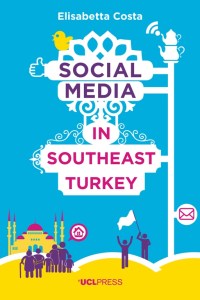
This book presents an ethnographic study of social media in Mardin, a medium-sized town located in the Kurdish region of Turkey. The town is inhabited mainly by Sunni Muslim Arabs and Kurds, and has been transformed in recent years by urbanisation, neoliberalism and political events.

Elisabetta Costa uses her 15 months of ethnographic research to explain why public-facing social media is more conservative than offline life. Yet, at the same time, social media has opened up unprecedented possibilities for private communications between genders and in relationships among young people – Costa reveals new worlds of intimacy, love and romance. She also discovers that, when viewed from the perspective of people’s everyday lives, political participation on social media looks very different to how it is portrayed in studies of political postings separated from their original complex, and highly socialised, context.

Elisabetta Costa is Post-doctoral Research Fellow at the British Institute at Ankara (BIAA). She is an anthropologist specialising in the study of digital media, social media, journalism, politics and gender in Turkey and the Middle East.

For details click here.


Kurdish Migration Conference 2016

15 12 2015

MiddlesexUniKurdish Migration Conference 2016: From Subordination to Transnational Mobilisation, May 27, 2016, Middlesex University, London, UK.

 Call for abstracts – Deadline: February 1st 

Conference Aims and Objectives

The lack of a home nation state has led to a relative invisibility of Kurdish migrants both in public and academic spheres in the settlement countries where they have been registered according to their nationality but not ethnic affiliation. As a result of this, Kurdish migrants have constantly been encompassed in national categories of their country of origin. This was also reflected in a limited public and scholarly attention on them. However, local civic and cultural activism, together with transnationalized Kurdish political mobilisation has drawn attention to the Kurds in the Diaspora. Consequently, recent years have witnessed a growing number of theoretical, conceptual and empirical works on themes related to Kurdish migration. The Kurdish Migration Conference 2016 aims to bring together researchers from multiple disciplines working on Kurdish migration to exchange and share their research findings and experiences about all aspects of migration in, from and to Kurdistan.

 Keynote speakers:

  • Prof Floya Anthias (University of East London, UK) – TBC
  • Prof Jane Holgate (Leeds University, UK)
  • Dr Minoo Alinia (Södertörn University, Sweden)

 Call for abstracts

Researchers are kindly encouraged to contribute to and help shape the conference through submissions of their research abstracts. The conference themes cover issues relating to migration in, from and to Kurdistan.

Topics of interest for submission include, but are not limited to:

  • Migration, ethnicity, citizenship, belonging and identity politics
  • Migration, labour market, entrepreneurship and economic integration
  • Migration, gendered experiences, and sexuality
  • Family dynamics and intergenerational relationships
  • Migrants, media and translocal cultural politics and representations
  • Political participation, (digital) networks and organizations
  • Transnational ties and/or remittances
  • Migration, law, legal status, rights, and undocumented migration
  • Internal and international migration, borders and borderlands
  • Discrimination and xenophobia and diasporic narratives of Kurdish resistance
  • Refugee and internal displacement issues
  • Migration theories and frameworks
  • Research methodology and Kurdish migration


How to submit

Please submit your abstract (no more than 300 words) online at:

www.mdxmigration.wordpress.com/kurdishconference2016/

There is no fee for attending the conference but all delegates will be expected to make and pay for their own travel and accommodation arrangements. For more information, please contact the conference organisers:

Dr Janroj Yilmaz Keles: J.Keles@mdx.ac.uk

‎Dr Alessio D’Angelo: a.dangelo@mdx.a.uk

Important Dates

The deadline for abstract submissions: February 1st, 2016

Notification of acceptance: February 19, 2016

Conference date: May 27, 2016

This conference is organised by the Business School and the Social Policy Research Centre at Middlesex University with support from The British Institute for the Study of Iraq.


New Issue of Kurdish Studies Out

25 11 2015

KSjvol3no2coverfront

Special Issue on the Kurdish Diaspora

Kurdish Studies, Volume 3, Issue 2, October 2015

Guest edited by Bahar Baser, Ann-Catrin Emanuelsson, and Mari Toivanen

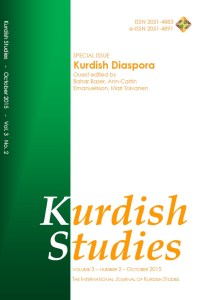
The latest issue of Kurdish Studies is out. It is a special issue focusing on the Kurdish diaspora and is guest edited by Bahar Baser, Ann-Catrin Emanuelsson and Mari Toivanen. Kurdish Studies journal is an interdisciplinary and peer-reviewed journal dedicated to publishing high quality research and scholarship. Kurdish Studies journal is initiated by the members of the Kurdish Studies Network (KSN) and supported by a large group of academics from different disciplines. The journal aligns itself with KSN’s mission to revitalize and reorient research, scholarship and debates in the field of Kurdish studies in a multidisciplinary fashion covering a wide range of topics including, but not limited to, economics, history, society, gender, minorities, politics, health, law, environment, language, media, culture, arts, and education. Kurdish Studies offers a universally accessible venue where sound scholarship and research as well as reviews and debates are disseminated. The journal establishes a genuine forum for serious discussion and exchange within the Kurdish Studies community, reaching out to a broad audience of students, professionals, policy makers and enthusiasts alike. Kurdish Studies aims to maintain a fair balance between theoretical analyses and empirical studies. Critical and novel approaches and methods are particularly welcome.

Table of Contents

Editorial
Martin van Bruinessen

Introduction: (In)visible spaces and tactics of transnational engagement: A multi-dimensional approach to the Kurdish diaspora
Bahar Baser, Ann-Catrin Emanuelsson and Mari Toivanen

Radical political participation and the internal Kurdish diaspora in Turkey
Francis O’Connor

The imaginary Kurdish museum: Ordinary Kurds, narrative nationalisms and collective memory
Vera Eccarius-Kelly

Filming family and negotiating return in making Haraka Baraka: Movement is a blessing
Lana Askari

Reflections on the Kurdish diaspora: An interview with Dr. Kendal Nezan
Mari Toivanen
http://www.tplondon.com/journal/index.php/ks/article/viewFile/594/433

Book Reviews

Thomas Schmidinger, Krieg und Revolution in Syrisch-Kurdistan: Analysen und Stimmen aus Rojava (Mandelbaum, 2014). Reviewed by Martin van Bruinessen.

Bahar Baser, Diasporas and Homeland Conflicts: A Comparative Perspective (Ashgate, 2015). Reviewed by Marlies Casier.

Bryan R. Gibson, Sold Out? US Foreign Policy, Iraq, the Kurds, and the Cold War (Palgrave, 2015). Reviewed by Serhun Al.

Alex Danilovich, Iraqi Federalism and the Kurds: Learning to Live Together (Ashgate, 2014). Reviewed by Ann-Catrin Emanuelsson. 

Sherko Kirmanj, Identity and Nation in Iraq (Lynne Rienner, 2013). Reviewed by Diana P. Hatchett.

Cenk Saraçoğlu, Kurds of Modern Turkey: Migration, Neoliberalism and Exclusion in Turkish Society (IB Tauris, 2011). Reviewed by Bediz Yilmaz.

Tatort Kurdistan. Demokratische Autonomie in Nordkurdistan, Rätbewegung, Geschlechterbefreiung und Ökologie in der Praxis(Informationsstelle Kurdistan, 2012) & Anja Flach, Ercan Ayboğa and Michael Knapp, Revolution in Rojava, Frauenbewegung und Kommunalismus zwischen Krieg und Embargo (VSA Verlag, 2015). Reviewed by Joost Jongerden


Welat Zeydanlioglu

Managing Editor

editor@kurdishstudies.net

Kurdish Studies is a peer-reviewed scholarly journal.

ISSN: 2051-4883 e-ISNN: 2051-4891

http://www.kurdishstudies.net


Call for Papers: Culture and Practices of Resilience in Kurdistan

13 11 2015

logo-sesamo-ita-eng1PANEL: CULTURE AND PRACTICES OF RESILIENCE IN KURDISTAN

Submission Deadline: 31 December, 2015

MIGRANTS: COMMUNITIES, BORDERS, MEMORIES, CONFLICTS

XIII Conference of the Italian Society for Middle Eastern Studies (SeSaMO), Department of Political and Social Sciences, Department of Humanities, University of Catania, Italy, 17-19 March 2016.


Kurdistan is a country of borders – a geographical historical, demographical, and political anomaly with borders running across and throughout its territory, yet never fully defined by political boundaries. Since the 1960s there has been a steady and increasing migration of Kurdish refugee communities to European countries, caused mostly by agricultural industrialization and the internal war between state power and Kurdish guerrilla forces. According to White (2000: 121), at least two million Kurds in Turkey alone were forced out of their villages and cities between 1993 and 1999. On the one hand, with the Kurdish community dispersed throughout the Middle East and Europe, the realization of Kurdish claims for autonomy or a state of their own has now become ever less plausible (Romano, 2006: 258). On the other hand, the Kurdish diaspora has become ever vital for the advancement of Kurdish demands and national identity as well as their internationalization (McDowall, 2004: 455-56). In this light, the Kurdish question is no more a merely regional question but has become an international one.

In view of these considerations, our panel aims to bring together scholars in Kurdish Studies and related fields in order to explore the resilience of Kurdish culture and practices in Kurdistan. We are especially interested in the Kurdish migratory movement and its political, social, and historical ramifications. To this end, participants are encouraged to examine how spatial aspects of belonging and the experiences of displacement, exile, the loss of environment, trauma, and longing are indexed through language, culture, literature, and politics among Kurdish communities. In particular, we would like to explore the various aspects of Kurdish identity, culture, and politics with a specific emphasis on the urgent need for re-defining, re-framing, and re-narrating the Kurds’ position in the Middle East and the world—as well as deconstructing the imposed national definitions, geographical frames, and historical narratives arbitrarily attached to them.

Scholars interested in presenting a paper should submit a 150-200 word abstract, along with CV, to directors Servet Erdem, University of Oxford, servet372@gmail.com, and Francesco Marilungo, University of Exeter, fm289@exeter.ac.uk by 31 December 2015.

Applicants will be notified by 20 January 2016. For further information about the conference visit http://www.sesamoitalia.it/?page_id=527.


Workshop: Language and Community from the Armenian to Iranian Plateaux – Armenian, Kurdish and Iranian Identities before Modernity, University of Oxford

8 11 2015

Oxford Conference


Conference: Zazaki – Yesterday, Today and Tomorrow. Survival and Standardization of a Threatened Language

4 11 2015

Zazaki Conference

Zazaki Conference Program

Zazaki Conference Booklet


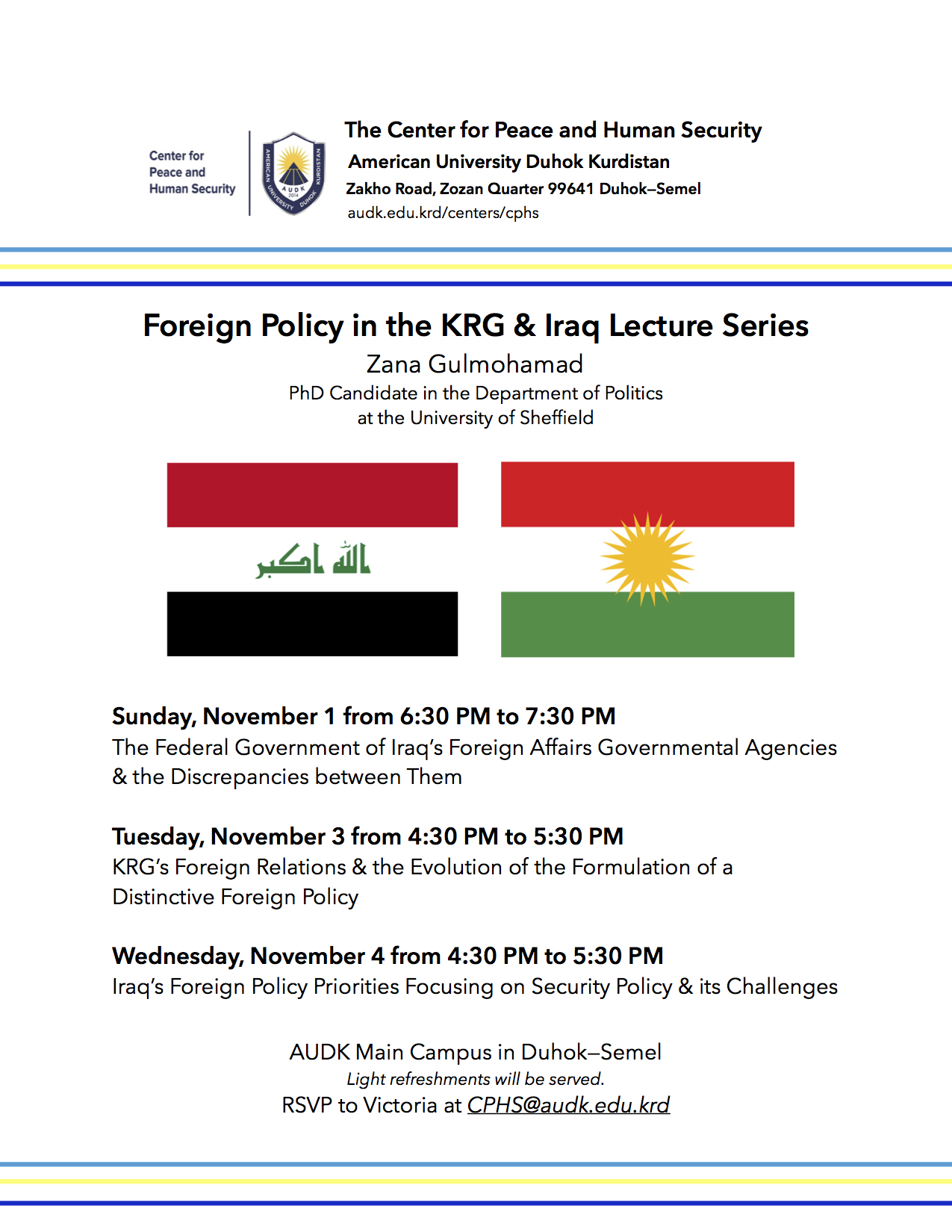
Foreign Policy in the KRG & Iraq Lecture Series

30 10 2015

CPHSfplecture


Conference: A New Middle East – Persistent Authoritarianism(s) or Prospects for Democratization?

29 10 2015

thumb_MIDDLE-EAST-PRGRM-BASKI-page-001
MIDDLE-EAST-PRGRM-BASKI-page-002


Kurdish Studies Summer School

15 10 2015

uollogoKurdish Studies Summer School – Kurdish Politics and Society: Contemporary and Historical Perspectives, 27-29 June 2016, University of Leicester 

Please join us at this three-day intensive summer school focusing on Kurdish politics and society. This is the first-ever Kurdish Studies Summer School and will bring together scholars, postgraduate students and community advocates. This summer school is designed to engage postgraduate students (Master and PhD), independent scholars, recent graduates in the field of Kurdish Studies as well as community advocates in the politics, society and culture of Kurds.

Key Information

Dates: Monday 27th June, Tuesday 28th June and Wednesday 29th June 2016
Place: University of Leicester, United Kingdom
Registration Fees: Early registration fee is £250; Registrations after 10th December 2015: £300
Registration fees cover tuition and venue costs.

Keynote lecturers

Confirmed keynote lecturers and panelists include:

Professor Christian Allison
Professor Hamit Bozarslan
Dr Necla Acik
Dr Kamran Matin
Dr Ipek Demir

Topics covered

The lectures and workshops will be organized in line with the lecturers’ area of expertise. They will be broadly in these areas:

Area 1: ‘Kurdish language, literature, popular culture and folklore in Kurdistan’

Area 2: ‘Coercion and Violence in Kurdistan and in the Middle East.’

Area 3: ‘International politics, modernisation, and the Kurdish question’

Area 4: ‘Gender and Kurdish Studies’

Area 5: ‘Kurdish Diaspora’

Format

The format of each day is as follows:

1) Opening plenary/keynote lecture by at least one of the invited speakers above, outlining the main approaches and methods employed in their specific field (e.g. Kurdish diaspora).

2) 15 minute presentations by participants which are then followed by feedback from at least one keynote speaker. Group discussion and feedback.

3) Closing session with two student rapporteurs summing up key insights from the day and closing statements.

Evening Events

Film showing and Kurdish dance, depending on interest.

Kurdish Studies Summer School


State-Building in Iraqi Kurdistan Report Release

10 10 2015

image


Call for Papers & Special Session(s): Kurdish Migration

9 10 2015

UniVienlogoSubmissions are invited to the tracks of special sessions on Kurdish Migration and Diaspora at the 4th Turkish Migration Conference 2016 hosted by the University of Vienna from Tuesday 12 July to Friday 15 July 2016.

This particular track aims to attract papers on Kurdish migration and diaspora communities. The conveners particularly encourage comparative and interdisciplinary papers focusing on the following issues, with regards to Kurds, Kurdistan and the Kurdish diaspora, though submissions on any relevant area of interest are welcome: (a) Kurdish migration, border crossings, zones, (b) displacement, asylum and Kurdish migration, (c) borders, regions and languages, (d) nationalism, ethnicity and migration in Kurdish context, (e) checkpoints, minefields and militarized geographies, (f) Kurdish migration and cross- fertilization, (g) mobility, state boundaries and sovereignty, (h) gender and Kurdish migration, (i) Kurdish migration and identity, (j) education and Kurdish migration, (k) Kurdish arts, literature and migration, (l) statelessness, mobility and conflict, (m) trade and mobility, (n) Kurdish migration, sexuality and health, (o) Kurdish migration and the environment.

TMC conferences are unique in its dynamic, complex focus on Turkish migration. The scientific programme organizes papers around thematic topics and includes invited talks, oral presentations and workshops. The conference will start with the Opening Plenary in the late afternoon of July 12th. Given by the two distinguished scholars in migration studies, Thomas Faist and Karen Phalet, the opening session sets the theme and tone for the TMC 2016. In subsequent panels, a number of well-known scholars will contribute to the debates over four days of stimulating exchange.

The Turkish Migration Conferences’ goal is to facilitate the inter-disciplinary exchange of knowledge and provide an outstanding opportunity to meet fellow researchers working on a wide array of topics and themes. Participants in the conference also have the opportunity to submit their work to Migration Letters, Kurdish Studies, Göç Dergisi, Journal of Gypsy Studies. There will also be opportunities to contribute to the edited books. Submissions of papers and posters are welcome from scholars, experts, policy makers and PhD students. We will convene in the W29 building, University of Vienna, one of the oldest universities in Europe. Vienna’s city centre with its historical buildings, museums and exhibitions is only paces away from the conference venue. We look forward to seeing you in Vienna, and if you have any questions please contact us at: welatzeydan@hotmail.com.

Track Conveners: Dr Welat Zeydanlıoğlu, Dr Joost Jongerden, Dr Bahar Başer.

About Turkish Migration Conference

Turkish Migration Conferences were launched in 2012 when the first large scale well attended scholarly academic event on Turkish migration hosted by Regent’s Centre for Transnational Studies in Regent’s Park campus of Regent’s University London. The third conference was hosted by Charles University Prague from 25 to 27 June 2015.

Turkish Migration Conferences entertain a select group of speakers from the US and Europe including Thomas Faist of Bielefeld University (Germany), Philip Martin of University of California Davis (USA), Douglas Massey of Princeton University (USA), Caroline Brettell of Southern Methodist University (USA), Jeffrey Cohen of Ohio State University (USA), Ibrahim Sirkeci of Regent’s University London (UK), Kemal Kirişçi of Bogazici University (Turkey), Nedim Gürsel of CNRS, France, Gudrun Biffl of Krems University (Austria), and Tariq Modood of University of Bristol (UK), and Karen Phalet of KU Leuven (Belgium).

Conference Chair

Ibrahim Sirkeci, Regent’s University London, UK

Jeffrey H. Cohen, Ohio State University, US

Philip L Martin, University of California Davis, US

Track Chairs

Samim Akgönül, University of Strasbourg, France

Ayşe Gedik, Middle East Technical University, Turkey

Medine Sivri, Osmangazi University, Turkey

Güven Şeker, Celal Bayar University, Turkey

Ali Tilbe, Namik Kemal University, Turkey

Mustafa Murat Yüceşahin, Ankara University, Turkey

Welat Zeydanlioglu, Kurdish Studies, Sweden

Sinan Zeyneloğlu, Zirve University, Turkey

Conference Advisory Committee

Ela Gökalp Aras, Gediz University, Turkey

İlker Ataç, University of Vienna, Austria

Bahar Başer, Coventry University, United Kingdom

Gudrun Biffl, Danube University Krems, Austria

Tuncay Bilecen, Kocaeli University, Turkey

Sema Buz, Hacettepe University, Turkey

Dilek Cindoğlu, Abdullah Gul University, Turkey

Yaprak H. Civelek, Istanbul Arel University, Turkey

Ali Çağlar, Hacettepe University, Turkey

Özlen Çelebi, Hacettepe University, Turkey

Didem Danış, Galatasaray University, Turkey

Saniye Dedeoğlu, Muğla Sıtkı Koçman University, Turkey

Oğuzhan Ömer Demir, Giresun University, Turkey

Mehmet Ali Dikerdem, Middlesex University, UK

Dalkhat Ediev, IIASA and NCSHT Academy, Austria

Nuray Ekşi, Yeditepe University, Turkey

Tahire Erman, Bilkent University, Turkey

Thomas Faist, Bielefeld University, Germany

Sarah E. Hackett, Bath Spa University, UK

Joost Jongerden, Wageningen University, Netherlands

Sibel Kalaycıoğlu, Middle East Technical University, Turkey

Ayhan Kaya, Istanbul Bilgi University, Turkey

Mehmet Rauf Kesici, Kocaeli University, Turkey

Kuvvet Lordoğlu, Kocaeli University, Turkey

Altay Manço, Institut de Recherche, Formation et Action sur les Migrations, Belgium

Fulya Memişoğlu, Çukurova University, Turkey

Nadja Milewski, University of Rostock, Germany

Mustafa Mutluer, Ege University, Turkey

Liza M. Mügge, University of Amsterdam, Netherlands

Mehmet Okyayuz, Middle East Technical University, Turkey

Maktoba Omar, Edinburgh Napier University, UK

Karen Phalet, KU Leuven, Belgium

Barbara Pusch, Orient-Institut Istanbul & Istanbul Policy Center (Sabanci University), Turkey

Katharine Sarikakis, University of Vienna, Austria

Deniz Şenol Sert, Özyeğin University, Turkey

Levent Soysal, Kadir Has University, Turkey

Sabine Strasser, University of Bern, Switzerland

Wadim Strielkowski, Charles University Prague, Czech Republic

Betül Dilara Şeker, Celal Bayar University, Turkey

Güven Şeker, Celal Bayar University, Turkey

Helga Rittersberger Tılıç, Middle East Technical University, Turkey

Deniz Eroglu Utku, Trakya University, Turkey

Östen Wahlbeck, University of Helsinki, Finland

Sutay Yavuz, TODAIE, Turkey

Pınar Yazgan, Sakarya University, Turkey

Local Organisation Committee

Ali Tilbe, Namık Kemal University, Turkey

Anett Condick-Brough, Regent’s University London, UK

Burcu Oskay, Transnational Press London, UK

Deniz Özalpman, University of Vienna, Austria

Emine Akman, Celal Bayar University, Turkey

Fethiye Tilbe, Namık Kemal University, Turkey

Güven Şeker, Celal Bayar University, Turkey

Ibrahim Sirkeci, Regent’s University London, UK

İlker Ataç, University of Vienna, Austria

  1. Murat Yüceşahin, Ankara University, Turkey

Sidar Çınar, Regent’s University London, UK

Important Deadlines:

19/01/ 2016: Abstract/Paper submission deadline

12/04/2016: Early bird registration deadline

12/05/2016: Submission of revised versions of accepted abstracts

12/07/2016: Final registration deadline to attend

On behalf of the Conference Committee

Contact: TurkMig@gmail.com  | Website: TurkishMigration.com  | @TurkMig


New Book: Records of the Kurds – Territory, Revolt and Nationalism, 1831–1979

6 10 2015

xlogo.jpg.pagespeed.ic.o8P1d74RttAnita Burdett (ed.)

Cambridge University Press, 2015

ISBN: 9781840973259

These nine thousand pages of facsimile documents trace early insurgencies directed by the Kurdish people against regional and metropolitan powers, and their interrelations with neighbouring tribes and other ethnic groups at historical flash points, from the origins of nationalist sentiments through a series of disparate revolts in the nineteenth century, and then on to a larger, more cohesive and discernible nationalist movement launched in the aftermath of World War I. They concomitantly depict the extent of territories pertaining to the Kurdish ‘homeland’, the use of the term ‘Kurdistan’ generally refers to an agreed geographical area, not to a legal or political entity.

Kurdish populated territory evolved over the nineteenth and twentieth centuries, with some regions becoming entrenched, others subject to constant flux. The map box provides illustrations of the changing territory, or those sections subject to alterations and contestation.

Records of the Kurds: Territory, Revolt and Nationalism, 1831–1979 offers an exhaustive account of Kurdistan’s geography in one of the most extensive documentary collections published to date. The collection includes extensive information on Kurdistan’s mountain passes and pastures; its forts, hamlets, villages, and small and large towns; its natural resources, such as water, oil, and items of trade; its roads, gorges, peaks, ridges, defiles, bridges, valleys, plains, deserts, marshes, and the like. Even the region’s geological, botanical, and zoological specimen are painstakingly catalogued.

This collection provides many highly valuable documents from the period, including those written by prominent Kurdish personalities and organizations, showing in particular detail how the war and post-war world affected the identity and political allegiance of the people of Kurdistan. One of the other key aspects of the set is the insight it provides into the social and political developments in Kurdistan over an extended historical period. It charts the tensions amongst the Kurdish community as well as their interactions with neighbouring communities and their often-uneasy relationships with various states and their representatives. The collection also constitutes an extremely important record of the gradual growth and development of the Kurdish movement over the course of the nineteenth and twentieth centuries.

The Kurdish ‘problem’, as it has often been labelled, has been a historiographical issue as well. The limited study of the area, often prevented by the pressures of regional states, however, is fast changing, and The Records of the Kurds, as the most extensive documentary source to be published so far, will only strengthen this trend and provide scholars from around the world with direct access to these extremely informative British documents.

All relevant documents which could be traced from the surviving records of the Government of India at the British Library, as well as the records of the Foreign Office, War Office, India Office, Colonial Office and Cabinet at the National Archives pertaining to Kurds or to Kurdistan as a regional entity for the period have been sourced and included, with the exception of duplicates and draft documents.

For details click here.


University of Central Florida Appoints First Kurdish Political Studies Endowed Chair in US

30 09 2015

ucfembKurdish Political Studies at the University of Central Florida has a new leader, Güneş Murat Tezcür, Ph.D., the inaugural holder of the Jalal Talabany Kurdish Political Studies Endowed Chair. The Chair is the first of its kind in the United States. It was initiated by a $1 million donation led by Dr. Najmaldin Karim, a neurosurgeon, who currently serves as Governor of Kirkuk Governorate, Kurdistan Regional Government, Iraq. Dr. Karim is also the president of the Washington Kurdish Institute, a non-profit center dedicated to research and education for Kurdish people worldwide.

Dr. Tezcür studies political violence, identity and movements. His articles have appeared or are forthcoming in various scholarly journals, such as the American Political Science Review, Foreign Policy Analysis, International Studies Perspectives, Journal of Peace Research, Journal for the Scientific Study of Religion, Law and Society Review, Nationalities Papers, Party Politics, Politics & Gender and Political Research Quarterly. He is also the author of Muslim Reformers in Iran and Turkey: The Paradox of Moderation (University of Texas Press, 2010). Dr. Tezcür’s research has been supported by grants from the National Science Foundation, the United States Institute of Peace and the Harry Frank Guggenheim Foundation. In addition to English, he conducts his research in Kurdish, Persian and Turkish. He also serves on the editorial board of the International Journal of Middle East Studies.

In contemplating the role of the Chair, Dr. Tezcür said, “I am honored to have been appointed. Kurdish aspirations for greater rights and power have the potential to remake the Middle East – with global implications. I am very much looking forward to this unique opportunity to advance public interest in and scholarly studies of Kurdish politics in the United States and beyond.”

The Chair is designed to help UCF expand its offerings related to Kurdish issues. Specifically, the mission of the Chair includes teaching, research and scholarly pursuits centering on Kurdish Political Studies, and further developing recognized excellence in that field. It will also facilitate fellowships, distinguished visitors, public forums, courses, workshops and other offerings that objectively present and discuss policies and conditions affecting the security, peace and democratic governance of the Kurdish people, including episodes of mass violence such as the Anfal genocide.

Dr. Kerstin Hamann, who heads the Political Science Department and co-chairs the affiliated Kurdish Political Studies Program, said, “We are very excited to house the Jalal Talabany Kurdish Political Studies Endowed Chair. The Chair establishes the department as a national and international center for the analysis of Kurdish politics. The Chair also makes a significant contribution to our Ph.D. program in Security Studies, given the substantial role Kurdish issues have in Middle Eastern and international politics. We are pleased, as well, to welcome Dr. Tezcür, an outstanding scholar of Kurdish political issues who has published widely in the top Political Science journals.”

John C. Bersia, Special Assistant to the President for Global Perspectives and co-chair of the Kurdish Political Studies Program, said, “The timing of this appointment is critical. News headlines underscore on a daily basis how the Kurds are playing an increasingly important role in the affairs of many countries, especially Iraq, Syria, Turkey and Iran.”

“The Chair – the first in the College of Sciences – is a welcome addition,” said Michael Johnson, Ph.D., Dean of the College of Sciences.  He added, “It complements the growing international focus of the Department of Political Science, the College and the university, and will encourage the scholarly examination of a crucially significant subject that has received insufficient attention.”

For details click here.