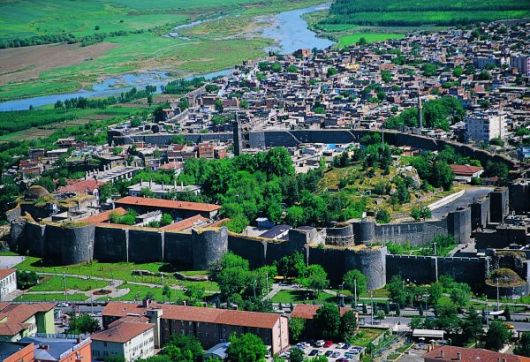
The second issue of Kurdish Studies is out‏

20 07 2014

Kurdish Studies

Volume 2, Issue 1, May 2014

ISSN: 2051-4883 | e-ISNN: 2051-4891

http://www.kurdishstudies.net/

http://www.tplondon.com/journal/index.php/ks/

Kurdish Studies journal is an interdisciplinary and peer-reviewed journal dedicated to publishing high quality research and scholarship. Kurdish Studies journal is initiated by the members of the Kurdish Studies Network (KSN) and supported by a large group of academics from different disciplines. The journal aligns itself with KSN’s mission to revitalise and reorient research, scholarship and debates in the field of Kurdish studies in a multidisciplinary fashion covering a wide range of topics including, but not limited to, economics, history, society, gender, minorities, politics, health, law, environment, language, media, culture, arts, and education.

Kurdish Studies offers a universally accessible venue where sound scholarship and research as well as reviews and debates are disseminated. The journal establishes a genuine forum for serious discussion and exchange within the Kurdish Studies community, reaching out to a broad audience of students, professionals, policy makers and enthusiasts alike. Kurdish Studies aims to maintain a fair balance between theoretical analyses and empirical studies. Critical and novel approaches and methods are particularly welcome.

Table of contents

Editorial

Martin van Bruinessen

http://www.tplondon.com/journal/index.php/ks/article/view/348

Articles

The Kurds and Middle Eastern “State of Violence”: the 1980s and 2010s

Hamit Bozarslan

http://www.tplondon.com/journal/index.php/ks/article/view/349

Was Halabja a turning point for the poet Buland al-Haydari?

Hilla Peled-Shapira

http://www.tplondon.com/journal/index.php/ks/article/view/270

Dengbêjs on borderlands: Borders and the state as seen through the eyes of Kurdish singer-poets

Wendelmoet Hamelink, Hanifi Barış

http://www.tplondon.com/journal/index.php/ks/article/view/350

Interview

Nationalism, cosmopolitanism and statelessness: An interview with Craig Calhoun

Barzoo Eliassi

http://www.tplondon.com/journal/index.php/ks/article/view/351

Obituary

Obituary: Prof Dr Ol’ga Zhigalina (1946–2013)

Khanna Omarkhali

http://www.tplondon.com/journal/index.php/ks/article/view/352

Book Reviews

Ulrike Flader, Vera Ecarius-Kelly, Clemence Scalbert-Yücel, Michael M. Gunter, Tozun Bahcheli, Ethem Çoban

http://www.tplondon.com/journal/index.php/ks/article/view/353


For further details, contact:

Welat Zeydanlioglu

Managing editor

editor@kurdishstudies.net

Kurdish Studies is a peer-reviewed scholarly journal.

ISSN: 2051-4883 | e-ISNN: 2051-4891 |http://www.kurdishstudies.net/


Kurdish Studies Conference was a success

19 03 2014

Regents University London

Press Release, 14 March 2014

The Kurdish Studies in the 21st Century Conference was held at Regent’s Park campus on 13th March 2014.

The event was attended by a select group of academics and members of media focused on developments in Kurdish Studies as an academic field. Professor Aldwyn Cooper, the Vice Chancellor of Regent’s University London emphasised the contested statistics on Kurdish populations in the Middle East in his welcoming speech.

Ms Bayan Sami Abdul Rahman, the High Representative of Kurdistan Regional Government to the United Kingdom, in her opening speech appealed for a more structured scholarly work on Kurdish Studies.

Ibrahim Sirkeci, a Professor of Regent’s University London and the Director of Regent’s Centre for Transnational Studies hosting the event, presented data on the growth of overall scholarly output in Kurdish Studies.

The progress in establishing academic ties among academics working in the field was discussed by Dr Welat Zeydanlioglu.

Martin van Bruinessen has shared his own journey of Kurdish Studies which dates back to the early 1970s.

See the full press release here

Find out about the Regent’s Centre for Transnational Studies


New Texts Out Now: Kurdish Studies journal

24 02 2014

Jadaliyya series on “New texts out”: Kurdish Studies, 5 feb 2014.

J: What made you start the journal Kurdish Studies, and who are the scholars involved in its editorial work?

Kurdish Studies (KS): The scholarly field of Kurdish studies has developed significantly over the last few decades, and has become an important field of study. This development expresses itself in the number of active researchers as well as articles and books published in the field of Kurdish Studies, but also in the various disciplines they cover: migration and diaspora studies, history, social sciences, political sciences, cultural studies, anthropology, linguistics, and so on. There has thus been a growing momentum in this field in tandem with the increasing interest in the plight of the Kurds and with the increasing mobilization and geo-political importance of the Kurds in the Middle East.

For the further development of the field of Kurdish studies and in order to tap into as well as represent this momentum or synergy, we believed that the time was ripe for the field to have its own journal. A critical mass had thus been reached in the field in terms of academic output and quality, as well as the general interest in the field, which was not there ten or fifteen years ago. All of this convinced us to take this step.

Another important aspect of our decision to launch the journal was the existence of the Kurdish Studies Network (KSN) since 2009. As an online network, the KSN has successfully managed to bring together the global Kurdish scholarly community and provided its members with a stimulating online environment for exchange of knowledge, expertise, and support. With now close to a thousand members, ranging from undergraduates, to postgraduates, to the biggest names in the field, as well as journalists, policy makers, and analysts, the KSN has functioned as a virtual institute of Kurdish studies. The intensity of information exchange and the level of debate in the network is another indication that Kurdish studies has come into its own as a distinct field of studies. With this in mind, a few members of the KSN went on to establish the journal.

J: What particular topics, issues, and areas does the journal address?

KS: We are an area-studies journal, which means we are interdisciplinary in focus, with an interest in heterogeneous fields of research: the social and political sciences, cultural studies, the humanities, and so forth. We have set the scope very widely and do not want to delimit the boundaries of the field very strictly. Research from all academic disciplines is welcome, as long as this work reaches out to readers of other disciplinary backgrounds. However, we expect most contributions will be from the social sciences and humanities. As Martin van Bruinessen highlights in his editorial in the first issue, we invite “contributions on Kurdistan and the Kurds, including the religious and ethnic minorities in Kurdistan, relations of the Kurds with neighbouring peoples and states, Kurdish enclaves elsewhere in the Middle East, and the modern Kurdish diaspora.”

In the inaugural issue, the diversity of the field was well-represented. Martin van Bruinessen, the editor-in-chief of Kurdish Studies, launches the issue with an editorial that emphasises the increasing growth of the field. In her cutting edge article, Derya Bayir sheds light on Turkey’s historically problematic relationship with ethnic and religious minorities by examining the Turkish Constitutional Court’s anti-democratic interpretation of the Kurdish right to self-determination. The second article, by Andrea Fischer-Tahir, is a fresh and highly insightful contribution to Kurdish media studies: it investigates the strategies of representation deployed by Kurdish newspapers of a quantitative study on genocidal persecution published by a Kurdistan government ministry. The third article, by Choman Hardi, concentrates on a highly important and yet understudied topic, namely that of the growing women’s movement in Iraqi Kurdistan at a time when that part of Kurdistan is going through intensive societal, political, and economic transformation. Finally, Ofra Bengio and Bruce Maddy-Weitzman deploy an interesting and much-needed comparative analysis of the political and cultural activities of the Kurdish and Berber diasporas.

The first issue of Kurdish Studies also contains several reviews by top scholars of the field of recently published books on the Kurds.

J: How does Kurdish Studies connect to and/or depart from other journals in Middle Eastern and/or Kurdish Studies?

KS: There is at the moment no other academic peer-reviewed journal in Kurdish Studies published in English today. This fact, by itself, sets Kurdish Studies apart from all other journals. That said, a few other features of Kurdish Studies further distinguish it from other journals in Middle Eastern studies. For example, all the article abstracts are translated into the two main dialects of Kurdish, which we believe is a small but important service to academics and students in the region. The wide coverage and strength of the editorial board in particular, but the support and backing of the Kurdish studies scholarly community in general, is another distinguishing asset. Kurdish Studies can be said to be a direct outcome/product of the Kurdish Studies Network, in the sense that the very contacts established there and the exchanges made through this network accumulated the energy and trust for some of its members to take the step to establish the journal. Kurdish Studies can therefore be said to have a direct and organic link to the very community it aims to represent.

J: Who do you hope will follow the journal, and what sort of impact would you like it to have?

KS: We expect academics and students, as well as diplomats, policy makers, journalists, and civil society activists dealing with the Kurds, Kurdistan, and Middle Eastern affairs generally will find it interesting and useful. We hope to be a channel for representing cutting edge scholarly knowledge produced in this field, as well as being the primary platform for the academic dialogue and exchange underway.

It is our ambition to aim for the highest possible quality and standard. We want to establish ourselves as a serious academic journal, which means that we have a double-blinded review process, with a minimum of three expert reviewers/referees. We also hope contribute to setting the research agenda and provide a focus on issues and themes that we believe have received insufficient attention in Kurdish studies. For example, we welcome the fact that almost all the articles in the first issue of the journal were written by women scholars, with one article specifically concentrating on the women’s movement in Iraqi Kurdistan.

J: How do you see the potential for Kurdish Studies to affect contemporary engagements with Kurdish studies within the larger field of Middle East studies?

KS: In this regard, we aim to set the tone and establish the journal as a trusted source of authority in the field. This, we believe, comes with independence and a strict practice of academic rigor.

Excerpt from Kurdish Studies, Volume 1, Issue 1

Martin van Bruinessen, “Editorial”

Kurdish studies have, in the past few decades, come to be established as a respectable field of academic investigation and publication, after long having been as marginal in academia as the Kurds themselves were in the politics of the Middle East. The received wisdom, in many Western academic institutions, was that it was essential to retain access to the “field” and that permits to carry out field research in such pro-Western and relatively accessible countries as Turkey and Iran would continue to be granted as long as scholars stayed away from sensitive issues—and the Kurds were definitely one of the most sensitive of those issues. Turkey and Iran, Iraq and Syria perceived their Kurdish citizens as a major security issue, and scholarly interest in the Kurds aroused suspicions of imperialist meddling in Arab, Persian, or Turkish affairs.

The imperialist heritage of Kurdish studies cannot be denied; we owe many of the best early studies of Kurdish language, culture, and society to Christian missionaries of various denominations and Russian, British, and French consuls and intelligence officers. This is hardly unique to Kurdish studies, however; the same is true of Turkish, Arabic, and Iranian studies and of Orientalist knowledge in general. The articles “Kurdistan” and “Kurds” in the first edition of the Encyclopaedia of Islam, which present an excellent overview of the state of the art in the 1920s, were written by the great scholar Vladimir Minorsky, who had been a Russian consul in Tabriz and a member of the international commission that demarcated the Ottoman-Persian border. These articles retain their value as a highly informative introduction to the history of the Kurds and their land. Half a century later, the articles were updated for the second edition of the Encyclopaedia by Father Thomas Bois, the last representative of the missionary scholars of the Kurds.

Bois had earlier written, under the pseudonym of Lucien Rambout, one of the first overviews of Kurdish uprisings and repression in the modern nation states of Turkey, Iran, and Iraq (Les Kurdes et le droit, 1947). This was a new genre of writing on the Kurds, which came to dominate the literature during the second half of the twentieth century, consisting mostly of popular works written by journalists and travellers, self-styled strategic analysts and human rights activists. More recently, sociologists and political scientists have produced more theoretically informed studies of Kurdish political movements and state policies towards the Kurds. Studies of the Kurdish movement have continued to make up a major portion of Kurdish studies.

The development of academic specializations depends on the availability of institutional support in the form of funding, specialized teaching and research institutes, libraries, and journals. Whereas numerous universities have distinct institutes or departments for Turkish, Iranian, or Arabic and Islamic studies, institutions specialized in Kurdish studies are few and far between—the Oriental section of the Soviet (now: Russian) Academy of Sciences and the Institute of Oriental Languages and Civilizations in Paris were for a long time the only academic institutions with small Kurdish departments. The establishment of a Kurdish Academy of Sciences (Korî Zanyarî Kurd, later reduced to Kurdish Branch of the Iraqi Academy of Sciences) in Baghdad after the March 1970 agreement, and the more recent establishment of a Mustafa Barzani Chair in Washington, DC and a Jalal Talabani-funded department in Exeter show the dependence of academic institutionalization on political factors. Private initiatives, such as the Kurdish Institute of Paris and the Kurdish Libraries of Brooklyn and Stockholm, each with their own publications, have been equally important as institutional support for the development of Kurdish studies. These institutions would not have been possible without the emergence of a well-connected Kurdish diaspora and, in the French and Swedish case, benevolence towards and sympathy with the Kurds among segments of the political elite.

Most of the scholars who wrote dissertations and scholarly articles on Kurdish subjects in the course of the past few decades, however, were not affiliated with one of the specialized departments of Kurdish studies but were educated, or worked, in departments of sociology, anthropology, politics, law, economics, history, linguistics, literature, cultural studies, geography, archaeology, or migration studies. This corresponds with a general shift in academia away from area studies towards education and research in one of those disciplinary frames, and with the increased emphasis on theoretically informed research. One positive aspect of this shift has been the increasing sophistication of at least some recent work on the Kurds; another, the absence of the old political fears of all things Kurdish in departments that are not focusing specifically on the Middle East. The downside, however, has been that most graduate students have had to do their studies without the benefit of regional expertise in their supervisors and their immediate academic surroundings.

Since its establishment, the Kurdish Studies Network (KSN), founded by Welat Zeydanlıoğlu in 2009, has made a great contribution to compensating for this lack of Kurdish expertise in the working environment of most of our colleagues. It has functioned as a virtual institute of Kurdish studies, providing its members with a stimulating environment, a repository of readily available factual knowledge, alerts on new publications and online resources, and a forum for discussion of a broad range of issues related to Kurdish studies. The number of actively participating members is the best indication that, around the world, in numerous universities and a wide range of disciplines, there is now a considerable community of scholars who share an interest in Kurdish studies. The peer-reviewed journal Kurdish Studies, which sees the light with this issue, is a logical next step in the institutionalization of the field of studies and the network, and will offer a more “established” platform for academic communication.

The editors do not want to delimit the subject of Kurdish studies very strictly. The journal invites contributions on Kurdistan and the Kurds, including the religious and ethnic minorities in Kurdistan, relations of the Kurds with neighboring peoples and states, Kurdish enclaves elsewhere in the Middle East, and the modern Kurdish diaspora. Contributions from all academic disciplines are welcome, provided they do not exclusively address narrow specialist issues but reach out to readers of other disciplinary backgrounds. A clear conceptual or theoretical framework is desirable, but the primary aim of the journal is to enable exchange between colleagues of different parts of the world and different academic specializations who share a general interest in the Kurds and Kurdistan. It is our hope that the journal will be especially useful to the younger generation of scholars, who will be the ones to further raise the intellectual level of Kurdish studies.

Singapore, 22 September, 2013

[The full editorial can also be accessed and downloaded here.]

[Excerpted from Kurdish Studies, Issue 1, Volume 1, by permission of the editors. Copyright © 2013 Kurdish Studies. For more information, or to subscribe to the journal, click here.]


New Book: Ottoman-Iranian Borderlands: Making a Boundary, 1843–1914

8 11 2013

Ottoman-Iranian BorderlandsBy Sabri Ateş

October 2013

Cambridge University Press

Using a plethora of hitherto unused and underutilized sources from the Ottoman, British, and Iranian archives, The Ottoman-Iranian Borderlands (1843–1914) traces seven decades of intermittent work by Russian, British, Ottoman, and Iranian technical and diplomatic teams to turn an ill-defined and highly porous area into an internationally recognized boundary. By examining the process of boundary negotiation by the international commissioners and their interactions with the borderland peoples they encountered, the book tells the story of how the Muslim world’s oldest borderland was transformed into a bordered land. It details how the borderland peoples, whose habitat straddled the frontier, responded to those processes as well as to the ideas and institutions that accompanied their implementation. It shows that the making of the boundary played a significant role in shaping Ottoman-Iranian relations and in the identity and citizenship choices of the borderland peoples.

Table of contents

Introduction 1. The Kurdish frontier in Ottoman-Qajar relations 2. Laying the ground: the concert of Zagros 3. The long journey of the first survey commission 4. The borderland between the Crimean War and Berlin congress 5. Sunnis for the sultan: the Ottoman occupation of northwestern Iran, 1905–12 6. Boundary at last Conclusion.

Sabri Ateş is an Assistant Professor of History at Southern Methodist University in Dallas, Texas. He has published a book in Turkish entitled Tunalı Hilmi Bey: An Intellectual from the Ottoman Empire to Modern Turkey (2009), as well as several articles in Comparative Studies of Asia, Africa and the Middle East and Iranian Studies.

Click for the publisher’s website


The first issue of Kurdish Studies is out‏

3 11 2013

Kurdish Studies

Volume 1, Issue 1, October 2013

ISSN: 2051-4883 | e-ISNN: 2051-4891

www.kurdishstudies.net

http://metapress.com/content/l1477t15336x/

Kurdish Studies journal is an interdisciplinary and peer-reviewed journal dedicated to publishing high quality research and scholarship. Kurdish Studies journal is initiated by the members of the Kurdish Studies Network (KSN) and supported by a large group of academics from different disciplines. The journal aligns itself with KSN’s mission to revitalise and reorient research, scholarship and debates in the field of Kurdish studies in a multidisciplinary fashion covering a wide range of topics including, but not limited to, economics, history, society, gender, minorities, politics, health, law, environment, language, media, culture, arts, and education.

Kurdish Studies offers a universally accessible venue where sound scholarship and research as well as reviews and debates are disseminated. The journal establishes a genuine forum for serious discussion and exchange within the Kurdish Studies community, reaching out to a broad audience of students, professionals, policy makers and enthusiasts alike. Kurdish Studies aims to maintain a fair balance between theoretical analyses and empirical studies. Critical and novel approaches and methods are particularly welcome.

Table of contents

Editorial

Martin van Bruinessen
http://metapress.com/content/a00052586p6q32nn/

Turkey, the Kurds, and the legal contours of the right to self-determination

Derya Bayir

http://metapress.com/content/th638244116m4500/

Science-based truth as news: Knowledge production and media in Iraqi Kurdistan

Andrea Fischer-Tahir

http://metapress.com/content/365q358182j5p602/

Women’s activism in Iraqi Kurdistan: Achievements, shortcomings and obstacles

Choman Hardi

http://metapress.com/content/j71xu72228441534/

Mobilised diasporas: Kurdish and Berber movements in comparative perspective

Ofra Bengio, Bruce Maddy-Weitzman

http://metapress.com/content/751148011116366k/

Book reviews
Janet Klein, David Romano, Michael M. Gunter, Joost Jongerden, Atakan Ince, Marlies Casier

For further details, contact:

Welat Zeydanlioglu

Managing editor

editor@kurdishstudies.net

Kurdish Studies is a peer-reviewed scholarly journal.

ISSN: 2051-4883 | e-ISNN: 2051-4891 | www.kurdishstudies.net


New Book: Honor and Violence against Women in Iraqi Kurdistan

14 10 2013

By Minoo Alinia

Palgrave, 2013.

ISBN: 978-1-137-36700-6, ISBN10: 1-137-36700-8

Examining violence against women in the name of honor in Iraqi Kurdistan, this study renders a unique contribution by offering an intersectional perspective. Minoo Alinia reveals the links between destructive, state-sanctioned honor discourse and notions of manhood as they are shaped by a resistance culture dedicated to the struggle against ethnic oppression. Supplying socioeconomic, historical, and political contexts, this book challenges explanations rooted in ideas of individual or cultural pathology. It demonstrates that, in Iraqi Kurdistan, women’s bodies have become the battleground for clashes between different masculinities, identity politics, and political projects.

Table of Contents

1. Locating the Book  2. Framing the Historical and Political Context of Oppression and Resistance in Iraqi Kurdistan  3. Intersecting Oppression and the Multiplex of Violence against Women  4. Policing Patriarchy: Honour, Violence, and Manhood 5. Women Opposing Violence: Room for Resistance and Spaces of Empowerment  6. Forced or Arranged Marriage and Women’s Responses 7. Suicide as Protest 8. Concluding Remarks

Minoo Alinia is a Researcher at Hugo Valentin Centre, Uppsala University, Sweden and a teacher at Uppsala University’s National Centre for Studies of Men’s Violence Against Women. She received her PhD in Sociology from Goteborg University, Sweden.

http://us.macmillan.com/honorandviolenceagainstwomeniniraqikurdistan/MinooAlinia


Stones and apples for changing Kurdistan’s universities

2 10 2013
Dlawer Ala'Aldeen

Prof Ala’Aldeen swapped the lecture hall for re-inventing the university system

BBC News – By Mandy Garner

1 October 2013

Professor Dlawer Ala’Aldeen had tomatoes, stones and apples thrown at him. He faced countless demonstrations.

The reason for this hostility, facing the microbiologist from the University of Nottingham, was his controversial attempt to reform the university system in his birthplace of Kurdistan.

Prof Ala’Aldeen was the architect of plans to improve the quality and to internationalise higher education in Iraqi Kurdistan.

He says he was up against “deeply entrenched interests, people, institutions and long stagnant cultures”.

The region, autonomous for two decades in the wake of the Gulf War, had inherited a post-Saddam university system that Prof Ala’Aldeen has described as “grossly outdated” and designed for a closed, centralised country.

In 2009 Professor Ala’Aldeen was given a secondment away from his job as professor of clinical microbiology at Nottingham University in the UK.

He stepped from academic life in the English midlands into the role of Kurdistan’s higher education minister, a post he held until last year.

‘Crisis of quality’

Prime Minister Barham Salih, a good friend, chose him for his knowledge of the higher education system and the series of critical articles on education and governance he had written in the years up to his appointment.

Barham Salih’s election manifesto had included significant support for higher education and training to support Kurdistan’s large population of under 20 year olds.

There were already plans for more scholarships to send talented students to study overseas.

Within a week of being appointed, Prof Ala’Aldeen had written up a radical vision document and it was quickly endorsed by the cabinet.

Higher education in Kurdistan was suffering a major crisis of quality, capacity and infrastructure.

There was a consensus in support of reform and it helped that Prof Ala’Aldeen had been very critical of the government in the past.

The reforms, which planned to improve the quality and accreditation of university teachers, brought considerable opposition from student and teacher organisations as well as businesses linked with the burgeoning market in private universities.

Several new private universities were threatened with closure, much to the anger of their staff and prospective students who had paid fees for their courses.

“Many teachers had been licensed prematurely. There were 11 private universities when I started with 18 more waiting to be opened. These mushrooming private colleges were relying on the same pool of resources as the public universities which lacked staff and facilities,” Prof Ala’Aldeen says.

The problem of staffing was particularly acute in medicine, pharmacy and dentistry and in postgraduate studies.

Closed universities

But Prof Ala’Aldee faced protests and opposition.

He was accused of trying to transplant the UK system onto Kurdistan, something he vehemently denies since he was educated and worked in his home region, before coming to study in the UK.

“I knew the system from the inside and studied what had happened in similar countries. I wanted to apply international principles of quality, but tailor-made to Kurdish traditions,” he says.

He responded by redoubling his efforts to communicate the purpose of the reforms, which also included curriculum development, moving beyond a single teacher delivering a lecture to a class, the introduction of an electronic admissions system and reforming the teaching of PhDs.

In the end, the government closed three private universities as well as five health-related colleges, three pharmacy colleges and two dentistry ones.

“If we had allowed the system to keep evolving as it was it would have taken at least a generation to fix it – a generation would have been wasted. We knew we had to act fast. It was a risky policy, but it would have been far riskier to do nothing,” he says.

The speed of his action was criticised as were aspects of the efforts to improve teaching standards, such as student feedback being used to measure teacher performance and pay. There was also opposition to teachers being asked to engage in professional development once a week.

Prof Brendan O’Leary, director of the programme in ethnic conflict at the University of Pennsylvania, says that a longer process might have worked better.

But he says it was against a background when unprecedented changes were happening in Kurdish society as the region opened up to foreign investment.

“The Kurdistan region is going through a difficult and fast-paced transformation.

“Ideally a long and rich discussion is needed to agree new institutional conditions to enable higher education to flourish in a region emerging from decades of destruction, war, genocide, internal fighting, academic isolation and lack of resources.

“University and institutional reforms are more likely to succeed if all the stakeholders have clear ideas on what to do, when, and at what pace. One should not be surprised if people with vested interests fear reforms,” said Prof O’Leary.

No consensus

Thomas Hill, assistant professor at New York University Center for Global Affairs, adds: “I do not believe there is consensus even now that the reforms the former minister wanted to implement would have been in the best interest of the Kurdistan region.

“There are many, many people with very conservative views within the higher education sector in the Kurdistan region and many did not and do not like the progressive path the former minister was plotting.”

There were areas in which vested interests remained unmoved. Prof Ala’Aldeen could not increase the independence of universities.

The government continues to choose university leaders and universities have been totally dependent on government funding.

Prof Ala-Aldeen put together draft legislation on institutional autonomy, but says the challenge to the status quo was too great to push it through.

He is in close touch with the current government and is pleased that the reforms to improve quality have been maintained, despite the fact that there is still not consensus in favour of them, and says the scholarship programme is already making a difference.

“Almost 3,000 students have studied abroad, the majority in the UK. Half of these are or will be back by the end of this year. They will provide leadership and bring a breath of fresh air. They will link their institutions to the outside world and break Kurdistan’s academic isolation.”

Although Kurdistan has its own particular circumstances, Prof Ala’Aldeen says that the problems facing the university system are not unique – and that the model for modernisation could be applied elsewhere in the Middle East.

“The problems are generic and the solutions can be implemented anywhere in the world.”

Commentators on Kurdistan’s politics agree. Professor O’Leary says: “The Kurdistan region, Iraq and several other states in the Middle East are going through dramatic changes, and in some cases, deeply regrettable authoritarian restorations.

“Most institutions are highly politicised in these societies. If the Kurdistan region can successfully reform its education system, including higher education, it can provide a model for the wider Middle East.”


New Book: The Kurdish Spring: Geopolitical Changes and the Kurds

22 08 2013

Edited by Mohammed M.A. Ahmed and Michael M. Gunter
Mazda Publishers, 2013
Bibliotheca Iranica: Kurdish Studies Series #12

http://mazdapublisher.com/BookDetails.aspx?BookID=320

Description

In the midst of all the changes the Arab Spring has brought in Egypt, Tunisia, and Libya, among others, the intelligent lay, media, and policy worlds have paid much less attention to what might be called the Kurdish Spring: Demands for meaningful democracy along with cultural, social, and political rights and their immediate implementation. Or as Ofra Bengio recently described it: “The Kurdish movement is now crystallized in almost all parts of Kurdistan. The weakening of the relevant states, alongside the tectonic sociopolitical changes taking place in the region as a whole, may end up changing the strategic map of the Middle East. Forged by the Great Powers after World War I, the borders separating the Kurds of Iraq, Turkey, Syria and Iran no longer appear as sacred or secure as they once did.”

However, before surveying this new climate, it also should be noted that the Kurdish version of the Arab Spring did not just begin in 2011, but in some ways has been going on for decades: In Turkey (at least since the Kurdistan Workers Party (PKK) formally began its insurgency in August 1984), as well as in Iraq since the days of Mulla Mustafa Barzani beginning in the early 1960s, but especially since the end of the two U.S. wars against Saddam Hussein in 1991 and even more in 2003. These two wars led to the creation of the Kurdistan Regional Government (KRG) in northern Iraq, the most successful attempt at Kurdish statehood in modern times.

On a lesser scale Iran too has long been going through its own off again/on again Kurdish Spring, the Mahabad Republic in 1946 being the most famous example. Until recently, the Iranian Kurds were bitterly divided into several competing parties, constant protests, and, in the case of the Kurdistan Free Life Party (PJAK) ensconced in the Iraqi Kandil Mountains just across the border from Iran, even armed struggle against the Iranian regime. In the past year, however, a more-or-less cease-fire has fallen over the Iranian Kurds and little has been heard from them. Some speculate that this might simply be the prelude to the next explosion in the Kurdish world.

Finally, in Syria, where the Kurdish population is much smaller and not as geographically united as it is in the other three states, the Kurds—in part inspired by the rise of the KRG—have broken out of their muted and divided existence to partially join the anti-Assad movement: First in protest against the assassination on October 7, 2011 of Mishaal Tammo, one of their most promising leaders, and subsequently as part of the much larger revolt against the Assad regime. Although the Syrian Kurds have taken a much less active role against Assad than other Syrian dissidents, since July 2012, they have enjoyed de facto autonomy due to Assad’s strategic withdrawal from the Kurdish northeast of the country. The purpose of this edited book is to survey the Kurdish Spring in the aftermath of the Arab Spring that began in late 2010 and early 2011. Approximately 13 articles written by scholarly experts on the Kurds will analyze the overall Kurdish Spring as well as individual aspects of the Kurdish Spring in Iraq, Turkey, Iran, Syria, and the Diaspora.

Table of Contents

Introduction

Maps
Part I.  Overview

Chapter 1
Canvassing the Kurdish Spring
Michael M. Gunter

Chapter 2
The Kurdish Spring and Its Impact on the Middle East
Ofra Bengio

Chapter 3
Central State Weakness and Kurdish Opportunities
David Romano

Chapter 4
The Kurdish Spring and the Changing Geopolitics of the Middle East
Michael B. Bishku

PART II. The Kurds of Iraq

Chapter 5
Kurdish Spring, Iraqi Kurdistan
Mohammed M.A. Ahmed

PART III. The Kurds of Turkey

Chapter 6
Turkey’s Kurdish Movement and the AKP’s Kurdish Opening:
A Kurdish Spring or Fall?
Marlies Casier, Joost Jongerden, and Nick Walker

Chapter 7
Springtime: The Kurdistan Workers Party (PKK) and the Quest for
Radical Democracy
Joost Jongerden and Ahmet Hamdi Akkaya

PART IV. The Kurds of Syria

Chapter 8
The Syrian Kurds in “Transition to Somewhere”
Eva Savelsberg and Jordi Tejel

Chapter 9
The Kurdish Autonomy Bid in Syria: Challenges and Reactions
Harriet Allsopp

PART V. The Kurds of Iran

Chapter 10
The Kurdish Spring: The Aftermath in Iran
Nader Entessar

Part IV. The Kurdish Diaspora

Chapter 11
Producing Knowledge and Controlling the Narrative:
Transnational Dimensions of “Kurdish Spring”
Vera Eccarius-Kelly

Chapter 12
Kurdish Spring in Diaspora? Austria and Its Kurds
Thomas Schmidinger

Dr. Mohammed M. A. Ahmed is the Executive Director and founder of the Ahmed Foundation for Kurdish Studies, a non-profit and non-partisan organization. He has published numerous articles, co-edited four books with Professor Michael Gunter, and authored two books: “The Kurds, Shiites and Sunni Arabs Compete for Supremacy” in Iraq and the “Iraqi Kurds and Nation-Building.”  Dr. Ahmed has lectured at the University of Baghdad and worked for the United Nations Food and Agricultural Organization, U.N. Economic and Social Commission for West Asia (ESCWA) in Beirut and the U.N. Department for Technical Cooperation in New York. He holds M.S. and PhD in Agricultural Economics.

Michael M. Gunter is a professor of political science at Tennessee Technological University in Cookeville, Tennessee and teaches during the summers at the Megatrend International University Vienna in Austria. He also teaches for the U.S. government area studies program in Washington, D.C. He is the author of numerous critically praised scholarly books on the Kurdish question, the most recent being Kurdish Historical Dictionary, 2nd ed., 2011; “The Kurds Ascending: The Evolving Solution to the Kurdish Problem in Iraq and Turkey,” 2nd ed., 2011; “The Kurdish Predicament in Iraq: A Political Analysis,” 1999; and “The Kurds and the Future of Turkey,” 1997. In addition, he is the co-editor (with Mohammed M. A. Ahmed) of “The Kurdish Question and the 2003 Iraqi War”, (Mazda Publishers) 2005; and “The Evolution of Kurdish Nationalism,” (Mazda Publishers) 2007. He has also published several other scholarly books and more than 150 scholarly articles on the Kurds, Turkey, Armenians, numerous other topics dealing with the Middle East, United Nations, and other topics in such leading periodicals as the Middle East Journal, Middle East Quarterly, Middle East Policy, Current History, Middle East Critique, Foreignpolicy.com, Third World Quarterly, Journal of Muslim Minority Affairs, Orient, Insight Turkey, Worth (Robb Report), American Journal of International Law, World Affairs, Orbis, and International Organization, among others. In addition, he was a Senior Fulbright Lecturer in International Relations in Turkey. He also has held Fulbright awards for China and Israel. Currently he is the secretary-general of the EU Turkey Civic Commission, an NGO working within the European Union Parliament to promote further democratization in Turkey to facilitate its accession to the EU. He has been interviewed about the Kurdish question and the Middle East on numerous occasions by the international and national press.


New Book: The Kurdish Question in Turkey: New Perspectives on Violence, Representation and Reconciliation

19 08 2013

Large ImageEdited by Cengiz Gunes and Welat Zeydanlioglu

Routledge, 2013

Exeter Studies in Ethno Politics

http://www.routledge.com/books/details/9780415830157/

Description

Almost three decades have passed since political violence erupted in Turkey’s south-eastern regions, where the majority of Turkey’s approximately 20 million Kurds live. In 1984, the Kurdistan Workers’ Party (PKK) initiated an insurgency which intensified in the following decades and continues to this day. Kurdish regions in Turkey were under military rule for more than a decade and the conflict has cost the lives of 45,000 people, including soldiers, guerrillas and civilians. The complex issue of the Kurdish Question in Turkey is subject to comprehensive examination in this book.

This interdisciplinary edited volume brings together chapters by social theorists, political scientists, social anthropologists, sociologists, legal theorists and ethnomusicologists to provide new perspectives on this internationally significant issue. It elaborates on the complexity of the Kurdish question and examines the subject matter from a number of innovative angles.

Considering historical, theoretical and political aspects of the Kurdish question in depth and raising issues that have not been discussed sufficiently in existing literature, this book is an invaluable resource for students and scholars of Nationalism and Conflict, Turkish Politics and Middle Eastern politics more broadly.

Table of Contents

Foreword by Hamit Bozarslan

Introduction: Turkey and the Kurds Cengiz Gunes and Welat Zeydanlioglu

1 The Role of the Judicial System in the Politicide of the Kurdish Opposition– Derya Bayir

2 The Representation of Democratic Society Party (DTP) in Mainstream Turkish Media – Derya Erdem

3 Mobilizing the Kurds in Turkey: Newroz as a Myth – Delal Aydin

4 The State Sovereignty and the Politics of Fear: Ethnography of Political Violence and the Kurdish Struggle in Turkey – Ramazan Aras

5 Re-defining the Role of Women within the Kurdish National Movement in Turkey in the 1990s – Necla Acik

6 Taking to the Streets! Kurdish Collective Action in Turkey – Kariane Westrheim

7 Repression or Reform? An Analysis of AKP’s Kurdish Language Policy – Welat Zeydanlioglu

8 Confederalism and Autonomy in Turkey: The Kurdistan Workers’ Party and the Reinvention of Democracy- Ahmet Hamdi Akkaya and Joost Jongerden

9 The Impact of the EU on Minority Rights: Kurdish Ethnic Minority as a Case – Zelal B. Kizilkan-Kisacik

10 Music and Reconciliation in Turkey – Ozan E. Aksoy

11 Elimination or Integration of Pro-Kurdish Politics: Limits of the AKP’s Democratic Initiative – Cuma Cicek

12 Political Reconciliation in Turkey: Challenges and Prospects – Cengiz Gunes

Cengiz Gunes is the author of The Contemporary Kurdish National Movement in Turkey: From Protest to Resistance (London: Routledge, 2012). His main research interests are in identity and nationalism, peace and conflict studies and the international relations of the Middle East.

Welat Zeydanlioglu is the coordinator of the Kurdish Studies Network (KSN) and the managing editor of the peer reviewed journal Kurdish Studies. He has published several articles on the Kurdish question, state violence as well as on the politics of nation-building and modern Turkish and Kurdish history.


New Book: Contesting Kurdish Identities in Sweden: Quest for Belonging among Middle Eastern Youth

25 07 2013

Contesting Kurdish Identities in Sweden - Barzoo EliassiContesting Kurdish Identities in Sweden: Quest for Belonging among Middle Eastern Youth
By Barzoo Eliassi
Palgrave, July 2013

Contesting Kurdish Identities in Sweden explores how young Kurdish immigrants living in Sweden experience and articulate their ideas about citizenship rights, belonging, and statehood as they are shuttled between different citizenship regimes and exclusive structures of belonging. Unlike immigrants who come to Sweden from countries where their groups are dominant, Kurds who immigrate to Sweden re-occupy a minoritized position; they do so not merely under the marginalized label of “Kurd,” common in the Middle East, but under other, overlapping identity categories that are equally negative and loaded. Examining how national and ethnic conflicts in the Middle East continue to impinge on Kurdish youths’ identities in Sweden, Barzoo Eliassi highlights the gulf between a rhetoric of equality and the lived experience of cultural, political, and economic subordination. He argues that, despite important theoretical deliberations about cosmopolitanism and post-nationalism, the international nation-state system has created a global apartheid that divides the world into nations with states and nations without, where the latter continue to be treated as anomalous and politically, legally, and socially superfluous.

Table of Contents

1. Kurdish Diaspora and the Retreat of Multictulturalism in Western Europe
2. Kurdish Identities and Political Struggle in the Middle East
3. Theorizing Belonging and Citizenship in Ethnically Divided Societies
4. Historical Injustices, Uneven Nationalisms and Reproduction of Ethnopolitical Conflict in Diaspora
5. Unequal Citizenship, Home(land)s and Strategies of Dealing with Ethnic Discrimination in Sweden
6. Orientalization of the Kurds and Reproduction of Colonial Categorization by Kurdish Youth in Sweden
7. Conclusion: Struggle for Social Justice and Citizenship Rights

Barzoo Eliassi is a post-doctoral researcher at The Centre for Middle-Eastern Studies, Lund University, Sweden. His research and teaching interests include citizenship studies, social policy, nationalism, cosmopolitanism, multiculturalism, and diaspora studies.


New Book: Minorities in Iran: Nationalism and Ethnicity after Khomeini

25 07 2013

Minorities in Iran: Nationalism and Ethnicity after  Khomeini
By Rasmus Christian Ellin
Palgrave, 2013

Description

Contrary to the popular understanding of Iran as a Persian nation, half of the country’s population consists of minorities, among whom there has been significant ethnic mobilization at crucial stages in Iranian history. One such stage is now: suppressed minority demands, identity claims, and debates on diversity have entered public discourse and politics. In 2005-2007, Iran was rocked by the most widespread ethnic unrest experienced in that country since the revolution. The same period was also marked by the re-emergence of nationalism. This interdisciplinary book takes a long-overdue step toward understanding these highly contentious issues.

Table of Contents

Introduction Identifying a People The Minority Issue Diversity and Order A Nation Defended A Nation Re-Envisioned Conclusion

Rasmus Christian Ellin has a PhD from the University of Copenhagen, Denmark.

Reviews

“Rasmus Christian Elling’s wonderful book on Iran’s major ethnic minorities is a unique and brilliant analysis of the changing role of these ethnic groups. The book is highly recommended for students and scholars of Iran and of ethnic and nationalist questions, and for all thoughtful Iranians.” – Nikki R. Keddie, Professor Emerita of History, UCLA, USA

“In a challenging and well-researched book, Rasmus Christian Elling brings considerable theoretical sophistication to a subtle and acute analysis of the issue, focusing on four key minorities and their histories, particularly since the 1978-79 revolution. This important book, ground-breaking in Iranian Studies, is a major contribution to the political sociology of ethnicity, nationalism, and minority-state relations.” – Richard Tapper, Emeritus Professor, School of Oriental and African Studies, University of London, UK

“This excellent book provides an analytically powerful yet subtle study of competing processes and discourses that shape Iranian cultural diversity. This is a highly erudite and well-written work, built on years of meticulous empirical research. Indeed, Elling has written a wonderful book that will set the standard for the future scholarship in this field.” – Siniša Malešević, Senior Lecturer, National University of Ireland, Galway, Ireland

“Rasmus Christian Elling has addressed the thorny issues of minorities, ethnicity, and national identity in post-revolutionary Iran with such dexterity and care that from now on this book will be on the reading list of any serious scholar examining these topics.” – Mehrzad Boroujerdi, Associate Professor of Political Science, Syracuse University, USA


New Book: Understanding Turkey’s Kurdish Question

5 07 2013

Edited by Fevzi Bilgin and Ali Sarihan

Lexington Books, June 2013

https://rowman.com/ISBN/9780739184035

Front CoverThis edited volume, comprising chapters by leading academics and experts, aims to clarify the complexity of Turkey’s Kurdish question. The Kurdish question is a long-standing, protracted issue, which gained regional and international significance largely in the last 30 years. The Kurdish people who represent the largest ethnic minority in the Middle East without a state have demanded autonomy and recognition since the post-World I wave of self-governance in the region, and their nationalist claims have further intensified since the end of the Cold War. The present volume first describes the evolution of Kurdish nationalism, its genesis during the late 19th century in the Ottoman Empire, and its legacy into the new Turkish republic. Second, the volume takes up the violent legacy of Kurdish nationalism and analyzes the conflict through the actions of the PKK, the militant pro-Kurdish organization which grew to be the most important actor in the process. Third, the volume deals with the international dimensions of the Kurdish question, as manifested in Turkey’s evolving relationships with Syria, Iraq, and Iran, the issue regarding the status of the Kurdish minorities in these countries, and the debate over the Kurdish problem in Western capitals.

Understanding Turkey’s Kurdish Question is an excellent collection of essays on Turkey’s most enduring political problem. It is a timely work enabling to look at the Kurdish question in Turkey from the perspectives of both past and present, from the eyes of both state and society. — Mesut Yegen, Istanbul Sehir University

Table of Contents

Chapter 1: Fevzi Bilgin, Introduction
Part I: The Genesis and the Legacy of Kurdish Nationalism
Chapter 2: Djene Rhys Bajalan, Early Kurdish ‘Nationalists’ and the Emergence of Modern Kurdish Identity Politics: 1851 to 1908
Chapter 3: Oral Çalislar, The Kurdish Issue in Turkey: Social, Political, and Cultural Dimensions
Chapter 4: Fuat Keyman and Umut Özkirimli, The “Kurdish Question” Revisited: Modernity, Nationalism, and Citizenship in Turkey

Part 2: The Kurdish Question Today: The movement, the conflict, and the future
Chapter 5: Cengiz Çandar, On Turkey’s Kurdish Question: Its Roots, Present State, and Prospects
Chapter 6: Michael M. Gunter, The Multifaceted Kurdish Movement in Turkey
Chapter 7: Ali Sarihan, The Two Periods of the PKK Conflict: 1984-1999 and 2004-2010
Chapter 8: Kiliç Bugra Kanat, Ending Ceasefires for Political Survival: The Use of Diversionary Strategies by the PKK Leadership
Chapter 9: Hugh Pope, Turkey and the Democratic Opening for the Kurds
Chapter 10: Gökhan Bacik and Bezen B. Coskun, Explaining Turkey’s Failure to Develop a Political Solution for the Kurdish Problem

Part 3: Civil Society Efforts in Turkey’s Kurdish region
Chapter 11: Mustafa Gürbüz, Revitalization of Kurdish Islamic Sphere and Revival of Hizbullah in Turkey
Chapter 12: Dogan Koç, The Hizmet Movement and the Kurdish Region

Part 4: International Dimensions of the Kurdish Question
Chapter 13: H. Akin Ünver, Turkey’s Kurdish Question, the United States and Europe: Historical Perspective
Chapter 14: Joshua W. Walker, International Dimensions of the Kurdish Question in Turkey


8th issue of the journal Toplum & Kuram (Society & Theory) out

3 07 2013

The 8th issue of the journal Toplum & Kuram (Society & Theory) is out, with a special focus on prison systems and the Kurds.

Table of Contents
  • Prison Portraits / Cezaevi Portreleri
  • The Three Periods of Prisons in Turkey since the Ottoman Era  / Osmanlı’dan Günümüze Türkiye Hapishanelerinin Üç Dönemi – Mustafa Eren
  • The History of the Imrali Prison / İmralı Cezaevi’nin Tarihi – Ali Sipahi
  • Disappearance of Resistance via Prisons and Constitutional Rights: The Black Movement in the USA / Cezaevleri ve Anayasal Haklarla Yok Olan Direniş: ABD’de Siyah Hareketi – Güllistan Yarkın
  • On Resistance, Prison Experiences and KCK Operations with Büşra Ersanlı ve Nesrin Uçarlar / Büşra Ersanlı ve Nesrin Uçarlar ile KCK Operasyonları, Cezaevi Deneyimleri ve Direniş Üzerine
  • Torture and Turkification in the Diyarbakir Military Prison / Diyarbakır Askeri Cezaevi’nde İşkence ve Türkleştirme – Welat Zeydanlıoğlu
  • Interview: On “Facing the Reality of the Diyarbakir Prison” with Nazan Üstündağ /  Nazan Üstündağ İle “Diyarbakır Cezaevi Gerçeği ile Yüzleşme” Üzerine
  • Dirty Protest: Gender and Symbolic Overdetermination in the Context of Ethnic Violence in Northern Ireland /  Kirli Protesto: Kuzey İrlanda’da Etnik Şiddet Bağlamında Sembolik Çoklu Belirlenim ve Toplumsal Cinsiyet – Begoña Aretxaga
  • Rape in Custody: State Desire, Power of Pleasure and the Limits of Language /  Gözaltında Tecavüz: Devletin Arzusu, Hazzın İktidarı ve Dilin Sınırları – Hazal Halavut
  • Prison Testimonies / Cezaevi Tanıklıkları
  • Document: Convict-Prisoner and Detention Order / Belge: Hükümlü-Tutuklu ve Gözaltı Talimatı
  • External Imposition and Internal Pressure: Mother Tongue and the Situtation of Kurdish Girls in Education / Spartina ji Derve û Pêkûtiya ji Hundir: Rewşa Keçên Kurd Perwerdehiyê de û Zimanê Dayikê – Mehmet Şerif Derince
  •  The PKK and New Left in Turkey: Analysis of Revolutionary Movement in Turkey through the PKK’s Memorial text on Haki Karer / Kürdistan İşçi Partisi ve Türkiye’de Yeni Sol: PKK’nin Haki Karer’i Anma Metniyle Türkiye’deki Dvrimci Hareketin Analizi – Joost Jongerden & Ahmet Hamdi Akkaya
  • Obligatory Bibliography / Muhtaç Kaynakça – Gülsünay Uysal
Toplum ve KuramLêkolîn û Xebatên Kurdî


7th issue of the journal Kürt Tarihi (Kurdish History) out

1 07 2013

The 7th issue of the journal Kürt Tarihi (Kurdish History)  is out, with a special focus on Iranian Kurdistan.

Table of contents

Two months in Kurdish history / Kürt Tarihinde İki Ay – Rahman Dağ

News / Haberler – Dara ELHÜSEYNİ

The Doctoral Researh of Mesud Fanizade of the 150s and an Expert Report / 150’liklerden Mesud Fanizade’nin doktora Çalışması ve Bir Bilirkişi Raporu  – Mehmet Bayrak

The Kurdology Research of Peter J. A. Lerch / Peter J. A. Lerch’in Kurdolojî Çalışmaları – Seyîdxan KURIJ

Special Issue: Iranian Kurdistan

Interview with Prof. Abbas VALİ: Kurds Remain Distant both to the Government and the Opposition” / Söyleşi: Prof. Abbas VALİ: Kürtler Hükümete de muhalefete de Uzak – Mesut YEĞEN

A Short History of Iranian Kurdistan During the Safavid Era /İran Kürdistanı’nın Safeviler Dönemindeki Kısa Bir tarihi Akihiko YAMAGUCHİ

On the Path of the People and the Caliphate / Millet ve Halife Yolunda: Şeyh  Ubeydullah İsyanı – Sabri ATEŞ

The Situation of the Kurds in Iran / Li Îranê Rewşa Kurdan – Kakşar OREMAR

Iran and the Xoybun Mvement: The Paris and Baghdad Talks  / İran ve Hoybun Hareketi: Paris ve Bağdat Görüşmeleri – Sara Zandi KARİMİ

The Kurdish Associations Established Before WWI /  I. Dünya Savaşı Öncesi Kurulan Kürt Cemiyetleri – İbrahim SEDİYANİ

The Dust of the Archive / Arşiv Tozu – Nilay ÖZOK-GÜNDOĞAN

The Kurdistan Republic: The Formation of the Kurdish Identity in Iran / Kürdistan Cumhuriyeti: İran’da Kürt Kimliğinin Oluşumu – Dara ELHÜSEYNİ


Academics for Gezi

14 06 2013

http://academicsforgezi.com/our-call/

As academics concerned with the recent developments in Turkey, we stand in solidarity with the people peacefully protesting to protect Gezi Park in Taksim, and we condemn the excessive police brutality that was inflicted on them.

What started on Monday, May 27, as a movement to peacefully protest the demolition of a public park and its replacement with a shopping mall, has turned into a mass struggle of people in Turkey for human rights, for freedom of expression, and for direct democracy. Throughout the past ten days, hundreds of thousands of people have joined the movement in many cities across Turkey. The immense violence practiced by the Turkish police, including excessive use of water cannon, pepper spray, rubber bullets, and batons cannot be justified in any way. Such violence has caused three confirmed deaths and left at least 5000 injured, as well as thousands affected by tear gas. The detention and blacklisting of thousands of people for expressing their opinions, including those who are charged for speaking out through social media, is unacceptable. Peaceful expression of opinions is a constitutional right in Turkey, much like in any democratic country.

The resistance movement in Gezi Park has created an atmosphere of open exchange and plurality in Turkey –an atmosphere, against which the increasing number of human rights violations, accompanied by a culture of fear and oppression, stands in jarring contrast. We are outraged by these violations. The oppression of women, LGBTQ communities, and minorities, together with the exploitation of the environment, are incompatible with democracy. We hereby reaffirm that the freedom of thought, expression, and conscience, as well as the recognition and acceptance of difference, are essential in any democratic society. It is our duty to remind the Turkish government of its obligations under international law to respect the basic rights of the people –the rights people in Turkey are defending with their lives.

We also condemn the silence, inconsistency, and bias of the mainstream media in Turkey. The people of Turkey have the right to a free press and the right to fully follow these events, in which thousands of people partake.

We as academics and scientists concerned with Turkey, reject Prime Minister Erdogan’s discourse that is denigrating and marginalizing the protests. We emphasize that this is a democratic movement. Congruent with the demands of the Gezi Park protestors in Turkey, we demand that Gezi remain a park; that continuing repression and police brutality end immediately; that the constitutional rights of those in custody be protected and their medical needs be met; that those who were taken into custody for exercising their right to peacefully and publicly protest be immediately released; that those responsible for the disproportionate use of police power and those who condoned the violence be held accountable; and that a participatory culture of democracy be established and sustained.

Every day we continue to receive horrifying news from Turkey. Yesterday, June 11, 2013, the police violently attacked Gezi Park. Hundreds of people were injured, with some left in very serious conditions. We are deeply saddened by this situation and we ask the Turkish government to immediately stop the police violence against the peaceful demonstrations in Gezi Park and other places around Turkey. We also declare to the world that the detention of lawyers and their harsh, unlawful treatment by the police at Caglayan Courthouse yesterday is unacceptable. Scenes like those we saw from the courthouse yesterday do not befit a country that claims to have a democratic legal system. We wish the people who have been subjected to violence a fast recovery. We send our condolences to the families of the deceased.

http://academicsforgezi.com/our-call/


Book review: Kurdish Reader: Modern Literature and Oral Texts in Kurmanji

3 06 2013

Khanna Omarkhali. Kurdish Reader: Modern Literature and Oral Texts in Kurmanji, with Kurdish-English Glossaries and Grammatical Sketch (Wiesbaden: Harrassowitz, 2011), reviewed by Michael Chyet.

In recent years, a new crop of Kurmanji Kurdish readers has appeared on the scene, revolutionizing the study of the Kurdish language by providing new information on an old people. The most recent is Khanna Omarkhali’s Kurdish Reader: Modern Literature and Oral Texts in Kurmanji, with Kurdish-English Glossaries and Grammatical Sketch. Mention should be made of two others, both published by Dunwoody Press: 1) Deniz Ekici’s Kurmanji Kurdish Reader (2007), and 2) Laura Shepherd’s Advanced Kurmanji Reader (2009). In the introduction to Ekici (2007), I list and discuss what reading materials existed for the student before the appearance of this new generation of Kurdish readers.

Each of these Three new readers will meet the needs of a different level of study. I would recommend using Omarkhali’s reader for first year students: it provides an introduction to Kurdish literature, folk literature, and dialects. Ekici’s reader is an introduction to the modern journalistic language. I have already used it with second year students – with encouraging results, I might add.  Shepherd’s book is for the advanced student, as the title implies. It introduces the student to linguistic discourse.

Ms. Omarkhali’s reader includes examples of both the written language and of various spoken dialects.  Glossaries and English translations of most (but not all) of the texts are provided, as well as grammatical explanations and some exercises. In fact, two separate glossaries have been provided, one for the literary texts in part one, and the other for the oral texts in part two.  There are entire reading passages (such as Lesson III, text 4), whose vocabulary has not been integrated into the glossary: a justification for this is provided in the introduction, viz. “The distinctive parts of the book are the original Kurdish texts … [the] explanation for words in these texts has not been included in the Kurdish-English Glossary, because the texts are designed for independent reading.” However, the complete vocabulary of Sehîdê Îbo’s Kurdê Rêwî (Lesson VII, text 1), one of those original Kurdish texts, is included in the glossary. The rationale for this type of omission is lost on me. Suffice it to say that most of the words can be found in my Kurdish-English dictionary.

Several important twentieth century Kurdish writers are introduced to the learner: Mehmed Uzun, Nurettin Zaza, and Kemal Burkay are prominent names from Turkey. The poet Cegerxwîn, although originally from Turkey, fled to Syria (bin xetê = below the line), where he became famous. Eskerê Boyîk, Erebê Şemo [Arab Shamilov], Tosinê Reşîd, Sehîdê Îbo and Şikoyê Hesen are literary writers from the Caucasus (Armenia in particular), as well as the folklorists Heciyê Cindî [Hajie Jndi] and the brothers Celîlê Celîl [Dzhalile Dzhalil] and Ordîxanê Celîl [Ordikhane Dzhalil]. The linguist Qanatê Kurdo [Kanat Kalashevish Kurdoev], compiler of an important Kurmanji-Russian dictionary (1960), is also presented.

The passages from the written language include translations from European and classical literature. The excerpt from Antoine de St. Exupéry’s The Little Prince (Le petit prince) is very well chosen. Nevertheless, this touching piece was translated from the English translation, rather than from the French original. Someone has got to say it, and it may as well be me: translations of translations (far too common a phenomenon among the Kurds) are to be discouraged. Other writers represented in translation include the Persian Sufi poet Hafiz (14th century), the German poet Heinrich Heine, the ancient Greek Antigonas, and the Russian writers Maxim Gorky and Mikhail Lermontov.

Relatively few Kurmanji oral texts have been collected. From Syria there is nothing, other than those parts of Roger Lescot’s pastiche of Mamé Alan (1942) attributed to the informant Mîşo from Meqtel, of the Berazî tribe. From Kurdistan of Iran, other than one folktale appearing in Margaret Kahn’s dissertation (1976), what little has been collected is in the Mukri subdialect of Sorani (Central) Kurdish (Mann 1909) and Southern Kurdish (Fattah 2000).  The Khorasani dialect, representing the Kurmanji dialect of exiles from Kurdistan proper, has been studied by Tsukerman (1986).

From Iraqi Kurdistan, although Prym & Socin’s Botani texts (1890) from Zakho are the earliest, D.N. MacKenzie’s “group II” dialects in his monumental work Kurdish Dialect Studies (1961-62) represent the single largest corpus of Kurmanji oral texts collected to date. They are all in the Behdinani subdialect (Southern Kurmanji).  J. Blau’s Le Kurde de ʻAmādiya et de Djabal Sindjār (1975) supplements the material from Behdinan, while providing new material from Sinjar [Şingal].

Although the largest single part of Kurdistan is the part administered by Turkey, only a modicum of oral materials have been collected from these regions. They include: Prym & Socin (1890) from Tur ‘Abdin, Mardin; Makas from Diyarbakir (1900) and Mardin (1926); Le Coq (1903) from Zencirli (Islahiye, Gaziantep); Nikitin (unpublished) from Shamdinan, Hekkari; Lescot (1940) from Mardin; Ritter (1968-69) from Tur ‘Abdin, Mardin; and Dorleijn (1996) from Beytuşşebap (Hekkari), Hazro and Diyarbakir.(1)

From the Soviet era, there are a fair number of studies of the Kurdish dialect of one or another specific region of the U.S.S.R., often including orally-generated folkloristic texts (Bakaev 1962, 1965, 1973). There are also folkloristic and literary collections which include such texts (Rudenko 1986; Dzhalil 1978, inter alia).

In light of the dearth of such texts, the fresh oral materials collected by Omarkhali are to be heralded as a major advancement, despite the smallness of her corpus.  The materials from Turkey, Armenia, Russia, Syria and Iraqi Kurdistan are based on interviews she conducted between 2005 and 2011.  Those from Azerbaijan and Turkmenistan are reprinted from Bakaev (1962, 1965); likewise the texts from Khorasan come from Tsukerman (1986).

The author of this volume, Khanna Omarkhali, is a Yezidi, and she has wisely given prominence to this understudied group. In addition to including pieces by Yezidi writers (Eskerê Boyîk, Sehîdê Îbo and Şikoyê Hesen), she rightly points out in the introduction that “the
majority of the Kurds in Armenia and Georgia are Yezidis whose ancestors were forced to move to these regions at the end of the 19th and the beginning of the 20th centuries to escape religious persecution” (p. 28). There are also oral texts from Armenia, and from the regions of Şingal
[Sinjar] and Tilkêf in Iraqi Kurdistan, which were collected from Yezidi informants, and reflect Yezidi customs.

The preface by Amir Hassanpour, which includes a map, provides a historical  context for the study of the Kurds, as well as showing how perceptions of them among foreign governments – and hence policies towards them — have changed over time.

Grammatical explanations, including verb lists and notes on dialectal differences, are additional aspects of the book which the beginning student of Kurdish will find indispensable.

I also applaud Ms. Omarkhali’s decision to write the book in English. Until the first Gulf War in 1992, English was not a particularly important language for Kurdish scholarship. From the early 1990’s until today, scores of studies in English have appeared on Kurdish history and politics. By contrast, anyone taking an interest in Kurdish folklore and literature would still do well to learn Russian, the first language of the author’s education. The Kurdish Studies program at Exeter in the UK (Kurmanji Kurdish Reader author D. Ekici’s alma mater) is another reflection of the new-found importance of English for studying things Kurdish. It is not a coincidence that all three of these new Kurdish readers have been written in English.

Because of the information on the Yezidis that this volume provides, and because of the new oral texts from all parts of Kurdistan and beyond, and thanks to the entry it provides to the study of Kurdish language and literature, Kurdish studies will be enriched by the appearance of this most welcome newcomer to the field.

Notes

(1) I am excluding Zeynelabidin Zinar’s Xwençe in 10 volumes, because by his own admission he has “doctored” the texts.

Bibliography

1962                                    Bakaev, Cherkes Khudoevich. Govor kurdov Turkmenii: fonetika, grammatika, teksty i slovarʹ (Moskva: Izd-vo Akademii nauk SSSR)

1965                                    Bakaev, Cherkes Khudoevich. I︠A︡zyk azerbaĭdzhanskikh kurdov (Moskva: Izd-vo “Nauka”)

1973                                    Bakaev, Cherkes Khudoevich. I︠A︡zyk kurdov SSSR: Sravnitelʹnai︠a︡  kharakteristika govorov (Moskva: Nauka)

1975                                    Blau, Joyce. Le Kurde de ʻAmādiya et de Djabal Sindjār: analyse linguistique, textes folkloriques, glossaires (Paris: C. Klincksieck)

1996                                    Dorleijn, Margreet. The Decay of Ergativity in Kurmanci: Language Internal or Contact Induced? ([Tilburg]: Tilburg University Press)

1978                                    Dzhalil, Ordikhane & Dzhalile Dzhalil. Kurdskiĭ folʹklor = Zargotina kurda (Moskva : Nauka), 2 vols.

2000                                    Fattah, Ismaïl Kamandâr. Les dialectes kurdes méridionaux : étude linguistique et dialectologique (Leuven: Peeters)

1976                                    Kahn, Margaret. Borrowing and Variation in a Phonological Description  of Kurdish (Ann Arbor, Mich.: Phonetics Laboratory, University of Michigan)

1960                                    Kurdoev, Kanat Kalashevich. Kurdsko-russkiĭ slovarʹ (Moskva: Gosudarstvennoe izd-vo inostrannykh i nat︠s︡ionalʹnykh slovareĭ)

1903                                    Le Coq, Albert von. Kurdische Texte (Berlin: Gedruck in der Reichsdrückerei)

1940-42         Lescot, Roger. Textes kurdes (Paris: P. Geuthner), 2 vols. 1. ptie. Contes, proverbes et énigmes (1940).– 2. ptie. Mamé Alan (1942).

1961-62         MacKenzie, D.N. Kurdish dialect studies (London & New York: Oxford University Press), 2 vols.

1900                                    Makas, Hugo. Kurdische Studien (Heidelberg: C. Winter’s                                                                                                     Universitätsbuchhandlung) contents: 1. Eine Probe des Dialektes von Diarbekir. 2. Ein Gedicht aus Gāwar. 3. Jezidengebete

1926                                    Makas, Hugo. Kurdische Texte im Kurmānǰí-Dialecte aus der Gegend von Märdîn (Petersburg-Leningrad: [s.n.])

1909                                    Mann, Oskar. Die Mundart der Mukri-Kurden (Berlin: G. Reimer),Kurdisch-persische Forschungen. Abt. 4: Kurdische Dialekte, Bd. 3, T. 2.

Unpubl.         Nikitin, Vasiliĭ Petrovich. Shamdinani Kurdish, edited by D.N. MacKenzie.

1887-90         Prym, Eugen & Albert Socin. Kurdische Sammlungen (St.-Pétersbourg: Commissionaires de l’Académie impériale des sciences, Eggers et cie et J.Glasounof), 2 v. in 4: 1. Abt. Erzählungen und Lieder im Dialekte des Ṭûr ‘Abdîn … a. Die Texte. b. Übersetzung.–2. Abt. Erzählungen und Lieder im Dialekte von Bothan. Gesammelt, hrsg., und übers. von Albert Socin. a. Die Texte. b. Übersetzung.

1968-69         Ritter, Helmut. “Kurmānci-Texte aus dem Ṭûr‘Abdîn,” Oriens, 21-22, p. 1-135.

1986               Rudenko, Margarita Borisovna. Literaturnai︠a︡ i folʹklornye versii kurdskoĭ poėmy “I︠U︡suf i Zelikha” (Moskva: Izd-vo “Nauka,” Glav. red. vostochnoĭ lit-ry)

1986               T︠S︡ukerman, Isaak Iosifovich. Khorasanskiĭ kurmandzhi : issledovanie i teksty (Moskva: Izd-vo “Nauka,” Glav. red. vostochnoĭ lit-ry)

1987-96         Zinar, Zeynelabidin. Xwençe (Stockholm: Weşanxana Çanda Kurdî), 10 vols.


Hrant Dink Memorial Workshop: Coming to Terms with War, Genocide and Political Violence

28 05 2013

Hrant Dink Memorial Workshop: Coming to Terms with War, Genocide and Political Violence

May 31 – June 2, 2013

Sabancı University

Minerva Palas, Karaköy, Istanbul

Organized by Sabancı University in collaboration with Hrant Dink Foundation and Anadolu Kültür

Turkish / English translation will be available throughout the conference.

Please register by writing to hrantdink-workshop@sabanciuniv.edu

FRIDAY, MAY 31

15:30-17:30 Parallel Event I: Coming to Terms through Art

LOCATION: DEPO

Visiting the Exhibit Bearing Witness to the Lost History of an Armenian Family through the Lens of the Dildilian Brothers (1872-1923)

http://www.depoistanbul.net/en/activites_detail.asp?ac=88

Open Forum

Moderator: Asena Günal (DEPO)

Osman Kavala (Anadolu Kültür)

Armen Tsolag Marsoobian (Southern Connecticut State University & Columbia University)

DEPO Istanbul, Tophane:

http://www.depoistanbul.net/en/contact.asp

20.30-21.30 Parallel Event II: Coming to Terms through Theater

LOCATION:

Şermola Performance (Beyoğlu)

DISKO 5 NO’LU

Theater performance followed by a discussion with Berfîn Zenderlioğlu and Mîrza Metîn

Nivîskar/Yazan/Playwright: Mîrza Metîn

Derhêner/Yönetmen/Director: Berfîn Zenderlioğlu

Lîstikvan/Oyuncular/Cast: Mîrza Metîn

In Kurdish, with Turkish subtitles

For Reservation and Tickets, please call: + 90212 243 74 36 / +90 507 818 21 51

ŞERMOLA PERFORMANS:

http://www.sermolaperformans.com/

Address: Istiklal cd. Imam Adnan-Nane sk. no:5 kat:2 Beyoğlu Istanbul (Turn on İmam Adnan Street from Istiklal, then take the second left onto Nane Street. It is the second building on your left)

For Reservation and Tickets, please call: + 90212 243 74 36 / +90 507 818 21 51

SATURDAY, JUNE 1

9:00-10:30 Coming to Terms with the Armenian Genocide I

LOCATION: MINERVA PALAS, KARAKÖY

Moderator: Oktay Özel (Bilkent University)

Taner Akçam (Clark University): “Dealing with the Armenian Genocide in Turkey: Being Pressured Between Tacit Agreement of Silencing and Exterminatory Hatred”

Cengiz Aktar (Hrant Dink Foundation): Hrant Dink Foundation History Conferences

Fethiye Çetin (Hrant Dink Foundation): Habab Fountain Project

10:30-11.00 Coffee/Tea Break

11.00-12:30 Coming to Terms with the Armenian Genocide II

Moderator: Fikret Adanır (Sabancı University)

Fatma Müge Göçek (University of Michigan): “The WATS Journey: Significant Turning Points”

Ronald Grigor Suny (University of Michigan): “Catching Up with 1915: A Hundred Years Later”

Halil Berktay (Sabancı University): “Before and after the 2005 Conference: Problems of Pursuing Truth, Persuading the Public, and Seeking Justice”

12:30-14:00 Lunch Break

14:00-15:30 Defining Genocide: Law and Politics Moderator: Setenay Nil Doğan (Yıldız Technical University) Reinhart Kössler (Arnold Bergstraesser Institut): “Politics of Genocide and Apology: The Namibian-German case”

Charles King (Georgetown University): “How Many Genocides? Concept Formation and the Study of Mass Violence”

Ozan Erözden (Yıldız Technical University): “On the Use and Usefulness of International

Criminal Tribunals in Coming to Terms With the Past: A Case Study of International Criminal Tribunal for Former-Yugoslavia”

15:30-15:45 Coffee/Tea Break

15:45-17:15 Memories across Generations

Moderator: Biray Kolluoğlu (Boğaziçi University)

Sibel Halfon (Sabancı University): “Psychic Impact of Intergenerational Transmission of Massive Trauma”

Leyla Neyzi (Sabancı University): “Youth and History in Turkey: To Remember or To Forget?”

Andrea Petö (Central European University): “Micro-histories of Holocaust as a Strategy to Coming to Terms with the Past”

SUNDAY, JUNE 2

9:00-10:45 Coming to Terms with Political Violence in the Ottoman Empire Moderator: Mehmet Ö. Alkan (Istanbul University)

Sinan Dinçer (Leiden University): “Coming to terms with the Adana Massacres”

Başak Ertür (Birkbeck College): “Haunting Justice: The Trial of Soghomon Tehlirian”

Ümit Kurt (Clark University): “‘Legal’ and ‘Official’ Plundering of Armenian Properties during the Armenian Genocide: Grappling with ‘Existence’ and ‘Absence’”

Özlem Galip (University of Oxford): “The Politics of Remembering: Massacres against Non-Muslims in Kurdish Novelistic Discourse”

10:45-11:00 Coffee/Tea Break

11:00-12:45 Facing History, Challenging Official Narratives

Moderator: Ömer Turan (Bilgi University)

Saygun Gökarıksel (City University of New York): “Facing History after State Socialism:

Spectacles of Secrecy, Transparency, and Violence in Poland”

Jennifer Dixon (Villanova University): “Changing the State’s Story: Continuity and Change in States’ Narratives of Dark Pasts”

Duygu Gül (York University): “Reconstituting Citizenship: Trauma, Memory, and Justice in Turkey”

Ayşe Parla (Sabancı University) & Ceren Özgül (City University of New York): “Proving Origins: Armenian Converts’ and Bulgarian Turkish migrants’ Encounters with the Law and the Governance of Sameness and Difference”

12:45-14:00 Lunch Break

14:00-16.00 Memory Work: Narration, Documentation, Commemoration

Moderator: Sibel Irzık (Sabancı University)

Gert Weisskirchen (Erfurt University): “Memory Work in Germany”

Gruia Badescu (University of Cambridge): “Post-Conflict Architecture: Coming To Terms with the Past and Urban Reconstruction”

Marc Herzog (British Institute at Ankara): “Memory is always more than the prison house of the past: Practices of Remembrance, Forgetting and the Musealization of Political Violence at the Ulucanlar Cezaevi Müzesi in Ankara”

Sossie Kasbarian (University of Lancaster) & Kerem Öktem (Oxford University): “Reconciling in the Diaspora: The Case of a Network of Turks, Armenians and Others in London”

16.00-16:15 Coffee/Tea Break

16:15-17:45 Facing Political Violence: Media and Activist Accounts Moderator: Ayşe Öncü (Sabancı University)

Leonidas Karakatsanis (British Institute at Ankara): “Repositioned / Re-Signified: Violence as a Bond? Reflections from the Turkish-Greek Encounters of the Left in the 1980s and 90s”

Mirna-Radin Sabados (University of Novi Sad): “In a Lego Village Made of Words: Writing about the No Man’s Land Writers”

Nurseli Yeşim Sünbüloğlu (University of Sussex): “The Soft Underbelly of Militarism: Media Representations of Disabled Veterans of Korea, Cyprus and the Southeast”


Kurdish Speaking University to Open in Diyarbakır

22 05 2013

Diyarbakır province is preparing to house the first Kurdish speaking university by 2016 – a trilingual institution that is mainly expected to address Mesopotamian people.

Nilay VARDAR – nilay@bianet.org

Diyarbakır – BIA News Desk, 21 May 2013, Tuesday

Diyarbakır province is preparing to house the first Kurdish speaking university by 2016 – a trilingual institution that is mainly expected to address Mesopotamian people.  The project dates back to the establishment of Mesopotamia Foundation with the initiative of 300 people including intellectuals, human rights activists, academicians, businesses people and NGO representatives. Among the notable co-founders of the foundation included Şiwan Perwer, a well-known Kurdish artist.  While the location of the university campus remains undetermined, it is expected to open by the academic year of 2015-2016. Its name is expected to be Mesopotamia University. Ramazan Tunç, the general secretary of the foundation, said they are in the process of completing procedures with Turkey’s Higher Education Institution (YÖK) and Education Ministry.

Trilingual education

Kurdish, Turkish and English are expected to be the primary educational language of the university. The foundation is also working on to include Assyrian and Armenian in the near future. For those who do not speak Kurdish or English, there will be language courses.    The university will mainly focus on humanities, applied sciences and medicine – the foundation will ultimately determine the departments after a thorough research.

“Kurdish language will integrate with sciences”

“The idea of a Kurdish speaking university came from an urgent need,” Tunç said. “It will fill in the gap for societal needs as well as science. Our goal is to create a multilingual educational institution. We will overcome the barrier on mother tongue in Turkey through a private university. Kurdish language will integrate with sciences.” He also added that the university will be accredited internationally and cooperate with several universities in Norway, Sweden and UK.

“All Mesopotamia inclusive”

The university is expected to appeal to a variety of students in the Mesopotamia region – especially from Iraq, Syria and Iran.  Diyarbakır will become a cultural and industrial hub after this process,” Tunç continued.  “We are quite optimistic. The university will find enough resources to sustain itself and even grow.” There is currently only one public university (Dicle) in Diyarbakır and a private one (Selahattin Eyyübi) is on the way. (NV/BM)

Bianet.org


Kurdish Studies Conference at Bilgi University

22 05 2013

PhotoKURDISH STUDIES CONFERENCE

Istanbul Bilgi University / Kuştepe BS, May 25, 2013
Organised by the Ismail Besikci Foundation and Bilgi Cultural and Intellectual Comunity

09.30- Opening:  Alaattin Ayhan (Bilgi Cultural and Intellectual Community)

09.45- Opening Speech:   Ismail Besikci

First session: Middle East and Kurds (10.30-12.30)

Moderator: Gencer Özcan (Bilgi University)

  • Abbas Vali (Boğaziçi University) The KRG, the Opposition and the Struggle for Democracy in the Middle East
  • Mesut Yeğen (Şehir University) “‘The Process’: Imperatives, Opportunities and Risks”
  • Seda Altuğ  (Boğaziçi University) From Binxet to Rojava: ‘Society, Politics and the State in Syrian Kurdistan – Harun Ercan (Koç University) PKK in the Middle East Context

(12.30-13.30) Lunch break

Second Session: On Kurdish Studies (13.30-15.30)

Moderator: Ayhan Işık (Ismail Beşikçi Foundation)

  • Celîlê Celîl (Vienna University) Education and Publishing in three Caucasian States. (1920-1960)
  • Clemence Scalbert Yücel (Exeter University) “Development and Autonomisation of a Field of Kurdish Studies”
  • Welat Zeydanlıoğlu (University of Uppsala/ Kurdish Studies Network) “The Kurdish Studies Network and the State of Kurdish Studies”

(15.30-15.45) Coffee break

Third Session: Identity Construction in Kurdish Language and Literature (15.45-17.45)

Moderator: Ronayi Önen (Bilgi University)

  • Kadri Yıldırım (Artuklu University) Identity Construction in ‘Mem û Zîn’
  • Ferhat Pirbal (Salahaddin University) The Role of Ebdul Rehîm Rehmî Hekarî in the Appearance of Modern Kurdish Theatre and Poetry
  • Metin Yüksel (Hacetepe University) “Hidden Transcripts”, Sentiments, “Historiology”: Listening to Dengbej Reso (ca. 1910-1983).
  • Özlem Galip (Oxford University) Reality or Imagination: the Image of Homeland in the Kurdish Novel.


US Universities Lag Behind Europe in Kurdish Studies – But This May Change

14 05 2013

by Mutlu Civrioglu, Rudaw.net, 12/5/2013

NEW YORK – US universities lag behind their European counterparts in offering Kurdish studies but this is likely change due to growing interest, according to speakers attending a panel discussion at New York’s Columbia University.

Currently only three US universities offer courses in Kurdish, noted Owen Miller, a member of the university’s Organization for the Advancement of Inner Eurasian Studies (OASIES), which organized the conference.

“The outlook for Kurdish Studies at universities in Europe is relatively brighter,” he told Rudaw.

“Members of OASIES hope to develop strategies for establishing other centers of Kurdish Studies in North America,” he said, by studying how Kurdish studies programs were developed at Germany’s Georg-August-University Göttingen and the Centre for Kurdish Studies at the University of Exeter in Britain.

He said that the underlying goal of the conference, which featured panel discussions by eminent academics and other experts on Kurdish issues, was to address the dearth of Kurdish studies at North American universities “through dialogue and intellectual exchanges.”

Janet Klein, a professor of history at the University of Akron in the United States and author of The Margins of Empire: Kurdish Militias in the Ottoman Tribal Zone, said that Kurdish studies moved very slowly in America because scholars and researchers have a hard time finding funding.

But expressing optimism, she said there is growing interest in Kurdish studies, and she expected greater involvement in the field by some universities.

Richard Bulliet, professor of history at Columbia, agreed that there is likely to be greater interest in Kurdish studies in the United States.  He said Columbia University is interested in becoming more active on Kurdish issues, and one way is its commitment to support other related events in the future.

Bulliet was also one of the moderators on panel discussions that focused on Turkey’s historic peace process with the Kurdistan Workers Party (PKK), and the new chapter unfolding in the three-decade conflict in which an estimated 40,000 people have died.

Zeynep Turkyilmaz, a Middle East historian at Dartmouth College in New Hampshire, underscored the importance of research on Kurdish affairs and history, giving the 1937-38 Turkish military crackdown in Dersim as an example.

She said thanks to documents that came to light in recent years there is growing agreement that the crackdown, in which more than 13,000 Kurds were killed by soldiers, was an example of genocide.

In November 2011, Prime Minister Recep Tayyip Erdogan, whose government is engaged in a peace process that saw PKK fighters begin a phased withdrawal from Turkish territories this week, became the first Turkish leader to apologize for the Dersim killings.

“Dersim is the most tragic event in our recent history,” Erdogan said.