Call for Papers: New Modalities for Democratic Autonomy for Minorities that do not entail Dismembering States – The Case of the Turkish Republic

26 02 2015

Ankara_University_Logo-2The School of Politics International Relations and Philosophy, Queen’s University Belfast, and, the Faculty of Politics of the University of Ankara (Ankara Üniversitesi, Siyasal Bilgiler Fakültesi),  with the generous support of the British Council, calls for applications from early carrier researchers with a doctoral standing of less than ten years to participate in the British Council Researcher Links Workshop to be held at the Faculty of Political Science of the University of Ankara on the topic New Modalities for Democratic Autonomy for Minorities that do not entail Dismembering States: the Case of the Turkish Republic from 15th to 19th May 2015.

The workshop is an intense research meeting for the evaluation and discussion of ideas and models for democratic autonomy for cultural and national minorities within the framework of a multination state. Fifteen early career researchers form UK and fifteen early career researchers from Universities in the Turkish Republic will be invited for four days to Ankara. Full expenses will be paid to those selected to participate in the workshop, courtesy of the generous support of the British Council. This is a call for early career researchers in the United Kingdom. A separate call will be made in the Turkish Language for early career researchers in Turkey.

All participants, from the UK and Turkey, are required to deliver a 20 minutes presentation IN ENGLISH on a topic closely related the theme of the workshop.

The workshop will include the following subsections:

Theories and concepts of Non Territorial Autonomy and Demoicracy as applied to Turkey, Led by Dr. Ephraim Nimni

Minority rights, representation of minorities and International law, led by Professor Bill Bowring, Law Department, Birkbeck College University of London.

National Cultural Autonomy in the Baltic States and the former Soviet Union. Development and Democratisation, what can the Turkish Republic learn from this experience? led by Professor David Smith, of the University of Glasgow, School of Social and Political Sciences.

Minority Representation in the Turkish Republic, led by Professor Baskin Oran from the University of Ankara.

Empowering women through minority representation, led by Dr. Rebecca Bryant from the European Institute, London School of Economics

The Antinomies of the Kurdish Question in The Turkish Republic, led by  Dr. Elçin Aktoprak, Faculty of Politics University of Ankara

The coordinators of the workshop are:

Dr. Ephraim Nimni, School of Politics International Relations and Philosophy Queen’s University Belfast. Email: e.nimni@qub.ac.uk

Dr. Elçin Aktoprak, Faculty of Politics University of Ankara, email: aktoprak@politics.ankara.edu.tr

Criteria for the selection of candidates from the UK and Ireland:

Fifteen applicants will be selected in accordance to the following criteria:

  1. A doctoral standing of ten years or less.
  2. A 250 word abstract of a paper proposal with a title, showing the ability to present a paper closely related to the topic of the workshop.
  3. An affiliation to a Higher Education Institution in the UK or the Irish Republic

The criteria for selection are:

1)      A demonstrable research interest on the topic of the workshop, ideally through a PhD thesis and publications

2)      A demonstrable ability to present a paper closely related to the topic of the workshop, and a demonstrable ability to convert this paper into a chapter for an edited collection that will result from the workshop.

There are no application forms.

An application must consist of:

A NOT MORE than 250 word  abstract for a  20 minute presentation with a title, of on a theme closely related to the topic of the workshop.

All applicants must indicate in writing that if selected, they are able and willing to travel to Ankara all expenses paid, from 14 to 19 May 2015.

A SHORT CV (not more than half of an A4 page) indicating and email address and institutional affiliation date of completion of doctoral dissertation, and relevant recent publications.

Women and minorities are especially encouraged to apply. The selectors will try, as much as possible, to select a gendered balanced group of participants.

THE DEADLINE FOR THE SUBMISSION OF APPLICATIONS FROM THE UK AND IRELAND IS FRIDAY 20 MARCH midnight GMT. And if in Turkey, midnight Ankara time. Late applications will not be considered. Successful applicants will be notified on or before Monday 30 March. If you do not hear from us by that date, please assume that you have not been selected.

APPLICATIONS BY EMAIL ONLY TO:

UK and Irish applicants to: e.nimni@qub.ac.uk

Applicants from Turkey to: aktoprak@politics.ankara.edu.tr

RATIONALE OF THE WORKSHOP

Cultural diversity is the norm in a world of nation-states, particularly in developing societies. A recurrent problem is how to organise developing multi-ethnic and multi-nation states so that majorities and minorities are able to coexist and effectively participate in the life of the state, bolstering allegiance without suffering cultural alienation and without resorting to territorial secession.

The consolidation of modalities for the growth of democratic pluralism is a crucial strategic goal for developing democracies. Multicultural liberal democracies sincerely champion equality and individual human rights, but often have difficulties in accommodating the representation of culturally diverse minority communities. Territorial representation is only possible when minority communities inhabit a compact territorial space, yet in many cases, minority communities do not reside compactly, making any territorial representation impossible. These situations undermine the proper functioning of democracies, and require modalities of non-territorial autonomy (NTA) as a remedy for the representation of minority communities.

The aim of this workshop is to examine in theory, in relevant case studies and through the work of legal practitioners, the challenges, and possible solutions offered by different models of NTA for the effective participation of minorities in public life, in accordance with the Lund Recommendations of the OSCE.

With a specific reference to the Republic of Turkey, and, drawing on the experience of Northern Ireland, and, other recent attempts of minority accommodation in other parts of the world, and considering, the Turkish and Ottoman experience of minority autonomy (The Millet System), this workshop aims to bring together researchers from the Turkish Republic, with their counterparts in the UK, to develop an ongoing dialogue and examine critically various models of minority accommodation. The focus will be on the Kurdish minority and on the other minorities that constitute 30% of the population of the Republic of Turkey.

The aim is to organise a joint ongoing research group in the UK and Turkey interested in issues of minority recognition and representation.  The goal is to see how it is possible to cross-fertilise the experience of both countries into models of minority autonomy and representation that are a crucial ingredient for a stable democracy.



New Book Out: Diasporas and Homeland Conflicts – A Comparative Perspective

25 02 2015

Ashgate Generic Series 1136Bahar Baser

Ashgate, 2015

ISBN: 978-1-4724-2562-1

As violent conflicts become increasingly intra-state rather than inter-state, international migration has rendered them increasingly transnational, as protagonists from each side find themselves in new countries of residence. In spite of leaving their homeland, the grievances and grudges that existed between them are not forgotten and can be passed to the next generation.

This book explores the extension of homeland conflicts into transnational space amongst diaspora groups, with particular attention to the interactions between second-generation migrants. Comparative in approach, Diasporas and Homeland Conflicts focuses on the tensions that exist between Kurdish and Turkish populations in Sweden and Germany, examining the effects of hostland policies and politics on the construction, shaping or elimination of homeland conflicts.

Drawing on extensive interview material with members of diasporic communities, this book sheds fresh light on the influences exercised on conflict dynamics by state policies on migrant incorporation and multiculturalism, as well as structures of migrant organizations. As such, it will be of interest to scholars of sociology, political science and international studies with interests in migration and diaspora, integration and transnational conflict.

Click here for publishers link.


Conference: The Kurds in a Changing Middle East

21 02 2015
Cambridge-LogoPembroke Politics, in collaboration with the Cambridge University Kurdish Society, warmly invite you to our very exciting panel on ‘The Kurds in a Changing Middle East’ on Wednesday 25th February, 5 pm.

The issues surrounding Kurdistan and Kurdish Unity have shot to prominence in recent years in light of the Arab Spring, the Syrian Civil War, and the rise of ISIS. Even more recently the battle for Kobani, and its eventual liberation by Kurdish forces, have dominated Western headlines. To discuss the future for Kurds in the Middle East we have panel made up of the following:

Falah Mustafa, Head of the Department of Foreign Relations, Kurdistan Regional Government, Iraq

Sir Richard Dearlove, Master of Pembroke College (Chair)

Alan Semo, PYD Syrian Kurdistan Foreign Relations Head

Nadhim Zahawi MP, the only British-Kurdish MP, and a member of the House of Commons Foreign Affairs Committee

Renad Mansour, Department of Politics and International Studies, Cambridge


Conference: Political reconfiguration in Rojava and South Kurdistan in the wake of IS military setbacks

19 02 2015

9In the wake of the ongoing conflict with the Islamic State and Kurdistan, the question of political configuration has come to the forefront of issues regarding the future of the region. Therefore, on 28 February, the Centre for Conflict Studies organises the conference ‘Kurdistan in Transition: Political reconfiguration in Rojava (Syrian Kurdistan) and South Kurdistan (Iraqi Kurdistan) in the wake of IS military setbacks’. Several speakers will address the changing political situation in the regions that are battling IS.

The aim of this conference is to explore the changing political situations within Syrian and Iraqi Kurdistan, from the developing government in Rojava to the shifting frontlines in Iraq. One of the current defining factors regarding Kurdistan is the continued Kurdish military effort against the advancement of IS, as well as the resulting military setbacks on both sides. The political environment emerging from this turmoil is one of uncertainty.

SPEAKERS

The speakers of the day include:

  • Mr. Ahmet Hamdi Akkaya (Centre for Conflict and Development Studies, Ghent University)
  • Mr. Sheruan Hassan (Democratic Union Party, Syria)
  • Mr. Sherzad Rojbeyani (Kurdish Democratic Party, Iraq)
  • Mr. Wladimir van Wilgenburg (Political analyst and journalist, Erbil)
    Start date and time

    28 February 2015 11:30

    Entrance fee

    Free

    More information

    Conference website


Report Launch: Building Peace in Permanent War – Terrorist Listing & Conflict Transformation

2 02 2015

client_QMUL2The International State Crime Initiative at the School of Law, Queen Mary University of London and the Transnational Institute invites you to the launch of the report

Building Peace in Permanent War: Terrorist Listing & Conflict Transformation

How do global counterterrorism laws impact on peacebuilders and the potential for the lasting transformation of armed conflicts? Building Peace in Permanent War: Terrorist Listing & Conflict Transformation by Louise Boon-Kuo, Ben Hayes, Vicki Sentas, and Gavin Sullivan addresses this complex issue. The report combines legal and political analysis with in-depth case studies drawing on the testimony of diverse actors engaged in conflict transformation. The study focuses on the use of laws banning ‘terrorist organisations’ in the management of conflict with Al-Shabaab in Somalia, Hamas in the Occupied Palestinian territories, and the Kurdistan Workers’ Party in Turkey. The report argues that terrorist listing places peacebuilding at the frontline of contemporary security practice and is profoundly affecting the types of peacebuilding that are possible. It documents the diverse risk management strategies that peacebuilders are developing in response to growing legal uncertainties, as well as how terrorist listing is excluding civil society from peace processes. The report raises difficult challenges for peacebuilders and explores some of the complexities of working to build peace in times of permanent war.

CHAIR
Professor Penny Green, International State Crime Initiative and Queen Mary University of London.

SPEAKERS PANEL
Professor Michael Semple, Queen’s University Belfast, scholar and practitioner in conflict resolution in Afghanistan and Pakistan.
Dr Véronique Dudouet, Director for the ‘Agents of change for inclusive conflict transformation’ programme, Berghof Foundation.
Gavin Sullivan, University of Amsterdam, and Dr Vicki Sentas, University of New South Wales, and report co-authors.

Tuesday, 24 February 2015
5:45pm for 6pm launch start, followed by a drinks reception
GO Jones Lecture Theatre, Physics Building
Queen Mary University of London
Mile End Road
E1 4NS London
United Kingdom

For details click here.


CfP: Im/mobilities – Products and Generators of Conflict

2 02 2015

HSFK_-_PRIF_logo.svg5th Bi-annual PACSA meeting, Peace and Conflict Studies in Anthropology, 2-4 September 2015 in Frankfurt

Organized in collaboration with the Peace Research Institute of Frankfurt and the Department of Social and Cultural Anthropology, Goethe University Frankfurt

PACSA, the EASA network on Peace and Conflict Studies in Anthropology, is pleased to announce its 5th bi-annual meeting, to be held at the Peace Research Institute of Frankfurt.

Im/mobility is one of the key concepts in contemporary anthropological theorizing. We are interested in exploring phenomena of im/mobility within the context of peace, violence and conflict. Ethnographic research is particularly prone to further insight into the intricacies of im/mobility dynamics. The world is increasingly defined by, and realized in, the movement and circulation of people, goods and ideas across and within different spatial scales. However, the same processes that promote movement and mobility also produce the contrary, namely, immobility, exclusion and disconnection. As changes in access to mobility dramatically affect multiple aspects of life, looking at im/mobility is a promising point of departure to the study of social change. In this PACSA meeting we want to explore, how im/mobilities are central to constellations of power, the creation of identities and the everyday with a focus on the way these processes work within situations of conflict and peace.

Im/mobilities can be products and generators of conflicts, but may also be enabling factors for peace advocacy and cross-border interventions. Both can result in gains and losses of power, identity and other sorts of capital. For this upcoming PACSA meeting we encourage reflections on the various types of im/mobility and how they are related to conflict and peace. Im/mobility in our understanding not only implies movement across space or time, but also social mobility. Contributions may include but are not limited to the following themes and connected topics:


– Conflicts resulting out of the control over people’s mobility, including forced im/mobilities, displacement, etc.

– Conflict and peace processes caused by international, trans-border and state-internal migration and vice versa.

–  Conflict and transformative powers resulting out of the circulation of local, national and international norms, concepts and models and their translation and adaptation.

– Im/mobilities produced by conflicts, including refugees, the mobilization of fighters or peace forces.

– Social memories shaped and transformed by conflictual im/mobilities.

– The im/mobility of private security and non-state actors in war and peace.

– The role of activism, social movements and cross-border interventions of activists in understanding im/mobilities in peace and conflict

Contributions  are ideally based on theoretical reflections and empirical data. Please send your abstract (max. 300 words) by 15 April 2015 the latest to pacsafrankfurt@gmail.com. By the end of May the organizing committee will send out acceptance emails.

Registration fee will be 80 Euro, which includes a conference dinner. We can offer limited funds to subsidize accommodation or travel to EASA members with no or little other funding. More information on this follows in a later stage on www.pacsa-web.eu.


Call for Papers: Kurdish Studies

31 01 2015


Kurdish Studies
http://www.kurdishstudies.net/

Kurdish Studies is an interdisciplinary and peer-reviewed journal dedicated to publishing high quality research and scholarship in the field of Kurdish Studies. Launched in 2013, the Kurdish Studies journal aims to contribute to and revitalise research, scholarship, and debates in this field in a multidisciplinary fashion. The journal embraces a wide range of topics including but not limited to politics, history, society, gender, minorities, health, law, environment, economics, language, media, culture, arts, and education.

Kurdish Studies invites academics, policy makers, and students to submit high quality papers that will make a significant contribution to the field. Offering a universally accessible venue where sound scholarship and research as well as reviews and debates are disseminated, the journal establishes a forum for serious discussion and exchange within the Kurdish Studies community.

The journal aims to maintain a fair balance between theoretical analyses and empirical studies. Critical and novel approaches and methods are particularly welcome. We invite contributions from all disciplines of the Humanities and Social Sciences (and related fields). Submissions can be in the form of: research papers, theoretical or conceptual papers, commentaries, review articles and book reviews. As a general guide, full research papers should be around 8,000 words and book reviews around 1000 words.

 Please submit through

http://www.tplondon.com/journal/index.php/ks/about/submissions where you will also see author guidelines and can register.

Kurdish Studies journal is published twice a year (May and October) and considers articles for publication all year round.

For the content of previous issues please see:

http://www.tplondon.com/journal/index.php/ks/issue/archive

On behalf of the editorial board,

Welat Zeydanlioglu

Managing Editor

editor@kurdishstudies.net

welatzeydan@hotmail.com

Kurdish Studies is a peer-reviewed scholarly journal.

ISSN: 2051-4883 e-ISNN: 2051-4891  www.kurdishstudies.net

Kurdish StudiesKurdish Studies


CFP: Symposium on Language Policy – Language and Exclusion

24 01 2015
UN
The Study Group on Language at the United Nations in cooperation with The Centre for Research and Documentation on World Language Problems are currently organizing a Symposium on Language and Exclusion. 
 
The organizers welcome proposals for brief 20-minute papers on topics such as the following:
  • Language policy in international organizations
  • Language parity in international settings
  • Language use at, and by, the United Nations
  • Language as a factor in sustainable development
  • Language and human rights
  • Discrimination on grounds of language
  • Language and the post-2015 development agenda
  • The role of language in international peacekeeping
  • Language and globalization
  • Language and minority rights
  • Mother-tongue education
  • NGOs and language policy
Please send proposals (200 words or less) to the chair of the symposium organizing committee, Prof. Humphrey Tonkin, at tonkin@hartford.edu, by February 15, 2015.  The committee expects to make final decisions on the program by March 1.
 
 
The event will take place on May 7th, 2015 at the Church Center, 777 United Nations Plaza, New York, NY 10017
First Avenue at 44th Street from 9:15 am – to 5:00 pm


CfP: Iraqi Kurdistan and the Reshaping of the Middle East

19 01 2015

logo.png

The University of Kurdistan-Hewler is pleased to announce the call for papers for a regional conference on the current developments in the Middle East, Iraqi Kurdistan and the Reshaping of the Middle East. The Conference will be held in Erbil, May 27-29, 2015.

Conference Themes

What is now happening in Iraq and more broadly in the Middle East, one of the world’s most unstable regions, has become a growing concern to politicians, scholars, journalists, and ordinary people. There are more factors contributing to regional instability than meets the eye. This Conference attempts to address one of them – Iraq’s federal design, its implementation and its possible collapse. The Iraqi Kurds constitute a significant force in the Middle East with a potential to considerably change the political map of the entire region. The Conference topics include:

  • Federalism in Iraq
  • The Kurdistan Region’s Statehood Aspirations and Its Ethno-Religious Minorities
  • Oil and Independence Drive in the Kurdistan Region
  • Regional Powers and the Kurdish Question
  • The Kurdish Issue on the American Foreign Policy Agenda

Proposal ideas that extend beyond these thematic areas will also be considered.

Deadline for Abstract Submissions: February 28, 2015.

For details click here.


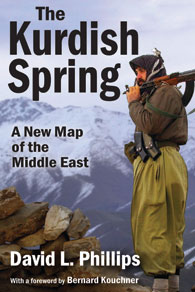
New Book Out: The Kurdish Spring – A New Map of the Middle East

10 01 2015

David L. Phillips8897

Transaction, 2014

ISBN: 978-1-4128-5680-5

Kurds are the largest stateless people in the world. An estimated thirty-two million Kurds live in “Kurdistan,” which includes parts of Turkey, Iraq, Syria, and Iran—today’s “hot spots” in the Middle East. The Kurdish Spring explores the subjugation of Kurds by Arab, Ottoman, and Persian powers for almost a century, and explains why Kurds are now evolving from a victimized people to a coherent political community.

David L. Phillips describes Kurdish rebellions and arbitrary divisions in the last century, chronicling the nadir of Kurdish experience in the 1980s. He discusses draconian measures implemented by Iraq, including use of chemical weapons, Turkey’s restrictions on political and cultural rights, denial of citizenship and punishment for expressing Kurdish identity in Syria, and repressive rule in Iran.

Phillips forecasts the collapse and fragmentation of Iraq. He argues that US strategic and security interests are advanced through cooperation with Kurds, as a bulwark against ISIS and Islamic extremism. This work will encourage the public to look critically at the post-colonial period, recognizing the injustice and impracticality of states that were created by Great Powers, and offering a new perspective on sovereignty and statehood.

For publisher’s website click here.


Conference: On the Outside Looking In – A Kurdish Studies Conference

9 01 2015

customLogo.gif


Tuesday, January 27th, 2015, at the University of Central Florida, Orlando, USA

The study of Kurdistan and its peoples encompasses topics as timely as today’s headlines and as timeless as the most ancient civilizations. This is the first conference in a pair of collaborative, interdisciplinary forums organized by Soran University and UCF. Papers will address a wide range of Kurdistan’s social, political, security, linguistic, historical, and cultural dimensions. Dr. Hamit Bozarslan will give the keynote address, and the conference will include a special exhibition of photography by Robert Leutheuser, “What We Lost in Sinjar.”

The following papers have thus far been confirmed for the conference:

  • Alexandra Ioannidou (Soran University and University of Essex), Jaffer Sheyholislami (Carleton University), and Rebeen Rasheed (University of Duhok)
”Language Choice in Education in the KRG: A Linguistic or a Political Decision?”
  • 

Christian Sinclair (University of Arizona), “Infusing Media Rhythms into the Diasporic Space: Kurds and Media Production in the US”
  • Farhad Shakely (Uppsala University, Sweden), “Malā-yē Jazîrî: A Sufi poet, a Naqshbandi Sufi”Ipek Demir (University of Leicester), “Translating Kurdishness in Diaspora”
  • Juliette Duclos-Valois (École des Hautes Études en Sciences Sociales), “Occupy Sinjar: The Compromises Tied to Access to Water Resources”
  • Kamal Y. Odisho (Soran University) and Muslih Mustafa (Soran University), “The Exodus of Christian and Aramaic Peoples from Mesopotamia: A Last Safe Haven in Kurdistan?”
  • 
Libby Johnston (University of Essex) and Jedidiah Anderson (Indiana University Bloomington), “LGBT Activism in Kurdistan: Achievements, Shortcomings, and Barriers”

Metin Atmaca (The Social Sciences University of Ankara), “Change and Continuity in the Perception of Kurdish Lands in Western and Eastern Literature”
  • Muli Amaye (Soran University), “Alternative Narratives: Women and Nation”
  • 
Niaz Aziz (University of Texas at Austin)
”Pragmatics of Mitigation in Kurdish”

Peshawa A. Muhammed (University of Sulaimani), “U.S. Policy Options for the Future of (Iraqi) Kurdistan”
  • Ranjbar A. Balisane (University of Oxford), Yadgar Hamadameen (Soran University), and Hewa Balisane (Soran University)
”Toward an Optimal Kurdish Keyboard Layout”
  • Wietse van den Berge (Leiden University), “PKK 2.0: The Need to Reconsider Attitudes Towards the Partiya Yekîtiya Demokrat (PYD)”

contact: tyler.fisher@soran.edu.iq 

For details click here .


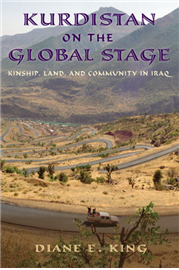
New Book Out: Kurdistan on the Global Stage – Kinship, Land and Community in Iraq

25 12 2014

ProductImageHandler.ashx

Diane E. King 

Rutgers University Press, 2014 

ISBN: 978-0-8135-6352-7

Anthropologist Diane E. King has written about everyday life in the Kurdistan Region of Iraq, which covers much of the area long known as Iraqi Kurdistan. Following the overthrow of Saddam Hussein’s Ba’thist Iraqi government by the United States and its allies in 2003, Kurdistan became a recognized part of the federal Iraqi system. The Region is now integrated through technology, media, and migration to the rest of the world.

Focusing on household life in Kurdistan’s towns and villages, King explores the ways that residents connect socially, particularly through patron-client relationships and as people belonging to gendered categories. She emphasizes that patrilineages (male ancestral lines) seem well adapted to the Middle Eastern modern stage and viceversa. The idea of patrilineal descent influences the meaning of refuge-seeking and migration as well as how identity and place are understood, how women and men interact, and how “politicking” is conducted.

In the new Kurdistan, old values may be maintained, reformulated, or questioned. King offers a sensitive interpretation of the challenges resulting from the intersection of tradition with modernity. Honor killings still occur when males believe their female relatives have dishonored their families, and female genital cutting endures. Yet, this is a region where modern technology has spread and seemingly everyone has a mobile phone. Households may have a startling combination of illiterate older women and educated young women. New ideas about citizenship coexist with older forms of patronage.

King is one of the very few scholars who conducted research in Iraq under extremely difficult conditions during the Saddam Hussein regime. How she was able to work in the midst of danger and in the wake of genocide is woven throughout the stories she tells. Kurdistan on the Global Stage serves as a lesson in field research as well as a valuable ethnography.

For details click here


CfP: Mapping Kurdish Media and Cultural Production between the National and the Transnational

16 12 2014

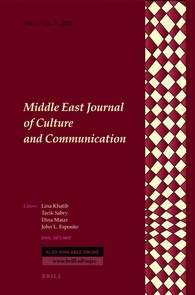
28725Middle East Journal of Culture and Communication

Special issue: “Mapping Kurdish Media and Cultural Production between the National and the Transnational”

Edited by Kevin Smets and Ali Fuat Şengül

Ongoing resistance against, and attacks on, Islamic State militias by Kurdish armed fighters in northern Iraq and Syria have brought international public and media attention to the Kurds’ continuing struggle for statehood. The   fighting between the IS and Kurdish militias has brought unprecedented media attention to the Kurds and their struggle for territory, human rights and identity.  Although it is too early to predict what direction the geo-political and national struggles will take, it is important to address mediated representations and production by and of Kurds and the role that the media play in new and multiple geographies and experiences of Kurdishness in changing contexts.

The volume and the geographical reach of Kurdish media are expanding exponentially, contributing to a shifting Middle Eastern mediascape. A number of studies already exist on some aspects of Kurdish media production, Kurdish identity and transnational connections and implications. However, these studies have either found home in the field of Kurdish studies or in transnational media studies without contributing, to a certain extent, to dialogues and connections between these fields which would certainly improve understandings of what has come to be known as the Kurdish question.

 This special issue seeks to make a contribution to bridging the gap. We therefore invite submissions devoted to empirically grounded, historically-contextualized studies on Kurdish media and cultural productions and their multiple geographies. We welcome papers from a wide range of disciplinary and methodological approaches that focus on media broadly defined and on questions of media and cultural production while relating these issues to relevant socio-political contexts.

 Contributions may address, but should not be limited to, the following questions:

 – How is the question of Kurdishness articulated, represented and experienced in different geographies?

– How is Kurdish media and cultural production influenced by political economic contexts in different geographies?

– How are questions of gender, class and ethnicity articulated and negotiated?

– What role do Kurdish media and cultural products play in the relation between politics and everyday life?

The deadline for submission of abstracts is 15 March 2015. Abstracts should not exceed 500 words and should provide a clear outline of its proposed theoretical framework and empirical data, as well as its contribution to the themes of the special issue.

Notification of acceptance of abstracts: 20 May 2015.

Deadline for submission of complete manuscripts: 15 October 2015. Contributions should be between 6000 and 7000 words and include an abstract of 150 words, at least 5 keywords and the author’s affiliation and email address.

 Please send abstracts by 15 March 2015 to Kevin Smets (kevin.smets@uantwerpen.be) and Ali Fuat Şengül (afsengul@gmail.com).


BISI Visiting Iraqi Scholarship

11 12 2014

s200_the_british_institute_for_the_study_of_iraq._gertrude_bell_memorial_The British Institute for the Study of Iraq (BISI) offers 2 to 3 scholarships each year to enable Iraqi scholars and cultural heritage professionals to engage in research, training and collaborative projects in the UK.  Projects should focus on the history, society and culture of Iraq from the earliest times until the present. We welcome applications from scholars involved in the following fields: anthropology, archaeology, history, geography, languages and other areas in the arts, humanities and social sciences. All applicants must be currently based in Iraq and should demonstrate how a scholarship in the UK will strengthen the research and cultural heritage environment in Iraq. Priority is given to Iraqi scholars who already have a working relationship with a UK institution or academic.

For details click here.


Call for Papers: Alternative Dispute Resolution

8 12 2014

IQ-University-of-Dohuk-UoDAlternative Dispute Resolution Symposium, 12-14 May 2015, Faculty of Law and Political Science, University of Duhok, Kurdistan Region, Iraq

Under the Auspices of Kurdistan Region Minister of Higher Education and of Prof. Dr. Mosleh Mohammed Duhoky, President of the University of Duhok, the University of Duhok Faculty of Law and Political Science invites the submission of papers to be presented at the second academic symposium focused on the alternative dispute resolution in Duhok on May 12-14, 2015.

Symposium’s Aims

1) To illustrate the characteristics and the importance and justifications of using alternative dispute resolution.

2) To increase knowledge of the legal experience of others states that have adopted alternative dispute resolution mechanisms and to assess these experiences.

3) To study and assess existing alternative dispute resolution systems which are applied in Iraq and theKurdistan Region.

4) To benefit from the comparative laws and systems that use alternative dispute resolution in developing thelegislation of Iraq and the Kurdistan Region.

5) To specify disputes that could be settled by alternative dispute resolution and the alternative dispute resolution mechanisms.

Important Dates

  • Deadline to send abstracts: January 10, 2015.
  • Acceptances will be announced: January 20, 2015.
  • Final paper submission: March 15, 2015.
  • Final paper acceptances: April 15, 2015.


New Book Out: Arab Spring and the Kurds – The Paradox of Turkish Foreign Policy

7 12 2014

UnknownHalhalli Bekir

Lambert Academic Publishing, 2014

ISBN:  9783659633133

The main purpose of this study tackles the Kurdish question on Turkish Foreign Policy due to external and domestic challenges under the AKP (Justice and Development Party) government. By doing this, it explores what aspects/consequences of Turkish Foreign Policy have been affected by the Kurdish question. In this context, as title makes sense of importance of this study is to explore and analyse the Kurdish policy of the AKP government and its impacts on Turkish Foreign Policy in last decade. In this way, this study will deal with both the Kurdish policy of the AKP government and historical development process of the Kurdish movement in the Middle East. Further to this, it discusses the drastic changes of the Turkish Foreign Policy in the Middle East focusing on the Kurdish political movement and provides coverage of the contemporary foreign policy strategies and debates on the Kurdish issue which has emerged as a result of the popular uprisings’ process.

For details click here. 


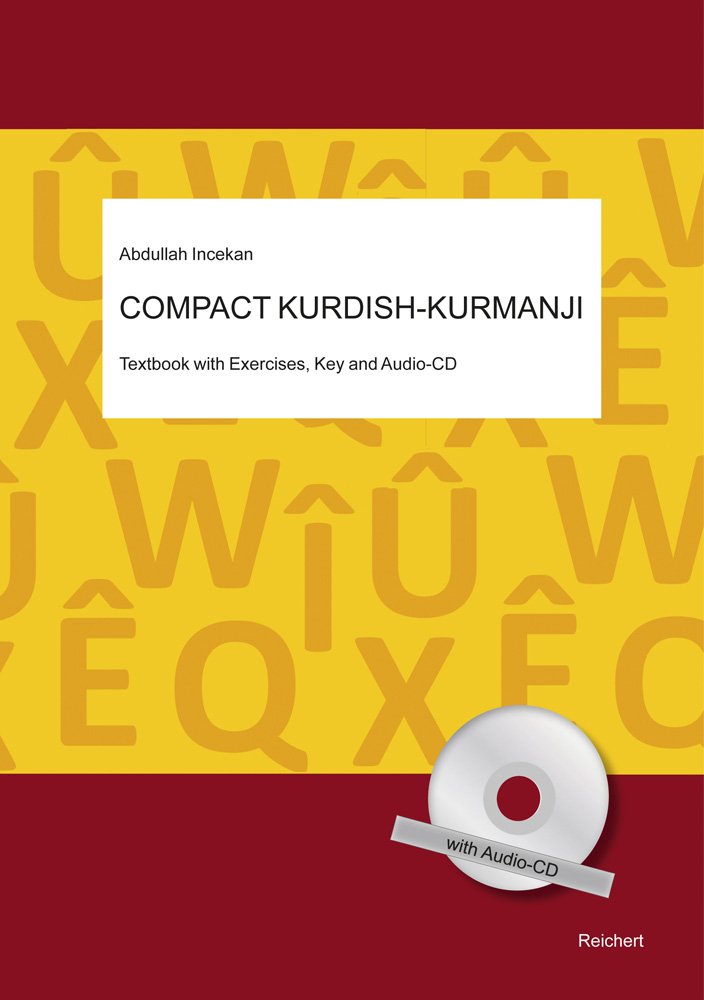
New Book Out: Kurmanji Textbook with Exercises, Key and Audio-CD

3 12 2014

51QadtJqdjLAbdullah Incekan 

Reichert L. Verlag, 2o14 

ISBN: 9783895009594

Compact Kurdish systematically provides the basis of the Kurdish language (Kurmancî) in a learner-oriented format in 19 chapters. The textbook is primarily aimed at students who want to learn Kurdish from the beginning. However, it can also be used by native speakers who want to better comprehend Kurdish grammar and written aspects of the language, since the majority of them has no institutional support in the systematisation of their own mother tongue. In order to meet the intended objective, each chapter is structured as follows: dialogue / text vocabulary grammatical explanations exercises The dialogues / texts are taken from everyday situations of all native Kurdish countries as well as Kurdish who have emigrated to other countries. However, they are built up gradually to match the level of language of the learner. Each text is additionally available in audio form on the included CD, where you will also find pronunciation exercises. In order to facilitate the learner’s access to the texts, many pictures have been drawn specifically for use in this book. In order to optimize an autodidact’s learning success, the following supplements have been added: • answer key • glossary Kurdish – English • glossary English – Kurdish • index of the two verb stems • word index Compact Kurdish first appeared under the title «Ez Kurdî Hîn Dibim – Pratik Kürtçe Dersleri» (I learn Kurdish – Practical lessons in the use of Kurdish) in June 2009 in Istanbul (published by Nûbihar). The sixth edition of the Turkish version has meanwhile been released. Thereafter the book was transcribed into German by the author and adapted to the German target group. It was published in 2010 by the Reichert-Verlag.

For details click here 


Call for Papers: Forced Migration & Resilience: Past & Present in Eastern Mediterranean, 23-25 January 2015

3 12 2014
10687113_711204842291897_1328167760141794622_nThe Swedish Research Institute in Istanbul invites researchers, practitioners, and policy makers to present their latest studies and community work and partake in discussions on either of the following themes:
  • Cases of historical and contemporary forced migration
  • Violence and its characteristics
  • Resilience and coping mechanisms
  • Policies of transit- and receiving countries
  • Community work with refugees
  • Reconciliation and looking ahead
Interested researchers are asked to send their abstract of about 500 words to Dr. Önver Cetrez at onver.cetrez@sri.org.tr
no later than December 10, 2014.


Conference Announcement: From War to Peace, from Conflict to Resolution

3 12 2014

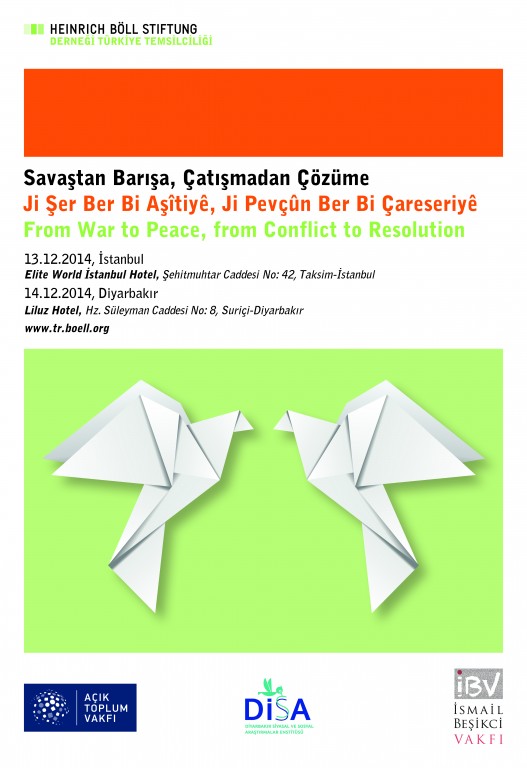
From War to Peace, from Conflict to Resolution, 13-14  December 2014, Diyarbakir & IstanbulKurtKonferansiAfis.25.11.14.Web   

The issue described by some as the “Turkish question” and by others as the “Kurdish question” has been standing in front of us for a century with vast repercussions in political, social, economic and cultural spheres. In the past, we have at times witnessed increased optimism for peace and resolution, and the rise of pessimist sentiment due to war and conflict at some other times.

In addition to the policies pursued by politicians and social actors, numerous NGOs organized many panel discussions, conferences and events during periods of optimism or pessimism. Thus, we can claim to have sufficient knowledge about the historical roots and evolution of the question at hand.

However, we cannot say the same for the very “peace or resolution process” itself in the last few years, which is conducted sometimes in secret, sometimes overtly. We believe that at the present the issue must be debated with its different dimensions through different perspectives, under the light of international cases. As such, we organize the conference entitled “From War to Peace, From Conflict to Resolution” in Ankara and Diyarbakır.

As such we wish to make a thorough analysis of the last few years and discuss the probable processes from different. Although it is impossible to exhaust the entire debate in a single conference, we shall take up the most burning issues, in our opinion, under four headings: Disarmament during Negotiation Processes, Initiatives for Peace and Resolution, Negotiation from Women Perspective.

The following questions could be taken up under the theme Initiatives for Peace and Resolution: How did the direct and indirect talks between the Turkish state and the Kurdish movement evolve in the last years? How can we discuss these negotiations within its historical context? What were the main topics of debate? How did these negotiations shape hopes for peace and resolution? What is the role and impact of third parties and international observers during peace talks? What stages did negotiations go through in similar cases across the world?

The debate under the heading Disarmament during Negotiation Processes could turn around the following questions: Does disarmament correspond to the mutual refusal of violence by the two sides? Under which circumstances did disarmament take place in different cases across the world? In the context of the Kurdish question in Turkey, what do the sides expect in terms of disarmament? In which situations does disarmament help resolve the issue, and which problems it does not?

Negotiation from Women Perspective could spark a debate around these questions: What does women perspective prioritize in peace talks? How does women perspective contribute to the societal peace processes? Is peace possible without the voice of women? How women were included or excluded in similar negotiations the world over?

Our hope is to contribute to societal peace with this and similar events…

From War to Peace, from Conflict to Resolution
13. December 2014Elite World İstanbul Hotel

13. December, Saturday 

09.00-09.30 Registration

09.30-09.50 Inaugural Speeches: 
Ibrahim Gürbüz, İsmail Beşikçi Foundation
Ulrike Dufner, Heinrich Böll Stiftung Turkey Representation

09.50-11.00 Open Forum: Resolution/Peace Process from Two Perspectives
Mahir Ünal, Justice and Development Party (tbc)
Idris Baluken, Peoples’ Democratic Party (tbc)
Moderator: Şirin Payzın, Journalist (tbc)

11.00-13.00 First Panel Discussion: Initiatives for Peace and Resolution
International Experiences, Alvaro de Soto, Global Leadership Foundation
Direct and Indirect Initiatives during Negotiations, Fehim Işık, Journalist-Author
The Role and Impact of International Observers, Francesc Vendrell, John Hopkins University, Washington DC
Moderator: Ayhan Bilgen, Human Rights Defender

13.00-14.30 Lunch Break

14.30-16.30 Second Panel Discussion: Disarmament during Negotiation Processes
Disarmament in the Conflict between the Turkish State and PKK, Cengiz Çandar, Journalist-Author
Why do Armed Groups Disarm? Harun Ercan, Koç University
International Experiences, N.N.
Moderator: Şemsa Özar, Boğaziçi University

16.30-17.00 Tea-Coffee Break

17.00-19.00 Third Panel Discussion: Negotiation from Womens Perspective
Women in Negotiation Processes, Nimet Tanrıkulu, Women’s Initiative for Peace
Women in Peace-Building, Yüksel Genç, Journalist-Author
International Experiences, Helen Scanlon, University of Cape Town
Moderator: Mehmet Tarhan, Conscientious Objector / LGBT Rights Activist

From War to Peace, from Conflict to Resolution
14. December, 2014, Diyarbakır Liluz Hotel

14. December, Sunday

09.30-10.00 Registration

10.00-10.30 Inaugural Speech:
İsmail Beşikçi, İsmail Beşikçi Foundation
Nejdet İpekyüz, Diyarbakir Institute for Political and Social Research (DİSA)

10.30-12.30 First Panel Discussion: Initiatives for Peace and Resolution
International Experiences, Alvaro de Soto, Global Leadership Foundation
Direct and Indirect Initiatives during Negotiations, Fehim Işık, Journalist-Author
The Role and Impact of International Observers, Francesc Vendrell, John Hopkins University, Washington DC
Moderator: Ayhan Bilgen, Human Rights Defender

12.30-14.00 Lunch Break

14.00-15.30 Second Panel Discussion: Disarmament during Negotiation Processes
Why do Armed Groups Disarm? Harun Ercan, Koç University
International Experiences, N.N.
Moderator: Nurcan Baysal, DISA

15.30-16.00 Tea-Coffee Break

16.00-18.00 Third Panel Discussion: Negotiation from Women Perspective
Women in Negotiation Processes, Nimet Tanrıkulu, Women’s Initiative for Peace
Women in Peace-Building Yüksel Genç, Journalist-Author
International Experiences, Helen Scanlon, University of Cape Town
Moderator: Mehmet Tarhan, Conscientious Objector / LGBT Rights Activist

For details click here


Call for Papers & Panels: Rethinking Territoriality – Between Independence and Interdependence

2 12 2014

University_of_Edinburgh_logo.svgUniversity of Edinburgh, 16-18 September 2015

This conference will bring together, for the first time, the three IPSA research committees to examine different aspects of territoriality evident in the world today. The conference, convened in Edinburgh one year after Scotland’s historic independence referendum, will provide an opportunity to examine the politics of territorial, ethnic and linguistic identity, state traditions and language regimes, the dynamics of federalism and multi-level government, and relations between power and territory in the context of regional integration.

We invite proposals for individual paper contributions or for panels engaging these issues. We welcome case studies and comparison of issues of territoriality evident in any part of the world, as well as papers adopting a theoretical perspective on territorial or identity and language politics. We aim to feature the best of contemporary research on territoriality, including new research by established academics as well as early career scholars.

Proposals for papers should include full contact details (including an email address, mailing address, and affiliation) of the author(s) and an abstract of up to 200 words.

 Panel proposals must include:

· a minimum of three papers and a maximum of five.
· contact details of paper-givers, and (if you have them) the discussant and chair
· Panel title and individual paper titles
· Short description of panel (max 200 words)

Conference languages are English and French. The final deadline for electronic submission of proposals for papers or panels will be 28 February 2015. Proposals should be submitted to: http://form.jotformeu.com/form/42413501455344
Limited travel funds may be available.

THIS IS A JOINT CONFERENCE OF IPSA RC 28: COMPARATIVE FEDERALISM AND MULTI-LEVEL GOVERNANCE; RC 14: POLITICS AND ETHNICITY; RC 50: THE POLITICS OF LANGAUGE and CENTRE ON CONSTITUTIONAL CHANGE AND SCHOOL OF SOCIAL AND POLITICAL SCIENCE, UNIVERSITY OF EDINBURGH.