New Book Out: Kurdish Documentary Cinema in Turkey – The Politics and Aesthetics of Identity and Resistance

23 10 2016

0404344_kurdish-documentary-cinema-in-turkey_300Koçer, Suncem & Candan, Can (eds) 

Cambridge Scholars Publishing, 2016

978-1-4438-9798-3

Without a doubt, this decade’s most discussed and developed documentary productions in Turkey come from Kurdistan, a name that provokes nationalist panic in Turkey, yet delineates distinct cultural, linguistic, and political boundaries nonetheless. Documentary film productions by Kurdish filmmakers from Turkey determine the major tendencies of this emergent genre, with such productions offering a unique opportunity for a nuanced understanding of national cinema. The larger body of films, fiction and non-fiction termed as Kurdish cinema complicates the category of national cinema, a concept discussed heatedly within the field of cinema studies. Documentary film is proving to be a particularly complex tool for the Kurdish social and political existence, as Kurds lack the official tools of history-writing and cultural preservation that are categorically associated with the capacities of a state. By delving into Kurdish documentary films as products of complex societal, political, and historical processes, the articles in the volume highlight the intersections of media production, film text, and audience reception, and expand on vibrant debates in the field of film and media studies through situated case studies. Bringing these chapters together, this book will stimulate academic discussion around this emergent and lively genre of documentary film production, and encourage further research and publication.

For details click here.


New Book Out: Kurdish Diaspora Online – From Imagined Community to Managing Communities

9 10 2016

9781137513465Mahmod, Jovan

Palgrave Macmillan, 2016

  • ISBN 978-1-137-51347-2

The argument offered in this book is that new technology, as opposed to traditional media such as television, radio, and newspaper, is working against the national grain to weaken its imagined community. Online activities and communications between people and across borders suggest that digital media has strong implications for different articulations of identity and belongingness, which open new ways of thinking about the imagined community. The findings are based on transnational activities by Kurdish diaspora members across borders that have pushed them to rethink notions of belonging and identity. Through a multidisciplinary and comparative approach, and multifaceted (online-offline) methodologies, the book unveils tensions between new and old media, and how the former is not only changing social relations but also exposing existing ones. Living in two or more cultures, speaking multiple languages, and engaging in transnational practices, diaspora individuals may have created a momentum that discloses how the imagined nation is diminishing in this digital era.

For details click here.


Call for Abstracts: Gender, Violence and Displacement

13 09 2016

emblem_of_university_of_sulaimanibrisunibanner

Middle East Gender Forum, 7-8 April 2017, Iraqi Kurdistan Region, University of Sulaimani 

Recent wars, conflicts and human rights abuses have forced millions of people to flee their homes and move within or across boundaries. According to the United Nations Population Fund, the world is currently facing the worst refugee and forced displacement crisis since the Second World War. In the last decade, the Middle East has shown important geopolitical changes that has repercussion not only on people in the region, but on Europe and the Western world in general. Following the Iraq and Syria crisis highlighted by the Syrian civil war and the emergence of the ISIL, in Syria alone, millions of people have left their homes, become internally displaced or moved to neighbouring countries. While some of the displaced people are desperately trying to cross the Mediterranean Sea with disastrous consequences, many have been put in camps in Turkey, Iraqi Kurdistan, Jordan and Lebanon. Iraqi Kurdistan, despite its small territory, has received and absorbed a disproportionate number of refugees and internally displaced persons (IDP); KRG officials talk about 2 million refugees and IDPs currently living in refugee camps or non-camps settlements in the three governorates of Duhok, Erbil and Sulaimani.

The process of displacement have affected people in many ways; in addition to losing their homes, the displacement process has caused the breakdown of peoples’ social structures, shifted gender roles as well as the representation of masculinity with great impact on gender relations. According to UN agencies and international aid providers the prevalence of gender-based violence has sharply increased during displacement and emergency crisis [UNFPA]. In the refugee camps, the new unfamiliar living environments and requirements have challenged the traditional gender relations, old ties and social norms making women vulnerable to violence and discrimination. In Iraqi Kurdistan Region women and girls during their displacement and in- camps settlements have experienced many forms of gender-based violence, including domestic violence, honour-based violence along with different forms of sexual violence. The displaced populations in the region are not a homogenous group; they include different religious and ethnic groups, including Kurdish Yezidis, Christians, Turkmens, and Sunni Arabs. With their different historical background and the process of their displacement, each of these communities has been subjected to different experiences with great impact on gender relations. Following the ISIL attack on the Sinjar region, August 2014, thousands of Yezidi women have been kidnapped by jihadists and subjected to sexual and gender-based violence; those who fled their jailors or ransomed off by local authorities, have confirmed systematic rape, forced prostitution, child and forced marriage and sex slavery. The challenges, vulnerabilities and different forms of violence facing displaced women, have implications for policy makers within host countries as well as inside international aid and official development organisations. What is more, vulnerable and frustrated migrant and displaced men and women in different European countries have been affected by the propagandas of the ISIL and travelled thousands of miles to join the ‘terrorist group’.

The first Middle East Gender Forum (MEGF) will address different shifted boundaries within displaced and migrant communities, focusing on gender relations, new challenges facing women as well as the position and representation of men during the displacement and settlement processes. What are women’s experiences of gender-based violence and the consequences resulted? How do migration, the breakdown of social structures and old ties impact young men’s lives and their perception of identity and masculinity? Preliminary researches by the CGVR demonstrate that young men have found religion as the best way to get respected and to reconstructtheir“shatteredidentity”.1 Howcouldmen’sfrustration,theirpotentialandstrategic interests be addressed before they are deviated and turned into violence? And finally, what are the best responses different national and international agents should provide to help migrant and displaced women and men, address their frustration, easing their pain and their suffering that could lead to reducing violence. This first Middle East Gender Forum will create a platform for debate and deep analysis, bringing together a diverse group of scholars, activists, civil society representatives and policy makers within host countries as well as inside international aid and official development organisations. During two days of reflection, debate and exchange of ideas and experiences, the MEGF will look at the intersectional causes of displacement, gendered violence and extremism with the aim to learn, understand and gain an insight into the complexity of the displacement process and politics of belonging and social as well as political inequalities.

We invite submissions and expression of interest in participation from scholars, civil society representatives, women’s rights activists as well as international policy makers. The Forum focuses on specific themes, including:

  •   Gender-based violence, conflict and displacement
  •   Gender relations, boundaries and politics of belonging
  •   Gender narratives within displaced communities and men’s positioning
  •   Justice and empowerment mechanisms
  •   Transnational terrorism

    The Forum is organised by the Centre for Gender and Violence Research, University of Bristol; the Gender and Violence Studies Centre, University of Sulaimani and the Gelawêj Cultural Centre, Iraqi Kurdistan. It will be convened on 7-8 April 2017 in Iraqi Kurdistan Region, the University of Sulaimani. Accommodation and subsistence will be provided by the organisers. A modest travel assistance will be available for those who cannot obtain funds within their organisation/academic institutions.

    Abstracts of no more than 500 words should be submitted before 15 October 2016 to Dr Nazand Begikhani and Dr Emma Williamson, University of Bristol.

    Email: nazand.begikhani@bristol.ac.uk


Call for Abstracts: Gender, Violence and Displacement

8 09 2016

emblem_of_university_of_sulaimaniMiddle East Gender Forum, 7-8 April 2017, Iraqi Kurdistan Region, University of Sulaimani 

Recent wars, conflicts and human rights abuses have forced millions of people to flee their homes and move within or across boundaries. According to the United Nations Population Fund, the world is currently facing the worst refugee and forced displacement crisis since the Second World War. In the last decade, the Middle East has shown important geopolitical changes that has repercussion not only on people in the region, but on Europe and the Western world in general. Following the Iraq and Syria crisis highlighted by the Syrian civil war and the emergence of the ISIL, in Syria alone, millions of people have left their homes, become internally displaced or moved to neighbouring countries. While some of the displaced people are desperately trying to cross the Mediterranean Sea with disastrous consequences, many have been put in camps in Turkey, Iraqi Kurdistan, Jordan and Lebanon. Iraqi Kurdistan, despite its small territory, has received and absorbed a disproportionate number of refugees and internally displaced persons (IDP); KRG officials talk about 2 million refugees and IDPs currently living in refugee camps or non-camps settlements in the three governorates of Duhok, Erbil and Sulaimani.

The process of displacement have affected people in many ways; in addition to losing their homes, the displacement process has caused the breakdown of peoples’ social structures, shifted gender roles as well as the representation of masculinity with great impact on gender relations. According to UN agencies and international aid providers the prevalence of gender-based violence has sharply increased during displacement and emergency crisis [UNFPA]. In the refugee camps, the new unfamiliar living environments and requirements have challenged the traditional gender relations, old ties and social norms making women vulnerable to violence and discrimination. In Iraqi Kurdistan Region women and girls during their displacement and in- camps settlements have experienced many forms of gender-based violence, including domestic violence, honour-based violence along with different forms of sexual violence. The displaced populations in the region are not a homogenous group; they include different religious and ethnic groups, including Kurdish Yezidis, Christians, Turkmens, and Sunni Arabs. With their different historical background and the process of their displacement, each of these communities has been subjected to different experiences with great impact on gender relations. Following the ISIL attack on the Sinjar region, August 2014, thousands of Yezidi women have been kidnapped by jihadists and subjected to sexual and gender-based violence; those who fled their jailors or ransomed off by local authorities, have confirmed systematic rape, forced prostitution, child and forced marriage and sex slavery. The challenges, vulnerabilities and different forms of violence facing displaced women, have implications for policy makers within host countries as well as inside international aid and official development organisations. What is more, vulnerable and frustrated migrant and displaced men and women in different European countries have been affected by the propagandas of the ISIL and travelled thousands of miles to join the ‘terrorist group’.

The first Middle East Gender Forum (MEGF) will address different shifted boundaries within displaced and migrant communities, focusing on gender relations, new challenges facing women as well as the position and representation of men during the displacement and settlement processes. What are women’s experiences of gender-based violence and the consequences resulted? How do migration, the breakdown of social structures and old ties impact young men’s lives and their perception of identity and masculinity? Preliminary researches by the CGVR demonstrate that young men have found religion as the best way to get respected and to reconstructtheir“shatteredidentity”.1 Howcouldmen’sfrustration,theirpotentialandstrategic interests be addressed before they are deviated and turned into violence? And finally, what are the best responses different national and international agents should provide to help migrant and displaced women and men, address their frustration, easing their pain and their suffering that could lead to reducing violence. This first Middle East Gender Forum will create a platform for debate and deep analysis, bringing together a diverse group of scholars, activists, civil society representatives and policy makers within host countries as well as inside international aid and official development organisations. During two days of reflection, debate and exchange of ideas and experiences, the MEGF will look at the intersectional causes of displacement, gendered violence and extremism with the aim to learn, understand and gain an insight into the complexity of the displacement process and politics of belonging and social as well as political inequalities.

We invite submissions and expression of interest in participation from scholars, civil society representatives, women’s rights activists as well as international policy makers. The Forum focuses on specific themes, including:

  •   Gender-based violence, conflict and displacement
  •   Gender relations, boundaries and politics of belonging
  •   Gender narratives within displaced communities and men’s positioning
  •   Justice and empowerment mechanisms
  •   Transnational terrorism

    The Forum is organised by the Centre for Gender and Violence Research, University of Bristol; the Gender and Violence Studies Centre, University of Sulaimani and the Gelawêj Cultural Centre, Iraqi Kurdistan. It will be convened on 7-8 April 2017 in Iraqi Kurdistan Region, the University of Sulaimani. Accommodation and subsistence will be provided by the organisers. A modest travel assistance will be available for those who cannot obtain funds within their organisation/academic institutions.

    Abstracts of no more than 500 words should be submitted before 15 October 2016 to Dr Nazand Begikhani and Dr Emma Williamson, University of Bristol.

    Email: nazand.begikhani@bristol.ac.uk


Panel Discussion: Turkey’s Intervention in Rojava and Its Consequences

6 09 2016

2ef38d_419917b1e7ce4ee9a5c740145aa31888

Friday, September 9, 2016, 2:30 p.m. – 4:00 p.m. Board Source Conference Room 750 9th St NW, Suite 650, Washington, DC 20001

The Kurdish Policy Research Center (KPRC) is pleased to organize the panel entitled ‘Turkey’s Intervention in Rojava and Its Consequences’.

On Wednesday August 24 Turkish tanks entered the borderline territory in Rojava (Northern Syria) along with Turkish-backed Free Syrian Army. According to the Turkish sources the objective of the “Operation Euphrates Shield” is to ‘stabilize’ the situation by clearing ISIS from Jarablus, the last stronghold of ISIS on the Turkish-Syrian border that is less than a mile from Turkey. However, soon after capturing Jarablus, the so-called Free Syrian Army supported by Turkish tanks advanced south towards Kurdish held territories where they engaged in clashes with the Kurdish YPG-led Democratic Syrian Forces. Since then Turkish tanks and artillery have been shelling not only the YPG, America’s most trusted ally in the fight against DAESH, but also the civilian population in Jarablus and Manbij.

The latest Turkish attacks on YPG have made it crystal clear that the real motivation behind the Turkish invasion of Rojava does not stem from the threat from DAESH, as the Turks claim, but from Turkey’s desire to prevent an autonomous Kurdish region emerging in northern Syria. To this end Turkey threatened to intensify its attacks on the Kurdish YPG forces, if the latter does not comply with Turkey’s request to withdraw from Manbij, a town newly liberated from DAESH by YPG, and remain the east of the Euphrates River.

Our distinguished panelists will bring their expertise to our gathering and offer their views on the root causes of the current political crisis in Rojava, discuss the political implications of the recent Turkish invasion as well as the clashes between Turkish-backed FSA and the Kurdish YPG and explore ways to find a peaceful solution.

The KPRC hopes that you can join us on September 9 for this exciting event that is aimed at offering an understanding of the political implications of the recent clashes between Turkish-backed FSA and the Kurdish YPG-led Democratic Syrian Forces.

RSVP Required to attend this event.
For media inquiries and questions, please contact: info@kprc.us

Panelists:

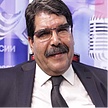
Salih Muslim:
2ef38d_a579969e808c4330a0065cd363219ab4

Salih Muslim is the co-chairman of the Democratic Union Party (PYD) in de facto autonomous Kurdish-controlled region of Rojava in Northern Syria. He is also the deputy coordinator of the National Coordination Committee for Democratic Change.

* Mr. Muslim will participate via Skype

Professor Dlawer Ala’Aldeen:

2ef38d_98109ae719204e1e857f260e48112f15mv2

Professor Ala’Aldeen is the Founding President of the Middle East Research Institute (MERI), a policy research institute and a think tank based in Erbil, Kurdistan Region of Iraq.  He is a former Minister of Higher Education and Scientific Research in Kurdistan Regional Government (2009-2012). Dlawer has been an advocate of, and published extensively on, human rights, good governance and democracy in Kurdistan, Iraq and the wider Middle East.

Aliza Marcus:

2ef38d_70e9eb88bb0f4a27b40da069c53600femv2

Aliza Marcus is formerly an international correspondent for The Boston Globe and lives in Washington, D.C. She covered the PKK for more than eight years, first as a freelance reporter for the Christian Science Monitor and later as a staff writer for Reuters, receiving a National Press Club Award for her reporting. She is also a recipient of a MacArthur Foundation grant for her work (NYU Press).


Call for Workshop: Emancipatory Transformations – Engaging Radical Democracy in Kurdistan

5 09 2016

institution-159-Sussex3-4 November 2016, University of Sussex

The many conflicts ravaging the Middle East pose profound questions regarding seemingly intractable and intersecting questions of democracy, political and ethnic pluralism, gender oppression, and ecological despoliation; questions that confront not only the region, but in varying forms, the entire world. As such, they highlight common challenges for humanity. These questions have received some radical and innovative answers in Rojava (Western/Syrian Kurdistan) where an ambitious project of radical democracy and social justice is being implemented despite formidable challenges, including a total war against ISIS.
Central to this project are the principles of democratic confederalism, plurinationalism, revolutionary feminism and social ecology as integral dimensions of the radical wing of the wider Kurdish freedom movement. The Rojava revolution therefore represents a novel form of emancipatory praxis that has profound implications for the region and beyond. Its attempted conjunction of direct democracy, communal economy, gender equality and ecological consciousness under the most unfavourable local and regional conditions in a region ravaged by sectarian conflict calls for engaged and critical dialogue by academics and activists. This is necessary in order to address both its achievements and limitations, to unearth and engage with many questions that remain suspended between a precarious present and uncertain future, and to ask what broader lessons it holds for our understanding of transformative democratic practice in the Middle East and beyond.
This two-day workshop aims to bring together a diverse group of researchers and activists to mutually learn, explore, share, and think of future possibilities for direct democracy and democratic confederalism through the examination of real-world grounded examples from contemporary movements in Rojava (Western Kurdistan) and Bakur (Northern Kurdistan), with careful consideration of the historical context and dynamics of contemporary and past struggles and challenges.
We invite submissions and expressions of interest in participation from researchers, activists, visual artists, filmmakers and others that explore these transformations through a focus on grounded perspectives and practices, situated in broader social, historical, political and ecological context. Specific thematic foci for presentations may include, but are not limited to:
  • Democracy and democratic confederalism
  • Gender and women’s movements
  • Pluralism in political practice
  • Economic transformations
  • Social / political ecology
  • Solidarity across social movements within the region or across the world
The workshop will be convened on 3-4 November 2016 in Brighton, UK and at the University of Sussex through collaboration between the ESRC STEPS Centre (http://steps-centre.org/), members of the Sussex Kurdish Community and members of the UK-based Kurdish Solidarity activist community. Travel assistance is available for workshop participants on the basis of need. Abstract submissions for paper presentations, visual exhibitions, film viewings or other presentation formats should include the following information:
  • Title of presentation
  • Presenter name, affiliation (if applicable) and contact details
  • Type of presentation (e.g. paper, visual art / photography, etc.)
  • Up to five key words / themes
  • Abstract / presentation description of no more than 500 words
  • Proposals based on original audio-visual work may also include a sample, either as a URL linking to media, or as images embedded in a Word or PDF document
  • A brief statement of need if you wish to be considered for travel assistance.


These should be submitted to Harriet Dudley (h.dudley@ids.ac.uk) no later than 16 September 2016, and selected participants will be notified no later than 30 September 2016.


Discussion: Spotlight on the Kurds

28 08 2016

cpd-logo-headerUniversity of Southern California, Annenberg School of Communication, Room 207, September 29, 2016, 5 pm-7:30 pm.

Join Professor Amir Sharifi of CSU Long Beach and Professor Asli Bâli of UCLA for a discussion of current Kurdish politics at the University of Southern California (USC) in Los Angeles. The speakers will focus in particular on the Turkish government’s responses to Kurdish public diplomacy efforts. Evîn Cheikosman, M.A. Candidate in the USC Center on Public Diplomacy, will moderate the discussion.

Amir Sharifi is the Director of the Kurdish Human Rights Advocacy Group, President of the Kurdish American Education Society and Lecturer of Linguistics at California State University, Long Beach.

Ali Bali is a Professor of Law at the UCLA School of Law. She teaches Public International Law, International Human Rights and a seminar on the Laws of War. She joined UCLA from the Yale Law School where she was the Irving S. Ribicoff Fellow in Law, and coordinator of the Middle East Legal Forum.

The event will be held in ASC 207. Refreshments will be served. To join the event, click here.

Contact: shofani@usc.edu


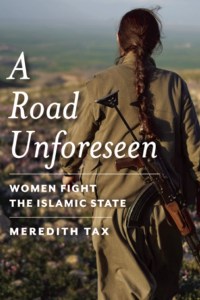
New Book Out: A Road Unforeseen – Women Fight the Islamic State

2 08 2016

ROAD-UNFORESEEN-by-Meredith-Tax-9781942658108Tax, Meredith

Trade Paper, 2016

ISBN: 9781942658108

In war-torn northern Syria, a democratic society—based on secularism, ethnic inclusiveness, and gender equality—has won significant victories against the Islamic State, or Daesh, with women on the front lines as fierce warriors and leaders.

A Road Unforeseen recounts the dramatic, underreported history of the Rojava Kurds, whose all-women militia was instrumental in the perilous mountaintop rescue of tens of thousands of civilians besieged in Iraq. Up to that point, the Islamic State had seemed invincible. Yet these women helped vanquish them, bringing the first half of the refugees to safety within twenty-four hours.

Who are the revolutionary women of Rojava and what lessons can we learn from their heroic story? How does their political philosophy differ from that of Iraqi Kurdistan, the Islamic State, and Turkey? And will the politics of the twenty-first century be shaped by the opposition between these political models?

For details click here.


New Book Out: Iraqi Kurdistan in Middle Eastern Politics

3 07 2016

9781138204478Danilovich, Alex 

Routledge, 2017

ISBN 9781138204478

The changes brought by the Arab Spring and ensuing developments in the Middle East have made the Kurds an important force in the region. Tel-Aviv and Washington place high hopes on Erbil to facilitate their dealings with Baghdad, Damascus, Teheran and Ankara. Kurds living in Turkey, Syria and Iran have been inspired by the successes of their brethren in Iraq who managed to gain significant independence and make remarkable achievements in state building. The idea of a greater Kurdistan is in the air. This book focuses on how the Kurds have become a new and significant force in Middle Eastern politics. International expert contributors conceptualize current developments putting them into theoretical perspective, helping us to better understand the potential role the Kurds could play in the Middle East.

For details click here.


New Book Out: Political Violence and Kurds in Turkey – Fragmentations, Mobilizations, Participations & Repertoires

26 06 2016

9781138918870Mehmet Orhan 

Routledge, 2016

ISBN 9781138918870

The Kurdish conflict is an acknowledged long-standing issue in the Middle East, and the emergence of radical Kurdish nationalist movements in the 20th century played a decisive role in the evolution of political violence.

Political Violence and Kurds in Turkey examines how this political violence impacts Kurds in contemporary Turkey, and explores the circumstances that move human beings to violent acts. It looks at the forms political violence takes and in which times and spaces it occurs, as well as the roles played by micro and macro factors. It takes a theoretical approach to violence, as both producer and product of interrelations between many actors, and contextualises this with studies of violence in Kurdish villages and towns. The book evaluates the three levels at which political violence operates; between the state and Kurdish movements, among Kurdish groups and between Kurdish political organizations and Kurdish society, and divides it into its different aspects and processes; fragmentation-segmentation (signifying intra-ethnic struggles between Kurdish actors), mobilization (the course leading the Kurdish movement to armed conflict), participation (the use of violence by individuals) and repertoires (the forms taken by political violence).

Offering an in-depth analysis of the dynamics behind political violence and its use amongst Kurds in Turkey, this book will be a key resource for students and scholars of Middle Eastern, Kurdish Studies and Conflict Studies, and offers new understanding and approaches to the study of political violence.

For details click here.


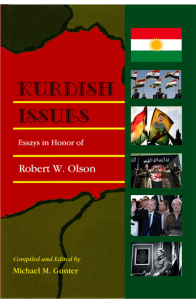
New Book: Kurdish Issues – Essays in Honor of Robert W. Olson

25 06 2016

ba6f47f7-6989-427f-a42a-3bd68c3f9708.jpgMichael M. Gunter (ed.)

Mazda Publishers, 2016

ISBN: 978-1568593104

This volume contains 13 essays, written by a group of distinguished scholars, on the most important issues facing the Kurds today. Subjects covered include politics, economics, ISIS, and number of issues that will be of interest to scholars, practitioners, and the intelligent lay public. Moreover, in delving into the nuances of such themes as ethno-nationalist origins, self-determination, US-KRG relations, democratic autonomy, ISIS, Kobane, the Kurdish Diaspora, Ataturk and Bourguiba, among others, these essays will definitely stand the test of time. The volume is dedicated to Robert W. Olson, a distinguished and recognized pioneer in the study of the Kurdish people and their relations with the neighboring countries, especially Turkey.

For details click here.


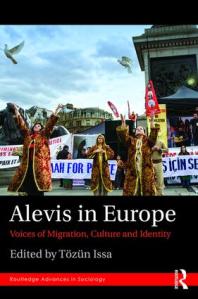
New Book: Alevis in Europe – Voices of Migration, Culture and Identity

13 06 2016

9781472456441Tözün, Issa

Routledge, 2017

ISBN 9781472456441

The Alevis are a significant minority in Turkey, and now also in the countries of Western Europe. Over the past century, many of them have migrated from rural enclaves on the Anatolian plateau to the great cities of Istanbul and Ankara, and from there to the countries of the European Union. This book asks who are they? How do they construct their identities – now and in the past; in Turkey and in Europe?

A range of scholars, writing from sociological, historical, socio-psychological and political perspectives, present analysis and research that shows the Alevi communities grouping and regrouping, defining and redefining – sometimes as an ethnic minority, sometimes as religious groups, sometimes around a political philosophy – contingently responding to circumstances of the Turkish Republic’s political position and to the immigration policies of Western Europe. Contributors consider Alevi roots and cultural practices in their villages of origin; the changes in identity following the migration to the gecekondu shanty towns surrounding the cities of Turkey; the changes consequent on their second diaspora to Germany, the UK, Sweden and other European countries; and the implications of European citizenship for their identity. This collection offers a new and significant contribution to the study of migration and minorities in the wider European context.

Click here for details.


Kurmanji at Berkeley

11 06 2016
Seal_of_University_of_California,_Berkeley.svgHûn bi xêr hatin Pola Kurdî ya Destpêker – Welcome to the Beginner Kurdish Course. For the first time, Near Eastern Studies will offer a course designed to introduce complete beginners to Kurmanji Kurdish, the dominant Kurdish variety spoken in Greater Kurdistan and among the Kurdish diaspora, and a language seldom taught in the United States.
The course provides complete beginners of Kurmanji Kurdish with a solid foundation in all four language skills. It introduces basic grammatical forms, essential frequent vocabulary and key aspects of pronunciation. Participants of the course will have opportunities to practices communicating in Kurmanji-Kurdish in class on daily topics such as routines and activities, hobbies and habits and so forth. By the end of this course, participants will be able to sustain basic communicative exchanges on common everyday topics in various social contexts and can then progress on to the Beginners Kurdish 2 class in spring term.
Class will meet on Tuesdays and Thursdays, 12:30-2:00 PM in 271 Barrows. Contact Near Eastern Studies with questions regarding the course or registration.


New Issue of Kurdish Studies Out

5 06 2016

ks_coverKurdish Studies, Volume 4, Issue 1, May 2016

The development of a field of studies such as our own, Kurdish studies, depends to a large extent on the existence of an institutional infrastructure of specialised academic departments, libraries, journals, etc. Only very few academic institutions in the world have a well-established tradition of Kurdish studies, and not surprisingly they are found in those countries that have had an imperial interest in Kurdistan: Russia, Great Britain and France. The general marginalisation of area studies in academia in favour of the more strictly discipline-oriented organisation of academic research has affected these established institutions too. The best specialised libraries in Europe are not in universities but in private Kurdish institutes in Paris, Stockholm, Berlin and Vienna, and they were established and funded by members of the Kurdish diaspora with incidental governmental support (Excerpts from the Editorial).
Table of Content

Editorial

Martin van Bruinessen


Articles


Language Shift Among Kurds in Turkey: A Spatial and Demographic Analysis

Sinan Zeyneloğlu, Ibrahim Sirkeci, Yaprak Civelek


In Search of Moral Imagination that Tells Us “Who the Kurds Are”: Toward a New Theoretical Approach to Modern Kurdish Literature

Joanna Bocheńska


Viewpoint

Making Sense: Research as Active Engagement


Book Reviews

The Kurdish Spring: A New Map of the Middle East

David L. Phillips


Shattered Dreams of Revolution: From Liberty to Violence in the Late Ottoman Empire

Bedross Der Matossian


The Kurdish Liberation Movement in Iraq: From Insurgency to Statehood

Yaniv Voller


Imagining Kurdistan: Identity, Culture and Society

Özlem Galip


The Kurds of Iraq: Nationalism and Identity in Iraqi Kurdistan

Mahir A. Aziz


Welat Zeydanlioglu

Managing Editor

editor@kurdishstudies.net

Kurdish Studies is a peer-reviewed scholarly journal.

ISSN: 2051-4883 e-ISNN: 2051-4891

http://www.kurdishstudies.net


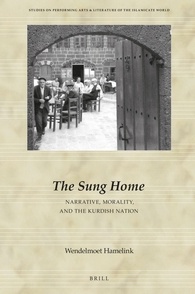
New Book: The Sung Home – Narrative, Morality, and the Kurdish Nation

17 05 2016

92847Hamelink, Wendelmoet

Brill, 2016

ISBN 9789004314818

The Sung Home tells the story of Kurdish singer-poets (dengbêjs) in Kurdistan in Turkey, who are specialized in the recital singing of historical songs. After a long period of silence, they returned to public life in the 2000s and are presented as guardians of history and culture. Their lyrics, life stories, and live performances offer fascinating insights into cultural practices, local politics and the contingencies of state borders. Decades of oppression have deeply politicized and moralized cultural and musical production. Through in-depth ethnographic analysis Hamelink highlights the variety of personal and social narratives within a society in turmoil. Set within the larger global stories of modernity, nationalism, and Orientalism, this study reflects on different ideas about what it means to create a Kurdish home.

For details click here.


Symposium: The Kurds and New Political Projects

15 05 2016

13198578_10154211349869083_8885988453283224156_oAfro-Middle East Centre invites to the symposium entitled: The Kurds and New Political Projects, 18 May 2016, The Sheraton Pretoria Hotel

Following the US occupation of Iraq in 2003, and the eruption of the Middle East and North Africa uprisings in 2011, Kurds of the Middle East have been confronted with new realities that included civil war, revolutionary moments, deteriorating economies, promises of an end to their marginalisation, and even genocidal actions, resulting in the development of different political projects posited as ways to secure their rights. This symposium will examine the Kurdish experience, and consider the forms of these new political projects, as well as the potential of their success.


Speakers:

  • Judge Essa Moosa
  • Rosa Burc
  • Galip Dalay
  • Ethem Coban
  • Nick Rodrigo


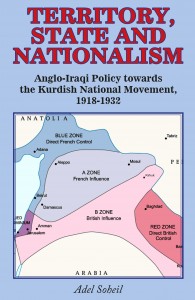
New Book: Territory, State and Nationalism – Anglo-Iraqi Policy towards the Kurdish National Movement, 1918-1932

2 05 2016

9789163902321-195x300Soheil, Adel

Häftad, 2016

ISBN 9789163902321

The Sykes-Picot Agreement map, signed in May 1916 by the Imperial powers of Great Britain and France, constituted the blueprint for redrawing the map of the Middle East after the dismemberment of the Ottoman Empire, in 1918, by the victorious Allies, thus dividing the Arab territories as well as Kurdistan into its current form. In this book, the author makes an ambitious attempt to provide a comprehensive new insight into the Kurdish national movement and its struggle against the mandatory power (the British) and the Iraqi government for achievement of national selfdetermination from 1918 to 1932.

The book explores both Kurdish and Arab nationalism within the context of power relations in international politics at the time on the one hand, and in relation to domestic political development in Iraq on the other. Thereby, salient issues are explained, inter alia, the reasons for Britain’s failure to create a modern national state in Iraq, Anglo-Iraqi authorities’ reluctance to accommodate Kurdish rights and their policy to incorporate Kurdistan into the nascent Iraqi state, the U.S. interests and implication in the region, along with President Wilson’s principle of self-determination and its impact on Kurdish and Arab nationalism.

For details click here.


Conference: Historical and Comparative Perspectives on Kurdish Politics

28 04 2016

buffett-logoBackground:

The Kurds are one of the world’s largest ethnic groups without a state, constituting sizable minorities in Turkey, Iran, Iraq, and Syria. They have recently become prominent in world politics due to their fight against the Islamic State in the midst of Syria’s civil war. Yet until now, their history has largely been one of marginalization, oppression, and resistance across borders. It is estimated that about half of world’s more than 30 million Kurds live in Turkey, where they have struggled for self-governance through parliamentarian politics and armed conflict for over 30 years. The three-year peace talks between the Turkish State and the PKK (Partiya Karkerên Kurdistanê, the main armed group of the Kurds) was terminated in July 2015 by the Turkish state, leading to yet another cycle of violence. Hundreds of civilian casualties, thousands of displaced Kurds, and terrified Kurdish and Turkish societies thus joined the long history of violence and deprivation in Turkey.

About this conference:

This international conference aims to bring together cutting-edge research examining the last hundred years of Kurdish existence in the Ottoman Empire and the Turkish Republic in a historical and comparative perspective.

November 3-4, 2016
Evanston, Illinois

  • Abstract Deadline: June 1
  • Paper Deadline: October 1

Call for submissions:

We invite paper proposals on the past and present of Kurds and the Kurdish politics in Turkey and the Middle East, in comparison to similar struggles in other parts of the world.

We especially welcome papers on the following topics:

  • The historical construction of “the Kurdish Question” in history
  • The Kurdish case in comparison with other ethnic and/or colonial struggles
  • The impact of international power struggles on the Kurds in Turkey and the Middle East
  • Shifts in Kurdish politics in relation to the ongoing civil war in Syria and the state formation in Iraqi Kurdistan
  • The impact of the processes of neoliberal capitalism on Kurdish politics
  • Status of Kurdish citizens in Turkey and Turkish constitutional politics with regard to the issues of pluralism and demands for autonomy
  • The impact of political, religious, linguistic, and class divisions on Kurdish politics in Turkey
  • “Kurdish-ness” and “Turkish-ness” at the intersection of power and privilege in changing Turkey
  • The role of gender, patriarchy, and feminism in Kurdish politics
  • Generational and demographic change among the Kurds and Kurdish political movements
  • Politics of the Kurdish diaspora
  • Discourses and knowledge production about the Kurds and Kurdish politics

We encourage submissions from PhD candidates and junior scholars.

Please submit your paper abstract of 250-300 words by June 1. Any questions may be sent to turkishstudies@northwestern.edu.

For details click here.


3rd International Conference on Kurdish Linguistics

12 04 2016

UvA-logo-englishUniversity of Amsterdam, Netherlands, August 25-26, 2016

Background and scope

After two conferences in Bamberg (2013) and Mardin (2014), the 3rd International Conference on Kurdish Linguistics (ICKL) will take place at the University of Amsterdam on August 25-26, 2016. The event is jointly organized by the Department of General Linguistics at the University of Bamberg and the Amsterdam Center for Language and Communication. The conference serves as a forum of scientific exchange for linguists working on any aspect of Kurdish, including the interactions with its neighboring languages. Accordingly, we welcome contributions which address these issues from the perspectives of various subdomains of linguistics, such as sociolinguistics, descriptive and typologically-oriented analyses of phonology and morphosyntax, grammaticalization and historical development, formal approaches to the grammar, pragmatics, language acquisition, language contact, and corpus linguistics.

Abstract submission

Authors are invited to submit anonymized abstracts, limited to one single and one co-authored presentation per person, for 20-minute talks. The language of the conference is English.

Abstracts should not exceed 2 pages in length (including examples and references) with 12 point font size (Times New Roman) and 1.5 line spacing. Abstracts should be sent by March 30, 2015, as an attachment in pdf and docx formats to: kurdishlinguisticsconference@yahoo.com

In the body of the email, please include the following information: Title of paper, Your name, Affiliation and address, E-mail address.

Keynote speaker: Donald Stilo (MPI Leipzig – retired)

Important Dates

  • Extended deadline for abstract submission: April 24, 2016
  • Notification to authors: May 5, 2016
  • Conference date: August 25-26, 2016

There is a conference fee of 30 Euros, to be paid in cash on arrival, which will also cover the conference dinner and morning and afternoon coffee.

Please note that the conference cannot provide reimbursement for travel and accommodation costs.

Organizing Committee

Margreet Dorleijn: (local organizer), M.Dorleijn@uva.nl

Songül Gündoğdu: snglgndgdu@gmail.com

Ergin Öpengin: ergin.opengin@uni-bamberg.de

Conference webpage: https://www.uni-bamberg.de/aspra/ickl3


Call for Papers: Between Loyalty and Critique: Moral and Political Dilemmas in Contemporary Northern Kurdistan and Beyond

6 04 2016

Logo_of_the_American_Anthropological_AssociationBetween loyalty and critique: Moral and political dilemmas in contemporary Northern Kurdistan and beyond, 115th American Anthropological Association (AAA) Annual Meeting, November 16-20, 2016, Minneapolis, USA.

Situated at the heart of the violent transformations the Middle East is currently undergoing, the Kurdish political movement has recently enjoyed unprecedented international attention. Yet even though it has only recently been ‘discovered’ by international audiences, the Kurdish movement has in fact for decades been invested in the creation of alternative subjectivities, socialities, and living spaces. In this session, we seek to take a close ethnographic look at the life worlds the Kurdish movement has successfully produced. Recognizing the centrality of gendered logics in the construction of those life worlds, we ask what happens when resistance becomes hegemonic. What sorts of gendered dilemmas does the institutionalisation of resistance produce, and how do subjects manoeuvre the resulting moral and political terrains? Our point of departure is the Kurdish movement in Turkey, yet we welcome contributions with parallel questions in contexts where radical movements have become hegemonic.

Feminist scholarship on the anthropology of war and violence has complicated categories of victimhood and trauma (Helms 2013; Visweswaran 2013), critically interrogated the connections between nationalism and feminism (Al-Ali and Pratt 2011; Çağlayan 2013), and pointed to gender and agency beyond the liberal paradigm (Åhäll and Shepherd 2012). Inspired by these lines of inquiry, we invite a shift of focus in the anthropological study of resistance in Northern Kurdistan and other contexts of on-going violence and occupation. Existing literature in this field focuses on political violence primarily as productive of subjects and discourses of suffering, trauma and victimhood. This focus, however, risks limiting our understanding of resistance as it comes to be directed not only against oppressive states but also against oppositional movements. Rather than asking how political violence produces structures of suffering, here we therefore ask how it creates patterns of loyalty and how such loyalty, in turn, engenders its own critiques. Attending to gender as an analytical tool to examine moral registers is particularly well suited, we suggest, for understanding the dilemmas resulting from these tensions between loyalty and critique.

This session seeks to shed light on dynamic political spheres in contexts of ongoing or recent violent conflict and the intense contestations over the meaning of political, moral, and ethno-national identifications characterising them. We invite contributions exploring – but not limited to – the following questions: What sorts of dilemmas emerge when oppositional movements become hegemonic? How do discourses of political loyalty engender their own specific forms of critique? How are resulting dilemmas negotiated and experienced? How does the intense politicization of public and private spaces create or foreclose possibilities for carving out autonomous spaces beyond two opposing political fronts? In accord with this year’s meeting theme, we also ask, how do gendered dilemmas, as responses to ever-shifting political paradigms and fluctuations in values, produce or disclose political action?What sort of challenges do gendered dilemmas bring to political and national projects and how might they lead to innovative and creative political articulations? Finally, how might dilemmas be resolved?

Please email your paper abstracts (max. 250 words) by April 7 to Esin Düzel esinduzel@gmail.com and Marlene Schäfers marlene.schafers@gmail.com