
Summer Language Workshop: Intensive 1st and 2nd Year Kurdish
16 04 2017
Comments : Comments Off on Summer Language Workshop: Intensive 1st and 2nd Year Kurdish
Categories : Uncategorized
Conference: Democratic Confederalism – Developments and Perspectives of Autonomous Elective Experiences in Rojava/Northern Syria
15 04 2017 EURAC Research Viale Druso, 1 – Bolzano, Italy, Friday 21st April 2017
14:30
Welcome
15.00 – 16.00
SESSION I: Comparative Analysis of Mechanisms for Ethnic Conflict Resolution and Management of Diversity in Complex and Diversified Contexts
Speakers:
- Joseph Marko (Eurac Research, and University of Graz):
Power-sharing without Reconciliation? Comparative Lessons from European Experience
- Karl Kössler (Eurac Research):
Governing Diversity through Autonomy – Comparative Evidence and Challenges for Constitutional Design
Moderator: Mauro di Vieste (Gesellschaft für bedrohte Völker – South Tyrol)
16.30 – 17.45
SESSION II: Democratic Confederalism and the Experience of Rojava/Northern Syria
Speakers:
- Kamran Matin (University of Sussex, Brighton)
Democratic Confederalism: Context and Prospects
- Ghadi Sary (Managing Partner – Governance House):
Self-government in Northern Syria: Survival and Ambitions
- Dilar Dirik (University of Cambridge):
Women’s Autonomy and Self-Defense in Rojava-Northern Syria
Moderator: Thomas Benedikter (POLITiS)
18.00 – 19.00
ROUND TABLE: Perspectives on Democratic Confederalism and Future Scenarios
Speakers:
- Kamal Sido (Programme Manager for Middle East, Gesellschaft für bedrohte Völker – Germany)
- Kariane Westrheim (University of Bergen)
- Francesco Palermo (Eurac Research and Senator)
Moderator: Wolfgang Mayr (editor in chief of RAI Südtirol)
The conference is funded by the Autonomous Province of Bolzano/Bozen,
Presidency and Foreign Relations, Office of Cabinet Affairs, Development Cooperation
Comments : Comments Off on Conference: Democratic Confederalism – Developments and Perspectives of Autonomous Elective Experiences in Rojava/Northern Syria
Categories : Uncategorized
Conference: Language Contact and Language Change in Western Asia
15 04 2017 Goethe University Frankfurt, 10-12 March 2017
The conference “Language Contact and Language Change in Western Asia” focuses on multilingualism in Western Asia. Within Western Asia, we aim at focusing the Kurdish-populated areas in the regions of Iran, Iraq, Syria, Turkey and the neighboring countries Armenia, Azerbaijan, and Georgia. In this area, several Indo-European varieties are spoken, including Armenian, Kurdish varieties, and Persian. A number of non-Indo-European languages are spoken as well, such as Azeri Turkic, Arabic, Neo-Aramaic, and Turkish. Finally Georgian and other Caucasian languages are also spoken in the region. Most of the above-mentioned languages exhibit a suprastratum of Semitic, Iranian and Turkic languages due to their close contact for centuries.
The conference explores the use of corpus methods in descriptive and theoretical analysis of word order change of natural languages in a multilingual area like Western Asia. Focal areas of interest include, but are not limited to language contact and language change in word order, information structure, and prosody. Furthermore, we are interested in theoretical and methodological issues pertaining to corpus-oriented research in language contact, i.e. tools, methods, and techniques in corpus assembly, annotation and analysis, the interaction between corpus linguistics and computational linguistics, the relevance of corpus linguistics and linguistic theory, the use of statistical and quantitative methods in detecting patterns of language change, as well as the impact of corpus-based vs. corpus-driven approaches on our view and understanding of morphosyntatic change in languages.
Comments : Comments Off on Conference: Language Contact and Language Change in Western Asia
Categories : Uncategorized
New Book Out: Between State and Non-State Politics and Society in Kurdistan-Iraq and Palestine
11 04 2017 Gürbey, Gülistan, Hofmann, Sabine, Ibrahim Seyder, Ferhad (Eds.)
Palgrave Macmillan, 2017
- ISBN 978-1-137-60181-0
This edited volume compares the internal dimension, politics and society in Kurdistan-Iraq and Palestine. In particular, it focuses on internal processes in Kurdistan-Iraq and Palestine (Palestinian Territory of the West Bank and Gaza Strip) in their specific shaping, development and transformation. The contributing authors analyze the transformation processes of the internal power structures, the economic basics, and the civil societies and provide an overview of the current political, economic and societal situation and challenges in both regions. The book presents the similarities and differences between both de facto states with regard to a set of guidelines: legitimacy, power relations, transformation of politics and society. It provides empirical explanations and contributes to a better understanding of both de facto states.
Comments : Comments Off on New Book Out: Between State and Non-State Politics and Society in Kurdistan-Iraq and Palestine
Categories : Uncategorized
New Book Out: The Modern Kurdish Short Story
18 03 2017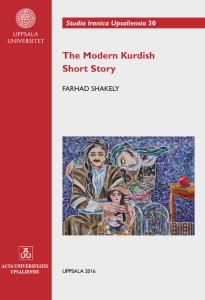 Shakely, Farhad
Acta Universitatis Upsaliensis, 2016
ISBN: 978-91-554-9774-3
The focus of this study is on the Kurdish short story, read from the viewpoint of literary history. The political course of events in Kurdistan, and the political and social circumstances which followed, have without question strongly influenced the Kurdish short story both in content, style, and language. The Kurdish short story has its origins in the second decade of the twentieth century. Kurdish prose arose in the beginning of the nineteenth century. There are few examples of Kurdish prose from that time; in every case, they are non-literary.Kurdish journalism played a central role in the development of the short story. The origin of the art of the Kurdish short story is directly related to Kurdish journalism. This development cannot be isolated from very conscious attempts to further the Kurdish short story with the help of translations of short stories into Kurdish from other languages – European languages in particular. This essay is an attempt to study the development of the Kurdish short story from its start until the beginning of the first decade in the 21st century.
Comments : Comments Off on New Book Out: The Modern Kurdish Short Story
Categories : Uncategorized
New Book Out: Kurdish Hizbullah in Turkey – Islamism, Violence and the State
7 02 2017 Kurt, Mehmet
Pluto Press, 2017
ISBN: 9780745399348
This study analyses Kurdish Hizbullah as a social movement and investigates this biggest Kurdish Islamist group by means of ethnographic fieldwork in their daily lives. As opposed to Hizbullah in Lebanon, whose followers are mainly adherents of the Shiite sect of Islam, Hizbullah in Turkey is populated by Sunnis, more specifically by Shafii Kurds. Mehmet Kurt charts the development of a particularly powerful Islamist social movement – Kurdish Hizbullah – from its origins in violent militancy to a more ‘civic’ mode of engagement, an engagement which nonetheless provides a rationale for disenchanted young Islamists to engage in political violence. It offers a unique insight into Kurdish Hizbullah, its political rise and the apparent power of Islamism amongst Kurds in the region, particularly in a context in which the leftist Kurdish political movement is the hegemonic political discourse. Through ethnographic field work and extensive interviews with members, leaders and supporters of Hizbullah, Kurt revelsa the manner in which Islamic civil society has taken root in a region where ethnic identity has been the primary organising tool against a repressive and violent state.
Dr. Mehmet Kurt studied Theology and Islamic Studies, and has a PhD in Sociology. He worked as a visiting researcher at Yale University Department of Anthropology. His areas of expertise are Kurdish Islamist groups, social movements, radicalisation, the Kurdish issue in Turkey, visual ethnography and oral history. He is the author of Turkiye’de Hizbullah (leti im Publication, 2015), and is the British Academy Newton Advanced Post-Doctoral Fellow at Queen Mary University of London.
Comments : Comments Off on New Book Out: Kurdish Hizbullah in Turkey – Islamism, Violence and the State
Categories : Uncategorized
Call for Papers: Narratives of Struggle – Maintaining and Preserving Kurdish Cultural Heritage
5 02 2017 The Kurdish Studies Association (KSA) announces a call for papers for the November 2017 Middle East Studies Association (MESA) meeting to be held in Washington DC, November 18-21, 2017.
Narratives of Struggle: Maintaining and Preserving Kurdish Cultural Heritage
Deadline for submission: February 9, 2017
Organizer and Chair: Christian Sinclair
This organized panel seeks to explore the narratives and politics of cultural maintenance and preservation in the face of repression and conflict. Culture, as defined by UNESCO, is “that complex whole which includes knowledge, beliefs, arts, morals, laws, customs, and any other capabilities and habits acquired by [a human] as a member of society.” Cultural heritage can be tangible or intangible. According to Bouchenaki (2003), “[c]ultural heritage is a synchronized relationship involving society, norms, and values” and the “intangible heritage should be regarded as the larger framework within which tangible heritage takes on shape and significance.”
The overt struggles faced by the Kurds across the Middle East are well known and have a rich literature. What is less researched, and hence the theme of this panel, are the behind-the-scenes efforts to maintain, preserve, and document Kurdish cultural heritage in the face of these decades-long struggles in the region and beyond. How does culture survive decades of oppression? How is it preserved and documented when challenged by the state or even from within?
There is no singular Kurdish culture, but rather a multitude of sub-cultures that together form Kurdish cultural heritage, writ large. Questions this panel hopes to answer include: Who defines these Kurdish culture(s)? For whom is the culture maintained and/or preserved, and why? Are there competing narratives of a singular cultural element? What risks and challenges are inherent in preserving Kurdish culture in the region? What are the relationships between tangible and intangible Kurdish culture?
Points of consideration may include, but are not limited to:
- The role of institutions such as libraries, archives and museums
- Patrimony, ownership and possession
- Hegemony and representation
- Gendered perspectives on cultural heritage
- Language and ethno-linguistics
- Religion and religious institutions
DEADLINE: By February 9, 2017, please send abstracts of 300-400 words for the panel. Include a brief 50-75 word bio. Those selected for the panel will be asked to submit their abstracts to MESA via their online submission system by February 15, 2017. Abstracts for this KSA-sponsored panel should be sent to: KSA Executive Secretary, William Kopycki at w.kopycki@gmail.com.
NOTE: All selected panelists must be members of MESA at the time of paper submissions to MESA. Student membership to MESA is $65. Professional membership rates vary according to income. Please do not submit an abstract to us if you are not prepared to join MESA once your abstract has been accepted. For more information about the MESA meeting, go to: http://mesana.org/annual-meeting/
Comments : Comments Off on Call for Papers: Narratives of Struggle – Maintaining and Preserving Kurdish Cultural Heritage
Categories : Uncategorized
Call for Papers: 3rd Lalish Conference for Peace and Coexistence – Civic State Guarantees the Sustainable Peace
31 01 2017 The Center for Peace and Human Security at the American University of Kurdistan in Duhok, the Women Peace Group and Emma Organization for Human Development will hold the 3rd Lalish Conference for Peace and Coexistence in April 25th and 26th, 2017 entitled “Civic State Guarantees the Sustainable Peace”. The 3rd Lalish Conference for Peace and Coexistence will be a two days conference. The ultimate objective of the conference is to endorse the principles of democracy, social justice and sustainable peace in the Middle East, through understanding genocide, self-determination of nations and affects of the war on women. These would only be guaranteed within the framework of the civic and democratic state.
Conference Themes
The conference papers will be presented in three panels:
Panel ONE:
Revisiting Genocide Experience: Recognition and Protection
The main objectives of this panel are: exchange the experiences of nations that faced genocide, documented the crimes and advocated to recognize it as a genocide internationally and getting international support for self determination. For this panel we invite papers and academic research on cases of genocide from different nations experienced genocide.
Panel TWO:
Self-determination is Vital for Sustainable Peace
This panel aims to discuss the right of self-determination of nations, as a guarantee to protect them from genocide and other threating to maintaining sustainable peace, through comparing between experiences of nations that are part of democratic communities and those are under pressure of dictatorship.
Panel THREE:
Effects of War on Women
The goal of this panel is focusing on the effects of ISIS war on the women that includes:
- The condition of women and children that have being abused and sexually harassed by ISIS soldiers during war.
- The women that have being forced to marry ISIS fighters.
- The situation and rights of female headed families
Limited fund will be provided for transportation and accommodation
You can Submit your abstract to cphs@auk.edu.krd or muslih.irwani@auk.edu.krd
| Important Dates | |
| Call for Paper Announcement | December 29th, 2016 |
| Abstract Submission | February 17th, 2016 |
| Abstract Acceptance Announcement | February 23rd, 2017 |
| Full Paper Submission | April 6th, 2017 |
| Announcement of Preliminary Program | April 18th, 2017 |
| Announcement of Final Program | April 25-26th, 2017 |
Comments : Comments Off on Call for Papers: 3rd Lalish Conference for Peace and Coexistence – Civic State Guarantees the Sustainable Peace
Categories : Uncategorized
Kurdish Studies Summer School
25 01 2017 Kurdish Politics and Society: Contemporary and Historical Perspectives
Please join us at this intensive summer school at the Kurdish Institute, Paris (17-20 July 2017) focusing on Kurdish politics and society. The School and will bring together scholars, postgraduate students and community advocates.
Dates: 17-19 July 2017 (teaching); 20th July 2017 (Kurdish ‘Paris’ tour TBC).
Place: Kurdish Institute, Paris
Registration Fees: 125 Euros (until 25 April 2017);
Registration fees cover tuition and venue costs.
Students will arrange and pay for their own accommodation and travel. Special rates on accommodation will be sent to those who have registered following the early registration deadline. This summer school is designed to engage postgraduate students (Master and PhD level), independent scholars, recent graduates in the field of Kurdish Studies as well as community advocates in the politics, society and culture of Kurds.
Keynote lecturers and panellists include:
- Professor Joyce Blau
- Professor Hamit Bozarslan
- Dr Nazand Begikhani
- Dr Ipek Demir
- Dr Wendy Hamelink
- Dr Welat Zeydanlioglu
The lectures and workshops will be organized in line with the lecturers’ area of expertise. They will be delivered in English, and broadly in these areas:
Area 1: Politics, Resistance, Radicalism and Violence in Kurdistan and the Middle East
Area 2: Kurdish Language and Literature
Area 3: Kurdish Studies and Gender & Gender-based Violence and Resistance
Area 4: Kurdish Diaspora
Area 5: Kurdish Culture, Arts and Music
Area 6: The Politics of Kurdish Language
The format of each day is as follows:
1) Opening plenary/keynote lecture by at least one of the invited speakers above, outlining the main approaches and methods employed in their specific field (e.g. gender).
2) 15 minute presentations by participants which are then followed by feedback from at least one keynote speaker. Group discussion and feedback.
3) Closing session with two student rapporteurs summing up key insights from the day and closing statements.
APPLICATION INFO:
Please fill in the attached application form.
You are welcome to apply as one of the following:
(a) as a presenter of a paper
(b) as an attendee.
You will be able to indicate this on the application form.
Those wishing to present a paper and receive feedback, please include a long abstract (max 500 words) in the application form. Please note that both the word limit and the deadline are strict.
Send the application form to Ipek Demir: id34@le.ac.uk
Deadline: 15 March 2017 (spaces might be filled before this date, hence please send your application asap)
Shortlisting will be finalised and communicated by 25 March 2017
REGISTRATION:
Registration (for those who have been accepted) will open on 5 April 2017
Early Registration Deadline: 25 April 2017
Early Registration Fee: 125 Euros
Registration Fees after 25 April 2017: 200 Euros
Please note that this is not a conference but a teaching and learning event involving teaching sessions from senior scholars of Kurdish Studies. It is a unique opportunity and places are strictly limited. In the event of the summer school being oversubscribed, participants may be selected according to the likely coherence of the sessions – this is not necessarily a reflection on the quality of work submitted.
For the application form click below:
Comments : Comments Off on Kurdish Studies Summer School
Categories : Uncategorized
New Book Out: Little Turkey in Great Britain
23 01 2017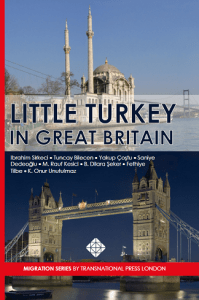 Sirkeci, Ibrahim et al.
Transnational Press London, 2017
ISBN: 978-1-910781-19-7
This book is the outcome of a collaborative writing exercise drawing upon a dozen of researches carried out by authors independently and jointly from 2011 to 2015 on Turkish, Kurdish and Turkish Cypriot diaspora populations in Britain, and particularly in London. It is a well round account of these particular immigrant populations from Turkey in the UK. Rich material covers official statistics, survey data as well as a wealth of narratives built upon hundreds of face-to-face interviews carried out in London and elsewhere in Britain. Each chapter looks into different aspects of the three populations ranging from political participation to employment relations to integration and identity formation, and from remittances to football and community life.
Turkish migration to British Isles has a long history but sizeable diaspora communities and enclaves of Turkish origin have emerged only in the last four to five decades. Earlier groups arrived were Cypriots fleeing the troubled island in the Eastern Mediterranean whilst Turks and Kurds of the mainland were not even considering the UK as a destination. This book is about these contemporary movers from Turkey, their movement trajectories, practices, and integration in Britain. Eight researchers from different disciplinary backgrounds and methodological schools came together to do the ground work for the students of this emerging subfield of human mobility studies. Turkey is now at the forefront of accommodating large scale inward mobility mostly due to the crisis in Syria and Iraq. This also brings some attention to Turkey’s own diasporic populations.
Comments : Comments Off on New Book Out: Little Turkey in Great Britain
Categories : Uncategorized
Call for Abstracts: Kurdish Migration Conference 2017
10 01 2017 Following the success of the first international Kurdish migration conference (KMC) held in 2016 at Middlesex University (London) and the strong interest and participation by the international scholarly community, the 2nd KMC will be held at Middlesex University on 15 and 16 June 2017. Displacement and forced migration have a distinct meaning and significance in the history of the Middle East. In recent years, the political and economic instability of the area, together with the repressive and coercive policies of most regional states and their international allies, the marginalisation of minority groups and the rise of fundamentalist movements, continue causing permanent crises, fuelling displacements and forced migrations. Millions of people have lost their homes and livelihood and were forced to seek a safe haven either in the neighbouring countries or taking a long and dangerous journey to Europe. The images of drowned three-year-old Kurdish boy Alan Kurdi in the Aegean Sea, mass killing of Yazidis and Syrian nationals, displacements of religious and ethnic minorities made global headlines without any effect.
Similarly to its neighbouring countries, today the Kurdistan Region in Iraq hosts some 1.8 million refugees from Syria and internally displaced persons. A considerable number of refugees and displaced people are also hosted by the Kurdish Cantons in Rojava (Kurdish region in Syria) and by municipalities in the Kurdish Region of Turkey.
Far away from the homeland, the over 2 million Kurds living in Europe, the USA, Canada, Former Soviet republics and other countries are following with great concern the events in the Middle East. Since the 1980s, the Kurdish diaspora in the Western has played an important role, recreating new Kurdish diasporic spaces in settlement countries while simultaneously reconnecting to their home country and making the question of Kurdistan a transnational political issue through their political engagement, media and cultural production and activism. However, what is the relationship of the Kurdish diaspora with the contemporary challenges and conflicts in and around Kurdistan? What kind of exchanges and interactions are taking place? How do Kurds relate with new refugees and displaced people living in Kurdistan, the Middle East and Europe? Moreover, what are the experiences of the Kurdish diaspora in countries where hostility and discrimination towards immigrants are alarmingly on the rise?
The Kurdish Migration Conference 2017 aims to bring together researchers from a range of disciplines working on Kurdish migration to discuss these and other relevant questions and to exchange their views and findings about all aspects of migration from, through and into Kurdistan, as well as about the experiences of diasporic communities and second generations abroad.
Keynote speakers:
- Professor Joshua Castellino (Middlesex University, London)
- Dr Osten Wahlbeck (University of Helsinki, Finland)
More speakers will be confirmed in the coming weeks.
Call for abstracts
Researchers are encouraged to contribute to and help shape the conference through submissions of their abstracts. The conference themes cover issues relating to migration from, through and into Kurdistan.
Topics of interest for submission include, but are not limited to:
- Migration, ethnicity, citizenship, belonging and identity politics
- Migration, labour market, entrepreneurship and economic integration
- Migration, gendered experiences, and sexuality
- Family dynamics and intergenerational relationships
- Migrants, media and translocal cultural politics and representations
- Political participation, (digital) networks and organizations
- Transnational ties and/or remittances
- Migration, law, legal status, rights, and undocumented migration
- Internal and international migration, borders and borderlands
- Discrimination and xenophobia and diasporic narratives of Kurdish resistance
- Refugee and internal displacement issues
- Migration theories and frameworks
- Research methodology and Kurdish migration
We also welcome submissions of proposals for panels.
Special panel: Kurdish Studies at British Universities
Due to a strong demand of scholars working in all subject of Kurds and Kurdistan at British universities, we have decided to organise a special panel(s) on “Kurdish Studies at British Universities”. The papers for this panel are not limited to migration but is open for all subject of Kurds and Kurdistan studies. If you would like to be considered for the special panel please note this in your submission.
How to submit
Click here to submit your abstract (or panel) proposal online
N.B. All speakers will be required to register and pay the registration fee ahead of the conference. You will be sent information on how to register upon acceptance of your paper.
Registration fee: £ 50
Discount fee for students (undergraduate, postgraduate or doctoral): £ 25
For more information, please contact the conference organisers:
– Dr Janroj Yilmaz Keles: J.Keles@mdx.ac.uk
– Dr Alessio D’Angelo: A.Dangelo@mdx.a.uk
Important Dates
– Deadline for abstract submissions: March 1st, 2017
– Notification of acceptance: March 15, 2017
– Conference date: June 15-16, 2017
This conference is organised by the Business School
and the Social Policy Research Centre at Middlesex University
Comments : Comments Off on Call for Abstracts: Kurdish Migration Conference 2017
Categories : Uncategorized
New Book Out: Contemporary Turkey in Conflict – Ethnicity, Islam and Politics
6 01 2017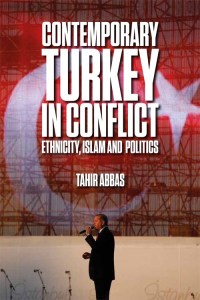 Abbas, Tahir
Edinburgh University Press, 2016
ISBN: 9781474417990
New perspectives on ethnic relations, Islam and neoliberalism have emerged in Turkey since the rise of the Justice and Development Party (AKP) in 2002. Placing the period within its historical and contemporary context, Tahir Abbas argues that what it is to be ethnically, religiously and culturally Turkish has been transformed. He explores how issues of political trust, social capital and intolerance towards minorities have characterised Turkey in the early years of the 21st-century. He shows how a radical neoliberal economic and conservative outlook has materialised, leading to a clash over the religious, political and cultural direction of Turkey. These conflicts are defining the future of the nation.
Key features
- Uses original qualitative data and observational analysis of the Gezi Park protests of 2013 and of a Kurdish community in the southeast of Turkey to explore aspects of political resistance and mobilisation.
- Analyses attitudes and perceptions of Turkish respondents based on survey data from the European Social Survey.
- Includes case studies to provide an insight on intergroup relations, social conflict and cultural cohesion in Turkey.
- Offers an important contribution to the discussion of Islamism, capitalism and democracy in Turkey.
Comments : Comments Off on New Book Out: Contemporary Turkey in Conflict – Ethnicity, Islam and Politics
Categories : Uncategorized
New Book Out: The Kurds of Turkey – National, Religious and Economic Identities
5 01 2017 Cicek, Cuma
I. B. Tauris, 2016
ISBN: 9781784535452
In fact, Kurds in Turkey have many diverse political and ideological orientations. Focusing on the elites of these informal groups – national, religious and economic – Cuma Cicek analyses the consequences of the divisions and subsequent prospects of consensus building. Using an innovative theoretical framework founded on constructivism, the ‘three ‘I’s’ model and various strands of sociology, Cicek considers the dynamics that affect the Kurds in Turkey across issues as diverse as the central state, geopolitics, nationalism, Europeanisation and globalisation. In so doing, he examines the consensus-building process of 1999-2015 and presents the possible route to a unified Kurdish political state. Cicek’s in-depth and meticulously researched work adds an indispensable layer of nuance to our conception of the Kurdish community. This is an important book for students or researchers with an interest in the history and present of the Kurds and their future in Turkey and across the Middle East.
Comments : Comments Off on New Book Out: The Kurds of Turkey – National, Religious and Economic Identities
Categories : Uncategorized
Lecture Series: Religious Traditions among the Kurds
19 12 2016
Comments : Comments Off on Lecture Series: Religious Traditions among the Kurds
Categories : Uncategorized
Call for Papers: Iraqi Kurdistan at a Crossroads – Current Issues of Domestic and Middle Eastern Politics
20 11 2016 University of Kurdistan-Hewler, Erbil, Kurdistan Region Iraq, 24-25 May 2017
The University of Kurdistan-Hewler is pleased to announce the call for papers for a conference on the latest developments in Iraq and the Middle East, Iraqi Kurdistan at a Crossroads: Current Issues of Domestic and Middle Eastern Politics, Erbil, May 24-25, 2017. The defeat of ISIS is a matter of time while restoring peace and acquiring stability in the Middle East will take many years to come. One of the biggest problems that needs to be addressed in order to achieve long-lasting stability in the region is the Kurdish question, including Iraqi Kurdistan’s plans to break away from Iraq.
The Conference topics include:
· The Kurdistan regional government in the post-ISIS period
· Erbil-Baghdad relations; political, economic and social challenges
· Neighboring countries’ policies towards the KRG
· Major global power strategies towards Iraq and Kurdistan
Proposal ideas that extend beyond these thematic areas will be also considered.
Proposal submission deadline: January 16, 2017
For more information and to submit a proposal, please visit https://www.ukh.edu.krd/eventdetail.php?evid=39
Comments : Comments Off on Call for Papers: Iraqi Kurdistan at a Crossroads – Current Issues of Domestic and Middle Eastern Politics
Categories : Uncategorized
The Best Article Award in Kurdish Political Studies Announcement
15 11 2016 This award, sponsored by Kurdish Political Studies Program at the University of Central Florida, recognizes the best article in Kurdish Political Studies by a rising scholar during the previous calendar year. In this inaugural year of the award, social science and humanities articles published in English language peer-reviewed journals in 2014 and 2015 were considered.
The First Prize Winner
Wendelmoet Hamelink and Hanifi Barış, “Dengbêjs on borderlands: Borders and the state as seen through the eyes of Kurdish singer-poets,” Kurdish Studies 2 (2014): 34-60.
The Second Prize Winner
Harun Yilmaz, “The Rise of Red Kurdistan,” Iranian Studies 47 (2014): 799-822.
From an impressive pool of more than a dozen articles, the committee has unanimously awarded the first prize to Wendelmoet Hamelink and Hanifi Barış’s “Dengbêjs on borderlands” published in Kurdish Studies. The article masterfully combines theoretical insights with meticulous research involving close textual analysis of the stories and symbols of the kilams (recital songs) and interviews conducted with the dengbêj (Kurdish folk singers) themselves to address one of the most important questions in modern Kurdish political history: why Kurds don’t have a state of their own? In contrast to typical conceptions that Kurdish elites “failed” to gain a nation-state, as well as more general condemnations of Kurds as too internally divided to achieve a state of their own, Hamelink and Barış find that Kurdish communities deliberately avoided and evaded the state as a means of maintaining some measure of freedom and independence. They suggest this evasiveness was not limited to preventing external authorities from imposing their will; it also included trying to ensure no state emerged from within Kurdish society. Their demonstration of the relevance of the local—local alliances, relationships, enmities, battles —and the perception in the kilam of the state and borders as external, far-flung, and invasive also offers an important counterpoint to the highly nationalized depictions common in accounts of Kurdish politics and society. The article also illustrates the rich potential of truly interdisciplinary work and draws on multiple methodologies and fields. The clarity and elegance of the writing, and the careful presentation of the kilams in both the original Kurdish and the English translation are also noteworthy.
The committee has awarded the second prize to Harun Yilmaz’s “Red Kurdistan” published in Iranian Studies. Scholarship on the Kurds have overwhelmingly focused on the Kurds in the Middle East. As a result, the Kurdish communities living in the Caucasus region have not received significant attention. Yilmaz’s article addresses this gap and focuses on the Kurdish population in Azerbaijan under Soviet administration between 1920 and 1937.This original work utilizes a wealth of primary and secondary sources in an attempt to demystify a Kurdish population in the Caucasus region subject to both communist modernization policies and Azeri hegemony during the interwar years. It compellingly documents the tensions between the Soviet modernist goal of presenting Azerbaijan as a regional model of ethnic coexistence and bureaucratic, political, and socioeconomic factors hampering literacy and schooling campaigns that brought few tangible benefits to the Kurds until the 1930s.
The first prize winner is awarded $300, and the second prize winner $200.
The committee is composed of Janet Klein (the University of Akron), Hakan Özoğlu (University of Central Florida), Güneş Murat Tezcür (University of Central Florida), and Nicole Watts (San Francisco State University).
Comments : Comments Off on The Best Article Award in Kurdish Political Studies Announcement
Categories : Uncategorized
Call for Panelists: Kurdish Futures In and Outside of Iraq, Syria, Turkey, and Iran – Fresh Hopes or New Tragedies
15 11 2016
 Following the success of the last two previous Kurdish studies conferences here in 2012 and 2015 at the University of Exeter Centre for Kurdish Studies, our next conference event will be held over 2.5 days: 26th – 28th June 2017. The theme for this event will be: Kurdish Futures In and Outside of Iraq, Syria, Turkey, and Iran: Fresh Hopes or New Tragedies?
Venue: Institute of Arab and Islamic Studies, University of Exeter, Stocker Rd, Exeter, EX4 4ND Call for Panellists
We are currently seeking proposals from scholars to organise panels.
The Conference Committee seeks proposals addressing subjects of relevance to the theme. We will also welcome proposals for panels that are not addressing the core theme of the conference, but their inclusion will be at the committee’s discretion. The Conference Committee welcomes panels of any disciplinary composition.
The deadline for proposal submissions is 16th Jan, 2017 at 5:00 p.m. GMT
All proposals must be submitted electronically to cks-kurdishconference@exeter.ac.uk
If you have any question regarding panel participation please contact:
cks-kurdishconference@exeter.ac.uk
To submit a proposal:
After considering the guidelines below please submit the proposal to the email address:
cks-kurdishconference@exeter.ac.uk
In the body of the email, please include the following information: Title of paper, your name, affiliation and address, E-mail address.
Panel Proposal Submission Guidelines
1. Commitment to participate prior to submission.
Please submit proposals which have confirmed commitment from participants. We wish to see panels which resemble the original proposal. Replacement participants will be allowed in exceptional circumstances only. It is expected that all presentations will be in English. Exceptions to this will be considered if there are arrangements for translation and prior agreement sought from the conference committee. The audio visual facilities within the centre building are limited and it is preferred that all participants appear in person.
2. The criteria on which the committee focuses are:
- Relevance to conference theme of ‘Kurdish Futures In and Outside of Iraq, Syria, Turkey, and Iran: Fresh Hopes or New Tragedies?’
- Ability to bring new knowledge and understanding to the field.
- Quality of material or interpretations, soundness of methodology, knowledge of the field,
etc.
- Structure and quality of the papers proposed for a given panel.
- Quality of the written abstracts, the overall panel abstract being of greatest importance.
- Gender, ethnic, and institutional balance and a combination of junior and senior scholars.
- We wish to promote a lively engaged discussion following each panel presentation. Participants are encouraged to consider presentation formats which engage the audience.
Acceptance of submission
Organising panellists will be informed by email as to the outcome of their proposal by the 31st January 2017
Programme Scheduling
The proposed workshop will be held over 2.5 days.
Panel sessions will begin on 26th June 09:30, the final presentation on the 28th June will finish at 12:30.
The conference committee will seek to complete the panel scheduling after all the applications have been received and acceptances given.
Audio Visual Facilities & Room Access
There are standard audio visual facilities within the building. PC, projector. If participants wish to bring an Apple computer please can they bring any adaptor / connector for their equipment as we cannot guarantee we will have the necessary connector. We have no plans to record the conference proceedings. The room is on our lower ground level, accessible by a lift.
Registration for participants
All participants will need to register, there is no fee for registration but the cost of any accommodation booked and the delegate day rate will be expected to be paid by all participants and delegates.
Participants will need to pay their attendance rate and any accommodation booked by the 14th May 2017. No refunds will be given for participants withdrawing after 14th May 2017. We suggest all participants in need of financial assistance from their institutions or other sources and/or those participants needing to complete a visa application begin the process immediately after notice of proposal acceptance. We cannot make exceptions for refund requests; including those submitted on the basis of denied funding and/or visa applications.
The conference ‘registration store’ is expected to be available via the university website by January 2017. A notice will go out to announce when this is available.
Cost of attending:
Total cost of attending the 2.5 days, which includes: all refreshments and food, including a lunch on the final day is £215.
On the evening of Tuesday 27th there will be a conference dinner. The cost of the dinner is also included in this price.
Accommodation:
Accommodation on site will be at Holland Hall https://www.exeter.ac.uk/eventexeter/venues/holland-hall/ this is situated a short walking distance from the conference venue. If you have any mobility issues and require any assistance please notify us in advance of your stay and we will be happy to arrange assistance.
Accommodation will be offered on the nights of the 25th, 26th and 27th June at a cost of £59.95 pn which includes breakfast.
Travel Bursary:
We do have limited funding available for assistance related to the conference.
- Support is limited to those scholars who are participants on panels and/or roundtables that have been accepted on the formal program.
- Panel organisers must apply on behalf of the intended recipient requesting the bursary.
- All applicants must indicate the city and country they will be traveling FROM to attend the
conference.
We will seek to fund those where need is seen as greatest. This could be because the home institution where the scholar is coming from is lacking in funds or if the recipient is unfunded or a student. Preference will be given to junior scholars and presenters, and attempts will be made to apply grants across all panels to support a broad representation, etc.
Panel organisers or applicants should seek outside funding to supplement the travel grants. Travel expenses eligible for reimbursement will be limited to advance purchase international return-trip economy airfare (purchased before 14th May for air fares and train tickets) airport transfers, public transfer the conference registration.
Panel organisers should submit their request for financial assistance as part of their panel proposal by the 16th Jan, 2017 deadline. No requests for travel assistance for participants will be considered after this date.
All reimbursements will be processed after the event and attendance has been confirmed. Participants will need to present receipts as proof of payment. Payment will be by bank transfer asap after the event. We are unable to pay cash on the day of the event for reimbursement.
Organised Panels
Organised Panels are proposed around a common subject or theme. Formal papers are presented, often followed by discussion. Organised panels last for an hour and a half and must include ample time for audience participation. Organised Panel proposal submissions should include:
A 300-word (maximum) overall panel abstract is required, in addition to the 300-word (maximum) abstract for each paper on the panel. The abstracts provided for each prospective paper presentation are very important, but the overall panel abstract is of greatest importance. The configuration of the panel is left to the organiser’s discretion. Abstracts should reach the committee by 16th Jan 2017.
-
Important Dates
- Deadline for abstract submission: 16th January 207
- Notification to panel organisers: by 31st January 2017
- Online Registration closes for panellists and delegates: 14th May 2017
- Delegates arrival (evening/pm) for conference: Sunday 25th June 2017
- First day of conference Monday 26th June 2017
- Second day of conference Tuesday 27th June 2017
- Gala dinner on evening Tuesday 27th June
- Half day conference and close Weds 28th June.
Conference webpage:
Facebook: http://www.facebook.com/KurdishConference2017/ Website: http://socialsciences.exeter.ac.uk/kurdish2017/
Comments : Comments Off on Call for Panelists: Kurdish Futures In and Outside of Iraq, Syria, Turkey, and Iran – Fresh Hopes or New Tragedies
Categories : Uncategorized
Call for Papers: Language Contact and Language Change in Western Asia
6 11 2016Language Contact and Language Change in Western Asia Conference, 10th to 12th March 2017 Goethe University Frankfurt, Germany.
The conference “Language Contact and Language Change in Western Asia” focuses on multilingualism in Western Asia. Within Western Asia, we aim at focusing the Kurdish-populated areas in the regions of Iran, Iraq, Syria, Turkey and the neighboring countries Armenia, Azerbaijan, and Georgia. In this area, several Indo-European varieties are spoken, including Armenian, Kurdish varieties, and Persian. A number of non-Indo-European languages are spoken as well, such as Azeri Turkic, Neo-Aramaic, and Turkish. Finally Georgian and other Caucasian languages are also spoken in the region. Most of the above-mentioned languages exhibit a suprastratum of Semitic, Iranian and Turkic languages due to their close contact for centuries.
The conference explores the use of corpus methods in descriptive and theoretical analysis of word order change of natural languages in a multilingual area like Western Asia. Focal areas of interest include, but are not limited to language contact and language change in word order, information structure, and prosody. Furthermore, we are interested in theoretical and methodological issues pertaining to corpus-oriented research in language contact, i.e. tools, methods, and techniques in corpus assembly, annotation and analysis, the interaction between corpus linguistics and computational linguistics, the relevance of corpus linguistics and linguistic theory, the use of statistical and quantitative methods in detecting patterns of language change, as well as the impact of corpus-based vs. corpus-driven approaches on our view and understanding of morphosyntatic change in languages.
Call deadline
15th December 2016 for abstract submission
Submissions
Proposals are open to anyone but we especially welcome:
1. Postgraduate students (MA, MPhil, MSt, etc.);
2. PhD students/candidates and post-docs at any stage of their degree.
We invite submissions of preliminary abstracts (max. 1 page, excluding references) for 20 minute presentations. Please send your abstracts through https://easychair.org/conferences/?conf=lclcwa2017 by 15th December 2016.
Important dates
15th December 2016 — Call deadline (submission of abstracts) 10th January 2017 — Notification of acceptance
Invited speakers
Prof. Dr. Anaid Donabedian (Labex EFL, Inalco, SeDyL, Paris, France) Prof. Dr. Geoffrey Khan (University of Cambridge, UK)
Prof. Dr. Jost Gippert (Goethe University of Frankfurt, Germany)
Prof. Dr. Martin Haspelmath (MPI-SHH Jena & Leipzig University, Germany) Prof. Dr. Michael Chyet (Library of Congress, Washington D.C., US)
Prof. Dr. Yaron Matras (Manchester University, UK)
Scientific committee
PD Dr. Agnes Korn (CNRS, UMR Mondes iranien et indien, Paris, France) Prof. Dr. Eleanor Coghill (Uppsala University, Sweden)
Prof. Dr. Geoffrey Haig (Bamberg University, Germany)
PD Dr. Irina Nevskaya (Goethe University of Frankfurt, Germany) Dr. Mojtaba Moshi Zadeh (Allameh Tabataba’i University, Iran) Dr. Thomas Jügel (Labex EFL, Inalco, Paris, France)
Dr. Zahra Abolhassani Chimeh (Research Center, SAMT, Iran)
Regular updates will be announced on our Facebook page: https://www.facebook.com/Humanities-and-Linguistics-Cross-Disciplinary-Approaches-1668887300067775/ A virtual preview of our program will be uploaded as soon as possible.
Inquiries and contact
LCLCWAConference@gmail.com
Comments : Comments Off on Call for Papers: Language Contact and Language Change in Western Asia
Categories : Uncategorized
International Seminar Series: Kurdish Independence and EU Aspects
28 10 2016 The School of History, Politics and International Relations, University of Leicester initiates its ‘International Seminar Series’ on Kurds and the Middle East and is pleased to invite you on November, 1st 2016 in the event entitled Kurdish Independence and EU aspects: The Impact of a Confederate Model of Governance.
The Seminar will address:
- The Project of Independence in the Kurdistan Region of Iraq
- The Kurdish Referendum: Challenges, Outcome and Impact
- Confederation as potential model of governance
- EU Views and Policies
With Guest Speaker:
Delaware Ajgeiy, Head of Mission to European Union, Kurdistan Regional Government
Attenborough Basement, University Film Theatre
To Register: Please email politics@le.ac.uk expressing your interest.
Comments : Comments Off on International Seminar Series: Kurdish Independence and EU Aspects
Categories : Uncategorized
Conference: Historical and Comparative Perspectives on Kurdish Politics
26 10 2016 November 2-4 2016, Scott Hall, Guild Lounge, Northwestern University, Evanston, Illinois
The Kurds are one of the world’s largest ethnic groups without a state, constituting sizable minorities in Turkey, Iran, Iraq, and Syria. They have recently become prominent in world politics due to their fight against the Islamic State in the midst of Syria’s civil war. Yet until now, their history has largely been one of marginalization, oppression, and resistance across borders.
It is estimated that about half of world’s more than 30 million Kurds live in Turkey, where they have struggled for self-governance through parliamentarian politics and armed conflict for more than 30 years. The three-year peace talks between the Turkish State and the PKK (Partiya Karkerên Kurdistanê, the main armed group of the Kurds) were terminated in July 2015 by the Turkish state, leading to yet another cycle of violence.
Hundreds of civilian casualties, thousands of displaced Kurds, and terrified Kurdish and Turkish societies thus joined the long history of violence and deprivation in Turkey. This international conference aims to bring together cutting-edge research examining the last hundred years of Kurdish existence in the Ottoman Empire and the Turkish Republic in a historical and comparative perspective.
Comments : Comments Off on Conference: Historical and Comparative Perspectives on Kurdish Politics
Categories : Uncategorized
 Kurdish Studies Network