Conference on “Kurdish Studies and Politics” at Columbia University

4 05 2013

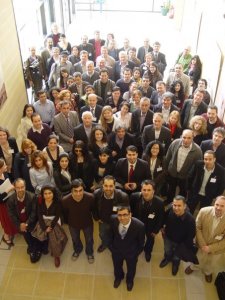
Conference on “Kurdish Studies and Politics”

May 6th, 2013, Columbia University.

For footage from the conference see (part I) and (part II).


The graduate student-led Organization for the Advancement of Inner Eurasian Studies (OASIES) at Columbia University will convene a series of panel discussions on Kurdish studies with eminent scholars and policy makers. Professors Robert Olson, Janet Klein, Zeynep Türkyılmaz, Mehmet Gürses and Abbas Vali will provide insights from an academic perspective. From the world of policy, Hasip Kaplan, the Peace and Democracy Party MP in the Turkish parliament, will complement the academic discussion with his vast experience in Kurdish affairs.

The panel discussions will be structured as follows: The first two will consist of academic conversations moderated by Columbia professors Richard Bulliet (history) and Katherine Ewing (religion/anthropology). The third panel, moderated by a Columbia PhD candidate specializing in Kurdish nationalism, Kamal Soleimani, will consist of a dialogue with Hasip Kaplan of Peace and Democracy Party from Turkey on contemporary affairs — from human rights issues linked to Syria to the recent cease fire between the Turkish government and the PKK.

The Kurdish Conference is part of a larger series of academic panels on ‘Forgotten Communities of Inner Eurasia’ that have taken Place over the past five years which we hope to install as regular series in the coming years which will focus on communities that have been systematically underrepresented or marginalized in academic institutions. OASIES inaugurated this series with a faculty panel entitled, “Power, Knowledge and the Kurds.” Moderated by Columbia Professor Gil Anidjar (Columbia University) that panel brought together Ahmed Ferhadi (New York University), Janet Klein (The University of Akron), and Robert Olson (The University of Kentucky). We are planning to continue these series with discussions on other underrepresented communities such as the Uyghurs, Hazara, and the Kalmyks.

If you would like to attend please RSVP. It is required to attend the conference. :
kurdishconference2013@gmail.com
Conference Schedule

Breakfast: 9:00 – 9:30

Opening Remarks : 9:30 – 10:00

Panel I : 10:00 – 11:30, Prof. Richard Bulliet (moderator)
Prof. Vali Abbas
Prof. Robert Olson

Lunch : 11:30 – 12:30

Panel II : 12.30 – 14:00, Prof. Ewing (moderator)
Asst. Prof. Janet Klein
Asst. ProfMehmet Gürses
Asst. Prof.Zeynep Türkyilmaz

Remarks : 14:00 – 14:20
David Phillips, Columbia University

Panel III : 14:20 – 15:50 Kamal Soleimani (moderator)
Hasip Kaplan, MP,Peace and Democracy Party, Turkey

Coffee Break : 15:50 – 16:00

Round-table (questions and answers from audience, conversation between panelists): 16:00 – 16:45

Concluding Statements : 16:45 – 17:00
Adress:School of International and Public Affairs
420 West 118th Street
New York, NY 10027

SIPA Building, 15th floor.


6th issue of Kürt Tarihi (Kurdish History) out

14 04 2013

The 6th issue of the popular journal Kürt Tarihi (Kurdish History) is out. This issue specifically looks at the Kurdish policy of the Republican People’s Party (CHP) during the single party rule in Turkey. The journal publishes new material emerging from Greek archives on discussions around Kurdish autonomy during 1921-1922 in Turkey’s assembly.

Table of contents 

– Two Months in Kurdish History/Kürt Tarihinde İki AyRahman DAĞ

– The End of the Prince of Rewandûz in Sweden’s Oldest Newspaper/İsveç’ın En Eski Gazetesinde Rewandûz Mîri’nin Sonu – Rohat ALAKOM

– The Eyyubis System of Communication during the Reign of Sultan Salahaddin/Sultan Selahaddîn Zamanında Eyyûbîlerin Haberleşme Sistemi  – Kadri YILDIRIM

– İsmail Beşikçi: “In Every Aspects Dersim is a Genocide/İsmail Beşikçi: “Dersim Her Bakımdan Bir Soykırımdır!”Interview/Söyleşi – Mesut  YEĞEN

Focus: The Republican People’s Party and the Kurds 

– Kurdish Autonomy in Greek Documents/Yunan Belgelerınde Kürtlere Özerklik – Murat ISSI

– Republican People’s Party and the Kurds [1923-1950]/CHP ve Kürtler [1923-1950]Ercan ÇAĞLAYAN

– Şükrü Kaya and the Secret “Turkification” Memorandum (1930)/Şükrü Kaya ve Gizli “Türkleştirme” Genelgesi (1930)Mehmet BAYRAK

– Are you among Those Kurds we could not Civilise? Kemalizm, Orientalism and the Kurds/Uygarlaştıramadığımız Kürtlerden misiniz? Kemalizm, Oryantalizm ve Kürtler Welat ZEYDANLIOĞLU

– The Koçkırî Operation and the Issue of the Investigation Commission/Koçkırî Operasyonu ve Tahkikat Komisyonu Meselesi / Mahmut AKYÜREKLİ

– The Dust of the Archive/Arşiv Tozu – Nilay ÖZOK-DOĞAN

– The Role of Modern Medicine and Kurdish Physicians in the Kurdish Enlightenment/Kürt Aydınlanmasında Çağdaş Tıbbın ve Kürt Hekimlerinin Rolü . Dr.Tarık Ziya EKİNCİ


Cfp: Kurdish Studies: Alternative Approaches

14 04 2013

The Kurdish Studies Platform Meeting Final DeclarationKurdish Studies Platform, which  have organized two meetings in Diyarbakır since June 2011 and whose aim is to promote independent studies in social sciences,  invites academicians, researchers and PhD students to the third meeting in Diyarbakır,  June 15-16, 2013. Like in the previous meetings, the main purpose is to contribute to the construction of the intellectual ground by which Kurdish studies that are excluded from or partly “involved” in academic and public information space in Turkey would exist. Moreover it is aimed to negotiate on institutionalization of a new perspective on social science. Since the long lead research on varied branches of social sciences on people, geography and culture of Kurdistan and Mesopotamia has crucial importance during “peace period”, methodical, discursive and ethical problems and the problem of construction of such a critical language gains primacy. The ultimate aim of the third meeting in June is to contribute to a creative and productive intellectual climate by assembling the people who are exactly addressed to these problems.

In this manner, the candidates who will participate the third meeting under the name of “Alternative Approaches in Kurdish Studies” need to send their abstracts no more than 400 words whether based on theoretical debates or field data at the conference mail address: kurdcalismalari@gmail.com by April 30, 2013. While the presentations can be about one of the following title or can involve more than one title, they are not limited by these:

  • Comparative Politics: Identity, Power and Struggle
  • “Kurdish Question” in International Frame: Kurds and Middle East
  • Politics, Economy and Class
  • History and Geography of Kurdistan
  • Kurdish Literature and Literature in Kurdish/Diaspora Literature
  • Religion and Belief in Kurdistan
  • Being “Minority” in Turkey
  • Women and Gender
  • “Justice” and Law
  • Urbanization and Migration Issue in Metropolis
  • 1990s, State, Kurdish Movement
  • Kurdish Question in the Context of Media and Cultural Studies

The official languages of the meeting are Kurdish and Turkish. The abstracts are needed to be sent in corresponded presentation language.

Kurdish Studies Platform

Conference Organization Crew

BANGAVAZİYA BO “Dİ LÊKOLÎNÊN KURDÎ DE XEBATÊN ALTERNATÎF”

Pûşbera 2011 û 2012’ê li Amedê ji aliyê Platforma Xebatên Kurdî ve du civînên berfireh û girîng hatin lidarxistin. Platforma ku xebatên xwe li ser zanistên civakî bi awayekî serbixwe dimeşîne; lêkoler, akademîsyen, xwendekarên doktora û lîsansa bilind, li Amedê dawetî civîna xwe ya sêyem ya 15-16 Pûşbera 2013’ê dike. Wekî di herdu civînên platformê yên berê de jî hate diyar kirin, Kurd li Tirkiyeyê heta niha nebûne mijara xebatên ilmî û derveyî berhemhînaniyên akademîk û raya giştî mane. Her ji ber vê Platforma Xebatên Kurdî hewl dide ku bingeha xebatên Kurdî bi gengeşe û angaştên alternatîf û cuda qewî bike û feraseteke nû ya li ser zanistên civakî bigehîne dereceya sazûmaniyê. Bi qonaxa ku wekî bi navê “Prosesa Aşitiyê” dihê qebûl kirin ve, firsenda xebatên li ser kultur, cografya û gelên Kurdistan û Mezopotamyayê rûdaye û lêkolînên kûr û dûr û curbicur, bi rêbazên akademîk derketiye holê. Bi vê mebestê, li dor behsa girîngiya xebatên Kurdî, arîşeyên metodolojîk, etîk û gotinî girîngtir bûye û di warê berhemhînaniyê de pêdiviya dirustkirina zimanekî rexneyî/sinarînî rûdaye. Mebesta civîna platformê ya sêyem û Pûşbera 2013’ê ew e ku, di ronahiya akademîk de muxatabên van arîşeyan kom bike û bi gengeşeyên cuda  xebatên li ser Kurdan bigehîne merheleyeke entelektuelî.

Platforma Xebatên Kurdî li ser esaseke rêbaza înterdîsîplînerî ava dibe û civîna xwe ya sêyem bi sernavê “ Di Lêkolînên Kurdî de Xebatên Alternatîf” jî bangewaziyê bo lêkoleran dike. Ew kesên ku xebatên xwe bi parametreyên teorîk û melûmatên sehayî dirust dikin, divê kurteya gotarên xwe yên herî zêde ji 400 bêjeyan pêk tê, heta 30 Nîsan 2013’ê bişînin navnîşana kurdcalismalari@gmail.com. Pêşniyazên gotaran, ji babetên ku li jêr hatine rêz kirin pêk tê û bitenê bi wan nehatiye sînor kirin.

  • Siyaseta Berawirdkirî: Pênase, Desthilatî û Têkoşîn
  • Di Çarçoveya Navdewletî de “Arîşeya Kurd”: Kurd û Rojhilata Navîn
  • Siyaset, Ekonomî û Çîn/Sinif
  • Dîrok û Cografyaya Kurdistanê
  • Wêjeya Kurd û Wêjeya Kurdî/ Wêjeya Dîasporayê
  • Li Kurdistanê Dîn û Bawerî
  • Kêmarên/Ekaliyetên Li Kurdistanê
  •  Jin û Cînsiyeta Nav Civakê
  • Dadwerî û Hiqûq
  • Bajarîbûn û Li Metropolan Arîşeya Koçberiyê
  • Salên 1990’î, Dewlet û Tevgera Kurd
  • Li Dor Behsa Medyayê û Xebatên Kulturî, Arîşeya Kurd

Zimanê pêşkêşiyên sempozyûmê dê bi Kurdî û Tirkî be. Ew kesên ku dê  gotaran pêşkêş bikin, divê kurteya gotarên xwe bi kîjan zimanî dikin, wesa bişînin.

Platforma Xebatên Kurdî

Amadekarên Konferansê

KÜRT ÇALIŞMALARINDA ALTERNATİF YAKLAŞIMLAR ÇAĞRI METNİ

2011’in Haziran ayından günümüze Diyarbakır’da kapsamlı iki toplantı gerçekleştiren, sosyal bilimler alanında bağımsız çalışmalar yürüten Kürt Çalışmaları Platformu; akademisyenleri, araştırmacıları, yüksek lisans ve doktora öğrencilerini 15-16 Haziran 2013 tarihlerinde üçüncü kez Diyarbakır’da buluşmaya davet ediyor. Daha önceki buluşmalarda da olduğu gibi temel amaç, Türkiye’de akademik ve kamusal bilgi alanının dışında bırakılan ya da kısmen “içerilen” Kürt Çalışmalarının var olabileceği entelektüel zeminin inşasına katkı sunmak ve alternatif yaklaşımların tartışılmasına olanak sağlamak; yeni bir sosyal bilim anlayışının kurumsallaşmasının yolları üzerine fikir alışverişinde bulunmaktır. Kürdistan ve Mezopotamya halkları, coğrafyası ve kültürü üzerine sosyal bilimlerin çeşitli dallarında yapılacak uzun erimli araştırmaların; daha önce hiç olmadığı kadar aktif biçimde karşımıza çıkan “barış süreci” bağlamında taşıdığı öneme binaen yöntemsel, söylemsel ve etik sorunlar ve bilgi üretiminde eleştirel bir dilin kurulması sorunu öncelik kazanmaktadır. Haziran ayında düzenlenecek üçüncü toplantının nihai hedefi tam anlamıyla bu sorunların muhatabı olan çalışmaların sahiplerinin seslerini bir araya getirerek yaratıcı ve verimli bir entelektüel iklime katkı sunmaktır.

Bu doğrultuda disiplinlerarası bir araştırma alanı olan “Kürt Çalışmalarında Alternatif Yaklaşımlar” başlığı altında yapılacak üçüncü toplantıda bildiri sunmak isteyen katılımcıların kuramsal tartışmalara veya saha verilerine dayanan çalışmalarını özetleyen maksimum 400 kelimelik bildiri özetlerini 30 Nisan 2013 tarihine kadar kurdcalismalari@gmail.com adresine yollamaları gerekmektedir. Sunum önerileri aşağıdaki başlıklardan birini veya birden çoğunu kapsayabileceği gibi bu başlıklarla sınırlı da değildir:

  • Karşılaştırmalı Siyaset: Kimlik, İktidar ve Mücadele
  • Uluslararası Çerçevede “Kürt Meselesi”: Kürtler ve Ortadoğu
  • Siyaset, Ekonomi ve Sınıf
  • Kürdistan Tarihi ve Coğrafyası
  • Kürt Edebiyatı ve Kürtçe Edebiyat/Diaspora Yazını
  • Kürdistan’da Din ve İnançlar
  • Türkiye’de “Azınlık” Olmak
  • Kadın ve Toplumsal Cinsiyet
  • “Adalet” ve Hukuk
  • Kentleşme, Metropollerde Göç Sorunu
  • 1990’lar, Devlet, Kürt Hareketi
  • Medya ve Kültürel Çalışmalar Bağlamında Kürt meselesi

Sempozyumun sunuş dilleri Kürtçe ve Türkçe olarak belirlenmiştir. Araştırmacıların bildiri özetlerini sunuş yapacaklara dile bağlı olarak Kürtçe veya Türkçe göndermesi gerekmektedir.

Kürt Çalışmaları Platformu

Konferans Hazırlık Ekibi


The Kurds: A Nation of Genocides

10 04 2013

The Kurds A Nation of GenocidesThe Kurds: A Nation of Genocides

By Kristiina Koivunen, Apec, 2013.

The history of the Kurds is a history of deportation, massacres and genocides. There are several books about them; the most famous cases are the Dêrsim massacre, Halabja chemical bombing and Anfal Campaign. But usually they are presented as independent cases without analyzing their connection to the whole process of the Kurdish genocides.

Kristiina Koivunen’s book “The Kurds, A Nation of Genocides” is the first book which adopts a wider perspective on the Kurdish genocide process, seeing the starting point as 1839 when the autonomous Kurdish emirates were crushed by the Tanzimat program in the Ottoman state. Until that year, the Kurds lived in autonomy in the Ottoman state with their own legal and administration systems.

How has the genocide process affected the Kurdish society? In the 1830s, the Kurds were at a proto-national level, moving towards national unity. The genocides and partition of Kurdistan in the 1920s stopped this process. As a consequence, there was a movement back towards tribal and local rule, which aided Turkish and Iraqi governance of Kurdistan.

As the autonomy of sixteen Kurdish emirates had been destroyed in the Tanzimat period, the Kurdish leaders were unable to establish an independent country when the Ottoman Empire collapsed at the beginning of the twentieth century. The Kurdish question became a frozen conflict, which now melts.

The genocide process still continues in Kurdistan. The process of cultural and linguistic genocide destroys the Kurdish language and identity in North Kurdistan (the Turkish part of Kurdistan). In South Kurdistan (the Iraqi part of Kurdistan), there is the danger that the genocide process will reach a peak in mass killings in the Disputed Territories, especially in Kirkuk and Mosul.

The collapse of the Ottoman Empire was a historical opportunity to establish an independent country, but the Kurdish leaders could not use it. Since then, local uprisings have taken place somewhere in Kurdistan all the time.

At the moment, a wave of changes blows in the Middle-East. The political situation is tense in all the countries which rule Kurdistan; Turkey, Iran, Iraq and Syria. The Kurds demand their rights in each of them – the situation is different than earlier in the sense that now there are uprisings in all parts of Kurdistan; but similar in the sense that they all still local. Cooperation with other Kurdish parties and movements is difficult for the Kurds, despite agreement about the need. This problem is one consequence of the genocide process; it stopped the national identity formation among the Kurds.

While books about the Kurdish genocide usually document the atrocities and count bodies, Koivunen’s book has a wider perspective. It searches for answers to the question how the genocide process has affected the Kurdish society and identity.


Volume in honour of Joyce Blau‏: L’eternelle chez les Kurdes

2 04 2013

Joyce BlauJoyce Blau: l’eternelle chez les Kurdes

Edited by Hamit Bozarslan and Clemence Scalbert-Yucel. Paris: Karthala, 2013.

The Kurdish Institute in Paris published a volume of essays in honour of Joyce Blau, who turned 80 last year. The volume was edited by Hamit Bozarslan and Clémence Scalbert-Yücel, and is titled Joyce Blau‏: L’eternelle chez les Kurdes.

The book has contributions (some in French, others in English) by Hamit Bozarslan, Sonia Dayan-Herzbrun, Jordi Tejel Gorgas, the late Mirella Galletti, Keith Hitchins, Christine Allison, Amir Hassanpour, Philip Kreyenbroek & Behrooz Chamanara, Michael L. Chyet, Salih Akin, Ibrahim Seydo Aydogan, Rûsen Werdî, Hashem Ahmadzadeh, Clémence Scalbert-Yücel, Martin van Bruinessen and Jean-François Pérouse.

Martin van Bruinessen’s contribution titled “Kurds and the City” can be accessed here.

Christine Allison’s constribution titled “From Benedict Anderson to Mustafa Kemal: Reading, Writing and Imagining the Kurdish Nation” can be accessed here.


Wait Diyarbakir: Account of Kurdish Struggle Told by Mehdi Zana

29 03 2013

By Mehdi Zana and Ali Ozturk

Blue Crane Books, 2013

An independent candidate, Mehdi Zana was elected by popular vote as the first Kurdish mayor of a major city during the 1977 elections in Turkey. Surprised by the election results, the Turkish government resolved to thwart this experiment, which it judged as dangerous by its popularity. “On September 12, 1980, under the pretext of restoring law and order,” writes Mehdi Zana, “the army provoked another coup with its customary brutality. Parliament was dissolved, and the political parties, associations, and unions were banned. Members of Parliament, ministers, heads of political parties, unions, municipal governments, academics, and journalists—in brief, all elements deemed undesirable and harmful to the ideal Kemalist Republic—were arrested.” On September 24, twelve days after the coup, Mehdi Zana was arrested and jailed. After serving eleven years in the notorious Turkish military prison in Diyarakir, Mehdi Zana was released in 1991 following a conditional amnesty, only to be sentenced again in 1994 to four more years of imprisonment for his testimony to the European Parliament Human Rights Sub-Committee and in 1997 to ten more months for publishing a poetry book. His wife, Leyla Zana—a Noble Peace Prize candidate and winner of Sakharov Prize for Freedom—was one of the six Kurdish deputies in Turkey who were charged with “separatism” and were arrested in March 1994. She spent 10 years in Ankara Prison. Leyla was elected once again in 2011 and currently serves as a member of the Turkish Parliament. Father of two children, Mehdi Zana continues his work as a peace activist from his home in Sweden, where he lives in exile.

Click for Table of Contents and sample pages


New book: Remembering the Past in Iranian Societies

27 03 2013

Remembering the Past in Iranian Societies

Edited by Christine Allison and Philip G. Kreyenbroek
Harrassowitz Verlag, 2013

The study of culture in non-Western civilisations, moving away from the traditional approaches of ‘Orientalism’, is turning towards more sophisticated and objective ways to gain an understanding of these cultures. As part of this process, the concept of ‘memory’ and the various ways this affects communal discourse − and therefore societies as a whole − has become a key object of study.
Remembering the Past in Iranian Societies contains articles by leading students of memory in Iranian societies today, and represents a range of different approaches to the study of memory in these societies, both ancient and modern. The definition of ‘Iranian societies’ has been kept ‘deliberately fuzzy’, and the work includes discussions of relevant topics in surrounding cultures. The emphasis is on modern Iranian, Kurdish, Afghan and Tajik culture, with further discussions of pre-Islamic constructions of history, Armenian lullabies, and the way Kurds were described for posterity by the Ottoman Turks. Together these articles are a representative collection of contemporary approaches to the study of Memory in Iranian societies.

Chrsitine Allison’s constribution titled “Memory and the Kurmanji Novel: Contemporary Turkey and Soviet Armenia” can be accessed here:


Forum on the Kurds in Turkey in a Transforming Middle East‏

24 03 2013

Dialectical AnthropologyA forum of commentary, titled “The Kurds’ Ordeal with Turkey in a Transforming Middle East“, is now out in the journal Dialectical Anthropology.

Dialectical Anthropology, March 2013, Springer.

Table of Contents

Hisyar Ozsoy – Introduction: The Kurds’ Ordeal with Turkey in a Transforming Middle East

Harun Ercan – Talking to the Ontological Other: Armed Struggle and the Negotiations between the Turkish State and the PKK

Seda Altug – The Syrian Uprising and Turkey’s Ordeal with the Kurds

Cuma Cicek – The Pro-Islamic Challenge for the Kurdish Movement

Ayhan Bilgen – The New Constitution and the Paradox of Kurdish Problem

Serif Derince – A Break or Continuity? Turkey’s Politics of Kurdish Language in the New Millennium

Erdem Yoruk & Hisyar Ozsoy – Shifting Forms of Turkish State Paternalism toward the Kurds: Social Assistance as “Benevolent” Control

Bilgin Ayata & Serra Hakyemez – The AKP’s Engagement with Turkey’s Past Crimes: An Analysis of PM Erdoğan’s “Dersim Apology”

Onur Gunay – Towards a Critique of Non-Violence

Dilan Yildirim – The Kurdish question in the context of Turkey and the Middle East politics: an interview with Noam Chomsky

Dialectical Anthropology is an international journal that seeks to invigorate discussion among left intellectuals by publishing peer-reviewed articles, editorials, letters, reports from the field, political exchanges, and book reviews that foster open debate through criticism, research and commentary from across the social sciences and humanities. We provide a forum for work with a pronounced dialectical approach to social theory and political practice for scholars and activists working in Marxist and broadly political-economic traditions, and those who wish to be in dialogue or debate with these traditions. Since its founding by Stanley Diamond 1975, Dialectical Anthropology has been dedicated to the transformation of class society through internationalizing conversations about the stakes of contemporary crises and the means for social change. For three decades, the pages of the journal have provided space for comment, criticism, agreement, and disagreement about significant issues of our times. Dialectical Anthropology is committed to reaching beyond an Anglophone readership via submissions, dialogue and active participation in languages other than English, and an editorial policy that promotes collaborations beyond the traditional concerns of Western academics.


Call for papers for panel(s) on: Kurdish Migration and Borderlands

9 03 2013

Areas of large Kurdish population in red

Kurdish Migration and Borderlands: Rethinking Borders, Boundaries, Crossings and Mobility

Special Session Conveners:

Dr Welat Zeydanlıoğlu, Kurdish Studies Network, Sweden

Dr Cengiz Güneş, Open University, UK

30 May – 1 June 2014 | Regent’s College London

Sponsored by the Kurdish Studies Network

Click for flyer

Regent’s Centre for Transnational Studies invites scholars, researchers, students, policy makers and media to this interdisciplinary conference on migration to Turkey, from Turkey, and in Turkey. The conference will be held at Regent’s College campus in Regent’s Park, London, UK from 30th May to 1st June 2014.

The panel “Kurdish migration and borderlands” aims to draw attention to the fundamental role of borders, boundaries, crossings and zones in Kurdish geography, mobility and existence. From the age of empires to the age of nation-states, the lands Kurds and others have traditionally inhabited have been violently divided by borders, boundaries and militarized zones of systematic state-violence, displacement and population engineering. These have had a defining role on Kurdish life, inscribing itself on to all aspects of Kurdish society, culture, identity, history, economy, environment, politics, language and struggle for recognition and self-rule. For example, Kurdish regional and “domestic” trading was transformed into “illegal” activity for many Kurds with the establishment of the national borders of Turkey, Syria and Iraq, forcing them into the “criminal” activity of “smuggling” for survival across these internationally recognized and sanctioned borders, criminalizing their means of survival. Villages, tribes, nomads and families were often divided by borders, boundaries and zones, resulting in internal and external Kurdish migration. The division of Kurdistan turned the dominant Kurmanci dialect of Kurdish into a “minority” language in several countries. This division has dispersed the Kurds around the world substantially expanding the transnational Kurdish geography towards Europe and North America.

Thus, existing, surviving, interacting inside, outside, beyond borders, crossings, zones of emergency rule but also transgressing, reaching, breaching, interacting, collaborating through these borders, zones and crossings have all been aspects of this reality. These challenges have impeded but also been utilized, at times creating opportunities, given way to new means of existing, persisting, communicating, struggling, mobilizing, collaborating and overcoming physical, symbolic and discursive borders. Of interest is also how these borderlands have impacted Kurdish mobilization and migration “internally” and “externally”, where they have had to survive new borders and boundaries in exile and diaspora. Of interest is also increasing levels of Kurdish self-rule and confidence in the Middle East at a time when old certainties disappear, boundaries and borders shift, regimes collapse, revolutions travel, the flow of information, people, goods, technology and capital accelerate faster than ever and their impact on internal and external “borders”; cultural, political, linguistic or economical.

We particularly encourage comparative and interdisciplinary papers focusing on the following issues, with regards to Kurds, Kurdistan and the Kurdish diaspora, though submissions on any relevant area of interest are welcome:

  • Borders, crossings, zones
  • Borders, displacement, asylum and inter(national)migration
  • Borders, regions and language
  • Nationalism, ethnicity and borders
  • Checkpoints, minefields and militarized geographies
  • Cultural cross-fertilization across borders
  • State boundaries and sovereignty • Gender and borders
  • Religion and borders
  • Education and borders
  • Borders, arts and literature
  • Statelessness, mobility and conflict
  • Borders and education
  • Borders, mobility and trade
  • Politics of smuggling
  • Sexuality, health, children and borders
  • Environment and borders

For any queries please contact the special session(s) conveners:

  • Dr Welat Zeydanlioglu @ welatzeydan [at] hotmail.com or
  • Dr Cengiz Gunes @ cgunes07 [at] gmail.com

Submission Guidelines: abstract (max. 300 words) and a full paper or extended abstract.

Important Deadlines:

  • 3 September 2013, Tuesday: Submission of abstracts (300 words) and session proposals.
  • 29 October 2013, Tuesday: Author notifications
  • 15 January 2014, Wednesday: Submission of full papers.
  • 28 March 2014: Early Bird Full Conference Registration deadline
  • 9 May 2014, Friday: Final Registration deadline


The 5th issue of the journal Kürt Tarihi (Kurdish History) is out

9 03 2013

rupel1The 5th issue of the journal Kürt Tarihi (Kurdish History) has been published.


Contents

* A Kurdish prince’s German novel / Bir Kürt Prensin Almanca Romanı
Abdullah İncekan

* Written Kurdish: Fom the medrese to the diaspora / Medreseden Diasporaya Yazılı Kürtçe
Interview with Şerif Derinceyle /  Şerif Derinceyle Mülakat

*The oldest Kurdish alphabet / En Eski Kürt Alfabesi
Ronî el-Meranî

* The alphabet adventure of the Kurds before Islam / Kürtlerin İslam öncesi Alfabe Serüveni
Kadri Yıldırım

* Grammar and vocabulary grammar and the Kurdish language / Grammar and Grammatica E Vocabolario Della Lingua Kurda
Yılmaz Bağlar

*Xelîl Xeyalî and the Kurmanci aplhabet / Xelîl Xeyalî ve Elîfbayê Kurmancî
Bahadîn Hawar & Suat      Kaymak Şeyh Mustafa Safvet Efendi – Sever Işık 

*Migration of Kurdish refugees after 1915 / 1915 Sonrası Kürt Mülteci Göçü
Sinan Hakan

*A Turkish-Kurdish catechism in the 19th century / 19yyda Türkçe-Kürtçe Bir İlmihal
Mesud Serfîraz

Gıdıkzadeler and the anatomy of paramilitarism / Gıdıkzadeler ve Milisliğin Anatomisi
Sedat Ulugana


New Book: Kurdish Life in Contemporary Turkey: Migration, Gender and Ethnic Identity

14 02 2013

Kurdish Life in Contemporary Turkey: Migration, Gender and Ethnic IdentityBy Anna Grabolle-Celiker
I. B.Tauris, 2013

The question of Kurdish identity and belonging is counted among the most controversial and challenging issues in modern Turkey. Kurdish Life in Contemporary Turkey cuts to the heart of this debate in an exploration of shifting ethnic identities brought on by the processes of extensive rural-urban labor migration. As well as analyzing the effects of migration on social networks and local political landscapes, this volume examines how Kurdish gender roles have changed. The everyday experiences of rural-urban migrants from Van province, on the south-eastern borders of the country, are central to this book, but they are inextricably linked to conflicting discourses on Kurdishness and the place of this minority in Turkey.

Table of Contents

Introduction • Gundême: A Kurdish Village in Van Province • Gundême: Now a ‘Sending Community’ • Dispersal and Differences • Retribalisation, Hometown Organisations, Transactions • Tepelik: A Cluster of Vanl? in Istanbul • Changing Gender Relations • Religion in the City • Transactions of a Special Kind: Marriages • Kurdishness after Migration • Conclusion

Anna Grabolle-Çeliker, a German-British anthropologist, received her PhD from Tübingen University. She has lived in Turkey since 1997, working first as a language teacher and translator, and then as a university lecturer.


Special issue: Ideological Productions and Transformations: the Kurdistan Workers’ Party (PKK) and the Left

1 02 2013

European Journal of Turkish Studies, 14, 2012

Special issue on “Ideological Productions and Transformations: the Kurdistan Workers’ Party (PKK) and the Left” edited by Marrlies Casier and Joost Jongerden

1. Understanding today’s Kurdish movement: Leftist heritage, martyrdom, democracy and gender

– Marrlies Casier and Joost Jongerden

2. The Kurdistan Workers Party and a New Left in Turkey: Analysis of the revolutionary movement in Turkey through the PKK’s memorial text on Haki Karer

– Joost Jongerden and Ahmet Hamdi Akkaya

3. Reassembling the Political: The PKK and the project of Radical Democracy

– Ahmet Hamdi Akkaya and Joost Jongerden

4. ‘Sold Out to the Enemy’: Emerging Symbolic Boundaries in Kurdish Politics and the Strategic Uses of Labeling Treason

– Mustafa E. Gurbuz

5. From Kawa the Blacksmith to Ishtar the Goddess: Gender Constructions in Ideological-Political Discourses of the Kurdish Movement in post-1980 Turkey

– Handan Çağlayan

6. Between integration, autonomization and radicalization. Hamit Bozarslan on the Kurdish Movement and the Turkish Left

– Interview by Marlies Casier and Olivier Grojean


Special issue on The Kurdish Linguistic Landscape: Vitality, Linguicide and Resistance

1 02 2013

 International Journal of  the Sociology of Language 217 (2012)

Special issue titled “The Kurdish Linguistic Landscape: Vitality, Linguicide and Resistance” edited by Jaffer Sheyholislami, Amir Hassanpour, Tove Skutnabb-Kangas

Table of Contents

1. Introduction: Kurdish: Linguicide, resistance, and hope

AMIR HASSANPOUR, JAFFER SHEYHOLISLAMI, and TOVE SKUTNABB-KANGAS

2. Kurdish in Iran: A case of restricted and controlled tolerance

JAFFER SHEYHOLISLAMI

3. The indivisibility of the nation and its linguistic divisions

AMIR HASSANPOUR

4. Modernity and the linguistic genocide of Kurds in Turkey

DESMOND FERNANDES

5. Turkey’s Kurdish language policy

WELAT ZEYDANLIOǦLU

6. Untying the tongue-tied: Ethnocide and language politics

UǦUR ÜMIT ÜNGÖR

7. Sociolinguistic situation of Kurdish in Turkey: Sociopolitical factors and language use patterns

ERGIN ÖPENGIN

8. Book review: Politics and language ideology in Kurdish lexicography

AMIR HASSANPOUR

9. Concluding remarks

TOVE SKUTNABB-KANGAS, JAFFER SHEYHOLISLAMI, and AMIR HASSANPOUR

Book review. Politics and language ideology in Kurdish lexicography


Call for Papers for the inaugural issue of the Kurdish Studies journal‏

25 01 2013

Call for Papers

http://www.kurdishstudies.net/

We are pleased to announce the launch of Kurdish Studies (KS), a new interdisciplinary and peer-reviewed journal dedicated to publishing high quality research and scholarship in the field of Kurdish Studies.

The Kurdish Studies journal aims to contribute to and revitalize research, scholarship, and debates in this field in a multidisciplinary fashion. The journal embraces a wide range of topics including but not limited to economics, history, society, gender, minorities, politics, health, law, environment, language, media, culture, arts, and education.

The Kurdish Studies journal is an initiative of Kurdish Studies Network members, and the inaugural issue is to be released in October 2013.

Kurdish Studies invites academics, policy makers, and students to submit high quality papers that will make a significant contribution to the field. Offering a universally accessible venue where sound scholarship and research as well as reviews and debates are disseminated, the journal establishes a forum for serious discussion and exchange within the Kurdish Studies community. The journal aims to maintain a fair balance between theoretical analyses and empirical studies. Critical and novel approaches and methods are particularly welcome.

We invite contributions from all disciplines of the Humanities and Social Sciences (and related fields). Submissions can be in the form of (a) research papers, theoretical or conceptual papers (b) case studies (c) debates, viewpoints (d) research notes (e) data presentation, and (f) book reviews.

Submission information
Kurdish Studies is published twice a year in May and October. As a guide, full research papers should be between 4,000 and 8,000 words. Please ensure your manuscript follows the format specified in the author guidelines on the journal website.

Manuscripts should be sent to the editor as a word document at: editor@kurdishstudies.net

Submissions are screened by the editorial team and if suitable, sent to two referees for double-blind peer review.

For any queries, please contact the associate editors.

Associate-Editors:
Welat Zeydanlıoğlu, Kurdish Studies Network, Sweden (Managing Editor)
E-mail: welatzeydan@hotmail.com

Ibrahim Sirkeci, Regent’s College London, UK (Managing Editor)
E-mail: sirkecii@regents.ac.uk

Joost Jongerden, Wageningen   University, Netherlands
E-mail: joost.jongerden@wur.nl

Janet Klein, University of Akron, USA
E-mail: klein@uakron.edu

EDITOR-IN-CHIEF:
Martin van Bruinessen, University of Utrecht

EDITORIAL ADVISORY BOARD:
Christine Allison, University of Exeter
Joyce Blau, Kurdish Institute of Paris
Hamit Bozarslan, EHESS
Michael Gunter, Tennessee Tech. University
Amir Hassanpour, University of Toronto
Keith Hitchins, University of Illinois
Robert Olson, University of Kentucky
Tove Skutnabb-Kangas, Åbo Akademi University Vasa
Abbas Vali, Bogaziçi University
Lale Yalçın-Heckmann, Martin Luther University in Halle-Wittenberg and University of Pardubice

EDITORIAL REVIEW BOARD:
Minoo Alinia, Uppsala University
Bilgin Ayata, Free University Berlin
Osman Aytar, Mälardalen University
Bahar Başer, University of Warwick
Derya Bayır, Independent
Ofra Bengio, Tel Aviv University
İpek Demir, Leicester University
Alan Dilani, International Academy for Design & Health
Vera Eccarius-Kelly, Siena College
Barzoo Eliassi, University of Lund
Andrea Fischer-Tahir, Modern Orient Z.
Zeynep Gambetti, Bogaziçi University
Cengiz Güneş, Open University
Geoffrey Haig, University of Bamberg
Choman Hardi, University of Oxford
Almas Heshmati, Korea University
Chris Houston, Macquarie University
Dilek Kurban, TESEV
Michael Leezenberg, University of Amsterdam
Shahrzad Mojab, University of Toronto
Liza M. Mügge, University of Amsterdam
Leyla Neyzi, SabancıUniversity
Kerem Öktem, University of Oxford
Hakan Özoğlu, University of Central Florida
David Romano, Missouri State University
Clemence Scalbert-Yücel, University of Exeter
Prakash Shah, Queen Mary University of London
Jaffer Sheyholislami, Carleton University
Jordi Tejel, Graduate Institute, Geneva
Uğur Ümit Üngör, University of Utrecht
Nazan Üstündağ, Bogaziçi University
Östen Wahlbeck, University of Helsinki
Nicole F. Watts, California State University
Mesut Yeğen, Istanbul City University


Call for Papers for a Special Issue on Kurdish Islam

16 01 2013

Call for papers for the journal Sociology of Islam (SOI)

Special Issue on Kurdish Islam

Sociology of Islam, a peer reviewed quarterly journal published by BRILL, plans a special issue on Kurdish Islam to be published in January 2014 (Volume 2, Number 1). Original research articles from any discipline are welcome, with special emphasis on papers that use vernacular-language empirical material and sociological perspective. Lately, Kurdish Islamic cultural repertoires and public religious symbolism have become a significant issue in defining contentious ethnic politics in Kurdish-populated regions in the Middle East. Despite its growing importance especially after the Arab Spring, the topic remains to be understudied among scholars. This special issue aims to shed light to recent revitalization of Kurdish Islamic sphere as well as emerging ethno-religious Kurdish initiatives in the Middle East and will be edited by Mustafa E. Gurbuz, University of South Florida, and Gulsum Kucuksari, University of Arizona.

Submission info

Please submit manuscripts to the editor of the special issue, Mustafa Gurbuz, gurbuz@usf.edu, by April 15, 2013. Maximum length is 40 pages, not including figures and tables. Remove all self-references (in text and in bibliography) save for on the title page, which should include full contact information for all authors. Include the paper’s title and the abstract on the first page of the text itself. For initial submissions, any standard social science in-text citation and bibliographic system is acceptable. All submissions will be evaluated upon receipt and, if judged appropriate, sent to referees for review.


New Book: Minorities and Nationalism in Turkish Law

2 01 2013

By Derya Bayir

Hardback, Januari 2013.

Ashgate

Examining the on-going dilemma of the management of diversity in Turkey from a historical and legal perspective, this book argues that the state’s failure to accommodate ethno-religious diversity is attributable to the founding philosophy of Turkish nationalism and its heavy penetration into the socio-political and legal fibre of the country. It examines the articulation and influence of the founding principle in law and in the higher courts’ jurisprudence in relation to the concepts of nation, citizenship, and minorities. In so doing, it adopts a sceptical approach to the claim that Turkey has a civic nationalist state, not least on the grounds that the legal system is generously littered by references to the Turkish ethnie and to Sunni Islam. Also arguing that the nationalist stance of the Turkish state and legal system has created a legal discourse which is at odds with the justification of minority protection given in international law, this book demonstrates that a reconstruction of the founding philosophy of the state and the legal system is necessary, without which any solution to the dilemmas of managing diversity would be inadequate.

Adopting an interdisciplinary approach, this timely book will interest those engaged in the fields of Middle Eastern, Islamic, Ottoman and Turkish studies, as well as those working on human rights and international law and nationalism.

Contents:

Introduction;

The Ottoman Empire and minorities;

Transition to Turkish nation-state;

Management of diversity in the nation-state 1923-60;

The myth of the civic state and the Turkish ethnie in law;

Nation and minority in the jurisprudence of the Turkish Constitutional Court;

‘The right to equal concern and respect’: equality, anti-discrimination and anti-racism laws in Turkey;

Conclusion;

List of cases and laws;

Bibliography;

Index.

Dr Derya Bayır is a legal consultant specializing in international human rights and minority rights, criminal law, and the Turkish legal system.

Reviews:

‘This book is a significant contribution to our understanding of mentalities and contexts, events and processes that have informed the Turkish Republic in its management of internal complexities. It makes Turkish law more accessible to a wider public and implicitly outlines better, more human rights-friendly options for a management process that would prospectively enhance the reputation of the Turkish state.’
Patrick Thornberry, Keele University, UK

‘This book makes an important contribution to our understanding of how the Turkish Republic manages diversity as well as the treatment of ethnic and religious minorities in the Turkish legal system.’
Maleiha Malik, University of London, UK

‘This timely book examines the ways laws and the judiciary have discriminated against minorities in modern Turkey. It  documents skilfully how nationalist, unitary policies of the state have been and continue to be supported by legislation and the courts.’
Şevket Pamuk, London School of Economics and Political Science, UK

‘A comprehensive yet nuanced discussion of the cunning use of law at the expense of minorities in Turkey – gruesome story, riveting reading …’
Umut Ozkirimli, Lund University, Sweden


Kurdish Studies Network Fills Void for Kurdish Experts

2 11 2012

“The Kurds and Kurdistan: History, Politics, Culture” - International Conference organized by the Centre for Kurdish Studies at the University of Exeter, 2 – 3 April 2009By Wladimir van Wilgenburg – 31 of October 2012

Rudaw.net 

ERBIL, Kurdistan Region — The Kurdish Studies Network (KSN) was established in 2009 at the Kurdish Studies Conference in Exeter and now has 650 members.

Its mailing list includes activists, journalists and researchers, as well as the biggest names in the field of Kurdish studies. It serves as a global communication network for experts on Kurds and Kurdistan.

The network is currently in the early stages of establishing an academic journal that has been missing from the field.

Welat Zeydanlıoğlu, the founder and coordinator of the KSN, described how the network filled an important void. “It came about because there was no real communication and connection between scholars and researchers who study the Kurds, the Kurdish question, Kurdish society and the peoples of Kurdistan,” he said.

Zeydanlıoğlu said that he felt isolated when working in this field for his Ph.D. “This obviously is closely related to the fact that the Kurds are a stateless people and lack institutions and the financial clout to sponsor research in this area,” he told Rudaw. “It is very common in the academic world to have networks, but this did not exist for researchers active in Kurdish studies.”

Through the network, students get advice on where to apply for universities, research methodologies, career moves and contacts. The mailing list has become a focal point for a new generation of researchers. According to Zeydanlıoğlu, this is because no institution can do this job at the moment.

For this reason, the network “could be important for the Kurdistan Region, since it provides interaction between scholars and universities,” Zeydanlıoğlu said.

The online mailing list functions without a budget, with the website acting as a meeting point where information can be found about Kurdish studies.

“The second World Kurdish Congress in Erbil was the first time some of us actually got to meet face to face,” Zeydanlıoğlu told Rudaw.

He added that it was at the conference that the decision to establish a journal for Kurdish studies was made. “At the moment, no journal of Kurdish studies exists that meets international academic requirements and standards, while other fields can have several journals,” Zeydanlıoğlu said.

“Now is the right time to publish a high-quality peer-reviewed scholarly journal of Kurdish studies, both in digital and print form,” he added, but noted that publishing a journal would require a budget.

Joost Jongerden, assistant professor of sociology and anthropology at Wageningen University in the Netherlands, told Rudaw that the network serves an important function as a forum to exchange information. “For me, the most important thing at the moment is that I can see through the list what is currently playing a role in the field of Kurdish studies and what kind of research is being done.”

Ibrahim Sirkeci, director of the Regent’s Centre for Transnational Studies in London, toldRudaw that the network is very useful for those who study the Kurds.

“When I started studying the Kurds and Kurdish society in the mid-1990s, there were very few people and very few works published in the field. One could easily list everybody’s work in less than half a page,” Sirkeci explained. “The KSN is probably Kurdish Studies 2.0, where the game has truly changed. That there are over 650 members is remarkable. The KSN is a useful platform which started with good intentions. It is largely an academic forum accommodating individual academics from all ranks.”

He added, “Nearly everybody I know involved in Kurdish studies seems to subscribe. It offers a venue for sharing what is happening in research on Kurds and about Kurds. People share their recent publications. Researchers and students seek help on certain subjects but also on practical issues such as field research contacts. This is a very valuable service to the academic community indeed.”

Dr. Hakan Ozoglu, an associate professor of history at the University of Central Florida in the U.S., told Rudaw that the network is important for scholars of Kurdish studies to inform each other about conferences and documents. “This network puts everybody in touch,” he said.

He added that a place is needed where “anyone who can advance Kurdish studies as a legitimate academic subject can find sources and connect people. This includes those people who go against the grain. It is quite important to me that an academically inspired network contains various and even contradicting voices.”

However, Dr. Ozoglu fears it will turn into a political platform. “Then, I would be the first to move away. I see this purely as an academic platform, and if you spread nationalist rhetoric in here, conflicts will be created. I understand many of the sentiments of my colleagues and I have the utmost respect for them. However, political activism is a slippery slope in an academic setting. The border has to be adjusted very carefully.”

“Otherwise, the KSN members would dance to their own tune which is what many of us criticize dominant powers of doing,” he added.

Erlend Paasche, a doctoral researcher from Norway specializing in Kurdish migration, toldRudaw that the network is a “treasure trove of information and literature.”

“Although it’s chatty at worst, it occasionally features some great conceptual discussions, most recently on nationalism,” Paasche said. “Kurdish studies is a highly politicized field and the network provides an academic forum where cool-headed arguments are the norm.”

Paasche added that the KSN has the added benefit of facilitating collaboration between Kurds and non-Kurds, which is “essential now that a new elite of young Kurdish scholars is on the rise.”

Wendy Hamelink, a Ph.D. candidate at Leiden University in the Netherlands, has been a member of KSN since the beginning. She told Rudaw that the network is helpful for her research about Kurdish dengbejs (singers; bards) in Turkey.

“It is of course important for me to keep informed about other people’s work on this issue. Through the network, I got to know people working on Kurdish musicology and oral tradition, and we regularly keep in touch in this way,” Hamelink said. “I also often see things pass by about related issues, such as Kurdish media, politics and diaspora. These are topics indirectly informing my work.”

Furthermore, Hamelink mentions that the network is important for finding information. “For example, I recently asked if people could advise me on books or articles concerning the caravan routes crossing Kurdistan in the 19th and 20th centuries. I had no clue about this issue, but others had some valuable remarks, although unfortunately there is not much work done on this topic, which is also interesting to know.”

According to Hamelink, the network is useful to keep informed about new books and articles, conferences and meet ups, political and social developments in Kurdistan, call for papers and job opportunities, and to build Kurdish studies as a discipline “together.”


New Book: The Alevis in Turkey and Europe. Identity and Managing Territorial Diversity

30 09 2012

By Elise Massicard

Hardback, august 2012

Routledge

This book examines the development of identity politics amongst the Alevis in Europe and Turkey, which simultaneously provided the movement access to different resources and challenged its unity of action.

While some argue that Aleviness is a religious phenomenon, and others claim it is a cultural or a political trend, this book analyzes the various strategies of claim-making and reconstructions of Aleviness as well as responses to the movement by various Turkish and German actors. Drawing on intensive fieldwork, Elise Massicard suggests that because of activists’ many different definitions of Aleviness, the movement is in this sense an “identity movement without an identity.”

Table of contents

Introduction 1. Complex historical trajectories Part 1: A polymorphous and divided movement 2. The emergence of the Alevist movement 3. A conflictual and fragmented movement 4. Conflicts over meaning 5. The role played by third parties Part 2: Difficulties in entrenching the movement in Turkey 6. The emergence and limits of identity politics in Turkey 7. Insurmountable difficulties in integrating the religious field 8. Difficulties in establishing a firm political footing 9. Culture as an outlet 10. How modes of action have evolved over time Part 3: The localisation of identity 11. Local identity factors 12. Alevism in Europe: shaping the movement from abroad Conclusion

Elise Massicard is Director of OVIPOT and scientific resident at the Institut Francais des Etudes Anatoliennes in Istanbul.


New Journal: “Kürt Tarihi” (Kurdish History)

4 06 2012

The first issue of the journal “Kürt Tarihi” (Kurdish History) has now been published.

Table of Contents

Delal Aydin
Newroz nasıl kürtlerin oldu (How did Kurds make Newroz their own).

Metin Yüksel
Hayatta kalma ve diriliş: Kürtçenin yakın tarihine bir bakış (Survival and resurrection: a glance at the recent history of Kurdish).

Rohat Alakom
Şemsedinov Kürtleri (The Şemsedinov Kurds).

Hakan Özoğlu
Cia raporlarında molla Mustafa Barzani (Mullah Mustafa Barzani in CIA reports).

Emine Rezzan Kahraman
Kürtlüğü inşa etmek: Yüzyıl dönümünde dergiler ve aydınlar (Constructing Kurdishness:Kurdish periodicals and intellectuals at the turn of the century).

Ayhan Geveri
Şeyh Rıza Talabani ve Sultan Abdülhamide yazdığı kasideleri (Sheikh Riza Talabani and his kasides to Sultan Abdülhamid)

Mehmet Bayrak
Kızılbaş-Kürt kartpostaları (The Kızılbaş-Kurdish postcards).

Server Işık
Ilk kürtçe şiir antolojisi (The first antology of Kurdish poems).

See also the interview with Mesut Yeğen who is currently serving as the magazine’s editor-in-chief: “Kurdish History Magazine Hits the Bookshelves” (Bianet.org).


New Book: İdris-i Bidlisi: Ottoman Kurdistan and Islamic Legitimacy

28 05 2012

İdris-i Bidlisi: Ottoman Kurdistan and Islamic Legitimacy

By Ebru Sönmez, 2012, Libra Books.

Ebru Sönmez’ study deals with two developments that were of central significance for Ottoman history in the sixteenth century and beyond. Both of them continue to be hot button issues after almost five hundred years: the incorporation of northern, southern, and western Kurdistan into the Ottoman Empire and the assumption of a staunchly Sunni identity by the Ottomans in response to the political threat posed by the Safavids who claimed a Shi’ite identity. Sönmez’ book is centered on Idris Bidlisi (d. 1520), a Persianate scholar whose family originates from Bidlis, a Kurdish political center in the fifteenth century. After providing an account of Bidlisi’s life, the second part of Sönmez’ work focuses on Bidlisi’s diplomatic role in attracting the military and political allegiances of the Kurdish lords to the Ottoman center. For anyone who is interested in the history of Kurdistan and the Ottoman approach to ethnic politics, this part is a must-read. In the third part of her book, Sönmez discusses Bidlisi’s political writings, focusing on the question of the legitimacy of Ottoman rule for a Muslim audience. She demonstrates that many of the Ottoman claims to Sunni caliphal legitimacy which were put forward during the reign of Süleyman the Magnificent (1520-66) were foreshadowed in Bidlisi’s writings as he theorized the rise of Selim I (1512-20) to the leadership of the Islamic world. This part of her book would be of interest both to scholars of Ottoman and Islamic political thought, and those who are interested in the historical roots of the Turkish style of secularism which, rather than separating religion and the state, prefers to bring the former under the control of the latter.

Baki Tezcan, Associate Professor of History, and Religious Studies, University of California, Davis.

Table of Contents

Notes on Transliteration

Acknowledgements

Preface

Part One The Life of Idris-i Bidlisi

I. Bidlisi in Tabriz

I. An Ajam Bureaucrat at the Ottoman Court

III. The War Years

IV. The Last Years

Part Two Practicing Diplomacy on Behalf of the Ottomans in the Struggle over the Kurdish borderlands

I. The Kings of ‘Ajam: The Presentation by Bidlisi about the Kurds

i- Locating Kurdistan

ii- Genealogical Legitimacy

iii- Marital Kinsmen

iv- Kurdish Religious Affiliations

v- Political Associations with Neighbors in the Early Sixteenth Century

II. Organizing the Kurds on the Side of the Ottoman Sultan

i- Playing the Tribes and Members of the Same Family off Against One Another

ii- The Two Captive Kurdish Leaders Back in Power

iii- The Kurds in the ‘Iraqayn

iv- The Unification of the Kurdish-Ottoman Forces

III. Organizing the Administration of the Ottoman Kurdistan

i- Administrative Arrangements

ii- The Emergence of Semi-autonomous and Autonomous Principalities: Eyalet-i Diyarbekir and Cema‘at-i Kurdan

Part Three Religio-Political Legitimacy of the Ottoman Sultan

I. Muslim Concepts of Political Authority during the Fifteenth and Early Sixteenth Centuries

i- The Regional Caliphate

ii- From Sufi Order to Polity: The Messianic Claims of  the Safavid sheikh/shah

II. Sultan Selim Versus Shah Isma‘il: Bidlisi’s Definition of the Caliphate-Sultanate Contrasted with the two Leaders’ Mode of Governing

i- The Contribution of Bidlisi to Ottoman Political Literature

ii- Bidlisi’s Concept of the Caliphate-Sultanate

iii- Redefining the Criteria for the Genealogy of the Caliph

III. The Religious and Ethical Duties of the Caliph-Sultan

i- The Union of Religion and State/Sultanate

ii- Jihad as a Religious Duty of the Caliph-Sultan

iii- The Practice of Justice

IV. Towards a New Formulation of the Universal Caliphate-Sultanate

Conclusion

Bibliography

Index